An Expat Special Needs TCK Parent

I recently re-read “6 Secrets Special Needs Moms Know But WON’T Tell You.” If you IMG_3649haven’t read it, go over and at least scan the list. It’s good and fairly accurate. I say that because I feel the same and I’ve heard the cheers from other moms out there. Like this mom, who was also inspired from this same article to write “Special Needs Parents“.

As an expat though, I think at times some of these truths could ring louder…and here is why.

1. Expats are mobile. We move, or our friends move. Like it or not, it is the nature of “expatland.” If we are the one moving, then it is finding new doctors, therapists, schools that have special education, housing that is safe for the child with special needs, and making new friends ~ and I’m not even getting into the emotional side of transition. If it is our friends that move, then new friends join the circle. Always changing…

2. Loneliness: Mobility can add to loneliness. The friend who understands your child, who forgives you for having to cancel the fifth coffee date that month because of something related to your child, the friend who always makes you laugh is no longer there. The time and energy it takes to invest in making new friends is exhausting ~ making one feel like it isn’t worth it at all. To add to this lonely feeling, going out in public and feeling the stares, the odd looks, or hearing the whispers is tough. This is normal in any country, but if you live in a country where the parents of children with special needs are believed to have “bad blood”, then one may not even want to go out.

2. Alone-ness. Not too many parents of children with special needs live overseas, so feeling “I’m all alone” haunts the mind of the parent. The internet forums for specific needs are a great resource for parents, but having someone in person who can relate to those struggles of living overseas is better.

3. Marriage. YES, this is so important and sometimes seems difficult. The divorce rate is very high for families of children with special needs. Couples have to work at their marriage to make it last. Most go on date nights every week, take weekends away without the kids, or even let the kids stay with grandparents for the week to have a second, third, or fourth honeymoon. As an expat, it can be difficult to find people to watch your children, especially if your child has special needs. People are not always comfortable and parents may have issues with finding people they fully trust – see #1 & 2 above.

So, why do we do it – live in “expatland?”

I can’t say for the other parents of children with special needs, but for our family I can say that we live here because it makes the most sense. It is not because we are against living in the US or in Germany or because we are hard-set on being expats. Nine years ago when Jie Jie was diagnosed, we were ready to figure out how to live in the US if we needed to. With no hesitation every doctor and therapists told us to return. So, we’ve taken it one year at a time.

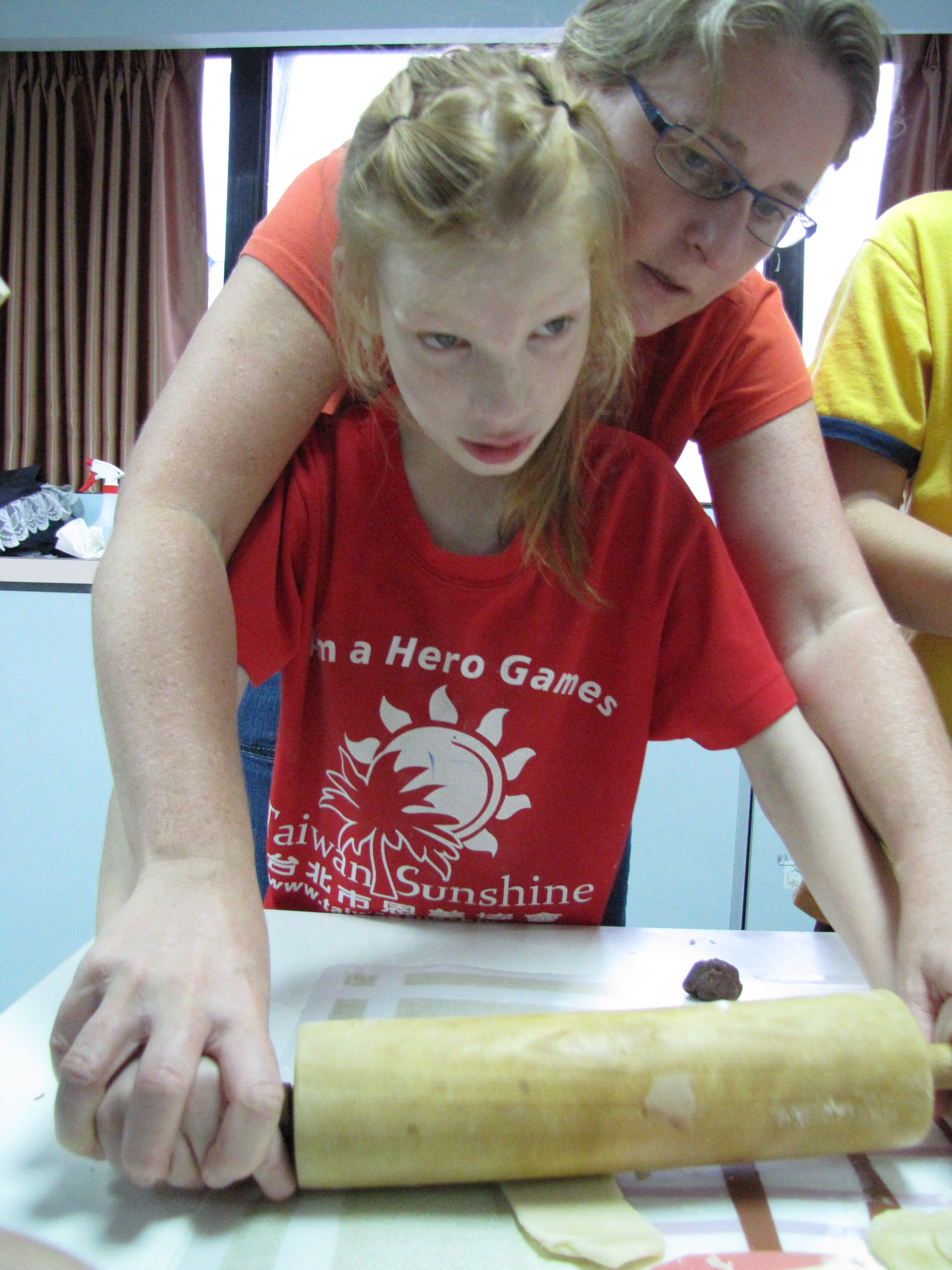
We look at our whole family, not just Jie Jie’s needs. We look at our other children and their needs. We also look at what God is wanting us to do. Two years ago my husband quit his job as principal at the “American Christian” school to focus more on the nonprofit organization that he helped start called Taiwan Sunshine, which supports families of children with special needs. So, for now, this “crazy” expat life makes sense.

Next week I’ll share a few ideas to help fight those expat “heartaches” of being a mom to a child with special needs child.

Your Turn: What do you find difficult as a mom/dad to a child with special needs while living overseas? Even if you don’t have a child with special needs, what do you find difficult? Really I do want to “hear” what you say. Go ahead and comment below.

Also, remember that if you want to get the latest post, subscribe and you they will be automatically emailed to you. Thanks to all who have subscribed and shared my posts.

Enhanced by Zemanta

Awareness Week for Cri-du-What? Syndrome

Cri-du-Chat is French for “Cat’s Cry”. It is the name given to the syndrome that Jie Jie has. The syndrome was discovered 50 years ago by the French geneticist, Jerome Lejeune. This syndrome is also known as 5p- Syndrome or Lejeune Syndrome.

So much has changed in 50 years. One of the major breakthroughs has been not institutionalizing the children. For the past twenty years, or so, children with CdCS have been able to remain at home with their families – with the discovery that they actually develop so much more through the interaction and intentional therapy play starting at a young age.

The big breakthrough for me, as an expat, was the internet and communicating with other families that have a child with CdCS. I have been so grateful that I’ve been able to receive the services that I’ve needed to help our daughter develop and grow here in Taipei, but the lack of communicating with other parents has been difficult. Now, I’m able to check on the Facebook page or the website to get the latest information or to get a question answered. I don’t feel as if I’m wading through an unknown land without a map or compass. I know have fellow travelers who have gone ahead and left markers to help me navigate this new territory of parenting.

This week, May 5th-11th is the 2nd annual International CdCS Awareness Week. It is a time for the families to be a voice for their child who can’t speak up. It’s a time for us to encourage each other, to be excited that we are not alone, to cheer our children on as they develop more than we ever expected or imagined. If you’d like learn more, here is a short video that gives you a glimpse of what these kids can do.  I CAN

If you are living in Taipei or thinking about moving here with a special needs child, I wrote an article that just came out in Centered on Taipei‘s May issue titled “Living in Taipei with a Special Needs Child”.

Living overseas with a special needs child is not always easy, but neither is living overseas with children. Period.
Your Turn: Whether your child has special needs or not, what has been the most difficult thing about living overseas for you? Please share in the comments below.
Enhanced by Zemanta

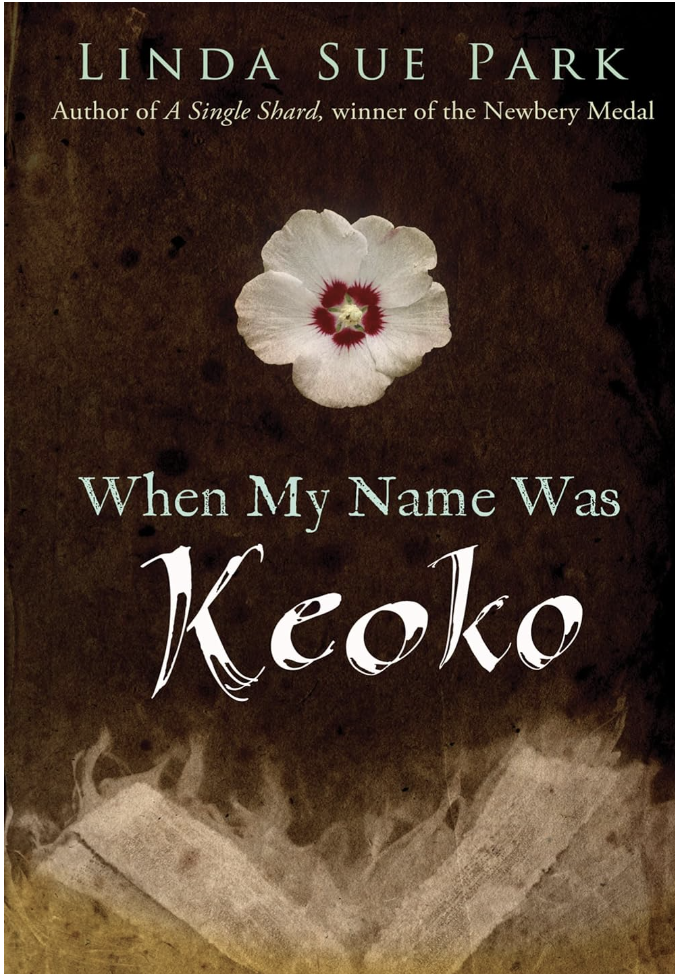
Book Review: WHEN MY NAME WAS KEOKO by Linda Sue Park

When My Name was Keoko

by Linda Sue Park.

Published: 2012

Genre:Middle School Historical Fiction

*Please note as an Amazon Associate, I earn from qualifying purchases.

Screenshot 2023-11-23 at 8.52.44 AM

WWII did not just affect Western countries, but it also affected Asia as well. Linda Sue Park shares an Asian point of view through her gift of storytelling. We watch the events of WWII unfold around Sun-yee and Tai-yul, a Korean sister and brother. 

As the term “Third Culture Kid” expands to “Cross-Cultural Kid,” I believe this book represents some broader aspects. 

  1. The characters are CCKs: The children at this time were more like CCKs, or “domestic TCKs” in their own home country. The Japanese occupied Korea. They tried to replace the Korean culture with Japanese culture. One way was by changing everyone’s names to Japanese names. So, Sun-yee became Keoko, and Tai-yul became Nobuo. Throughout the story, the family struggles to hang onto their Korean culture by trying to teach the children what it means to be Korean.
  2. Language is essential: Korean was forbidden during this time. All classes were conducted in Japanese. No one was to speak or write in Korean. Because of this, the Korean language was almost lost. Sun-yee’s father saw the relationship between culture and language, so he secretly taught her the Korean alphabet. For many non-English speaking families, the language struggle to ensure the children do not forget their “mother tongue” is real.
  3. To see the human being: I mean not being judgmental towards other nationalities. Before the Japanese came, Sun-yee’s good friend was the Japanese neighbor boy. As tension builds against the Japanese, Sun-yee becomes confused by what the Koreans say about the Japanese. Her friend is not like those descriptions. When she is older, she does become friends with the Korean girls, but she never has harsh feelings about her neighbor. They help each other out at different times. TCKs/CCKs have the opportunity because of the international schools/communities to see past prejudice and see the person for who they are, not the country their passport says they are from.

Parenting TCKs Top Ten


10. You memorize expiration dates: passports and resident cards – because if you don’t and they expire you know how much it will be to get it all worked out.

9. Home communication becomes a mixture of words and phrases from various languages. (eg. Chinglish)
8. Airport security doesn’t scare you – even with all the changes.
7. Who needs Google Translator when you have a live version living with you? (kids always learn the language quicker)
6.Vacations are planned by looking at countries not gone to.
5. You know certain words like fever, diapers, toilet in many “foreign” languages, but are not fluent in any of them.
4. You don’t need to print off the directions for filling out a passport, because you do it often enough between you and your children.
3. You know the guards and office workers at the Embassy from all the visits for passports, citizen abroad papers, etc.
2. When your child(ren)’s friends come over to the house, your living room looks like a mini United Nations.
Though this is number one, it does NOT in anyway count as my favorite – I’d say it is the hardest of all…

Drum Roll, please……

1. You take your child to college in another country and watch them grow/struggle to figure out who they are as a TCK.

And there you have it, my Parenting TCKs Top Ten

Your Turn: Anything you’d add to this list? Please comment below.

Enhanced by Zemanta

Meeting a Famous TCK

Before the flu hit our family like a vicious creature from the black depths of the sea, I had the opportunity to listen to a John Newbery Award author speak at one of the International Schools here in Taipei. Linda Sue Park to be exact.

She’s a TCK, really!

I’m not sure she’d call herself a Third Culture Kid, but I do. Her parents are US immigrants from South Korea. Most of her books are tied back to South Korea in someway, which I love. Her curiosity of her parent’s life before America lead to questions, which lead to story ideas.

She was inspiring…

I’m not Korean, but I was inspired to share my stories and to find out the stories of my family to share with my own children. My kids should know about their great-grandparents and how they survived the dust bowl of the 30’s, how their grandparents survived WWII in Germany/Prussia, and how their parents grew up on opposite sides of the world yet still met and married.

How do you share family stories when you live on different continents?

Stories are usually shared around the table at family gatherings. I grew up in a family that met every Sunday after church at my grandparents’ home for lunch. This is where I heard many of the family stories, but my kids do not have that same opportunity. We live on a different continent and see them every few years.

What to do, what to do…

Be proactive. Keep a journal with the questions you want to ask. Get your kids involved if they are old enough and ask them what they want to know. Buy a book that already has the questions written down. Then spend time with those loved ones and find out the answers. You could even video the question/answer time so your children can watch it later. Your kids may not be that interested in it right now, but someday they will be – and when that day comes wouldn’t it be more fun to have a video or book to look at together than to just stare at them open mouthed and say, “I don’t know.”

My in-laws are visiting in a few months – I need to get that journal bought and ready.

Your Turn: Have you thought about your family stories and how you are going to pass them down to your kids? How have you managed it? I’d love to hear your thoughts and responses below.

Enhanced by Zemanta

Field-Trip Madness

We’ve been sick around here for the last few weeks, but I think we are now coming out of it. Finally.

A few months ago, I was thrilled to be asked by Carole at The Expat Child to write an article for her site. If you’ve not heard of this site, you need go and check it out. She has a wealth of information for parents relocating with their child(ren).

I had just survived a couple of field-trips with Jie Jie when I wrote this article. I shared some tips that I learned from the good, the bad, and the could have been ugly.  Here is a clip from that article.

Though staying home would have been easier, new experiences are good for her development – no matter how hard they may be for me. So, I took a deep breath, said a prayer and entered the pottery shop.

If you want to read the rest of the article you can click on the link: “Surviving Field-Trips with Special Needs Children”

Here’s some of my favorites from The Expat Child:

Jet-Lag and Children

Where is Home?

Step Out of Your Comfort Zone

Debunking the Excuse Rail – Part 3

Emotions. They can really get to us, well I can say to most of us. There are a few of you out there that are very logical and keep us emotionally minded people grounded. That is why I’m so thankful for my husband – well, I’m not usually so thankful during the time he is being logical and I’m not, but later after I get past all the “feelings” I am so grateful that he was there with his stable mind, especially when dealing with “feout“.

Emotions are not all bad, though. They are good to have. Without them we can’t really comfort those that are hurting, nor can we celebrate with those that are rejoicing. I sometimes tend to be more emotional, than logical. I’m a woman, what can I say? Though, I may have emotional outbursts, I’ve learned to not make decisions based entirely on them. If I did, I’d never get out of bed in the morning and make breakfast for the hungry crew of four. Thus, the reason for debunking those excuses. This is the last of this “series” from me, though as I ponder this topic, I am seeing more places/situations arise – as I’m sure you are probably starting to see in your own life.

This “excuse” that I’m about to share, though, is the winner – the one that began this whole pondering process.

It all began with reading this post on parents of special needs children. Especially this section:

The panic and constant state of anxiety parents of special needs children experience almost become a part of you.  It consumes you.  The nature of the beast becomes embedded in our brains and we know that with so many variables to triggers that we can never completely let our guard down.  Many parents become proficient at being proactive, walking on eggshells and creating a sensory friendly world that is foreign to others.  We are militant in our preparedness to avoid that dreaded meltdown and disregulation that once started can set off a chain reaction that can last hours or even days.  Studies have shown that special needs parents have cortisol levels equal to or higher than war veterans. We are warriors.

Read that last part again, “special needs parents have cortisol levels equal to or higher than war veterans”. If you are wondering, “Cortisol is a biological marker that plays an important role in linking stress exposure to health problems”, says Rick Nauert PhD in his article “Parental Stress with Special-Needs Children“.

And everything made sense...

Okay, honestly I already knew I had high stress in my life. I mean I have performed the  Heimlich countless times, I’ve had surprise nutella splatters, conditioner baths to clean, unplanned wall paintings, falls, a whole handful of hospital stays (with just Jie Jie alone), and I’ve lost the little rascal in an airport. Life is stressful with a special needs child – I agree with both of those articles.

But it was interesting how I responded right after I had the reason for my stress levels.

Yes, my response to the study that my cortisol levels were the same, if not higher than a war veteran’s was lame. I used it as an excuse. In my head I could eat more chocolate “because I’m highly stressed and need it for sanity purposes.” I also used it as an excuse for when I’d get really upset with my other children or with my husband. I found that for a few days I would immediately think of that report and excuse my behavior.  “I can’t help it, my cortisol levels are just too high,” I’d say to myself.

But, something in my gut disagreed, so I began some searching…

In reality, it was the scales and the tightness of my pants that directed that spotlight to my attention of my silly thinking. The book I mentioned in Part 1 also blew this thought process out of my mind. Yes, it is the truth that I’m under some stress, stress that is causing super high levels of cortisol – but it shouldn’t excuse my behavior. In fact, it should have caused me to step up my game in taking care of myself, or as what Dr. Neusert calls in his article, “stress-reduction strategies”.

So there you have it – don’t let scientific reasons become your excuse for your behavior whether towards yourself or to others. We are responsible for how we treat each other – and as parents, especially living overseas, we teach our children how to treat others.

I’ll share next week what those “strategies” are that I’m now doing and I’d like to share what others are doing to reduce their stress. So please share below in the comments what you do to reduce stress, especially if you are a parent of a special needs child living overseas.


Enhanced by Zemanta

Debunking the Excuse Rail – Part 2

For the first part of this series click here to read.IMG_2608

Living overseas can be adventurous and exciting. It can also be lonely and hard – even if you have a family. I’ve had my seasons of it all – or at least I think I should have by now, but I’m sure as seasons come and go they will each return at various times in my life.

One season that seems to return quite frequently is the Season of Feout (pronounced fe-out, combo of fear and doubt). This one pops up when I mention things or people from the US and my kids look at me with a blank stare. It also pops up in the fall when many Facebook friends start posting pics of their children at the pumpkin farms, hayrides they’ve taken, or tree leaves in their brilliant autumn colors. These I mentally add to my “list” of all the things I’m failing at with my kids because I have them here and not there. Here where there are no pumpkin patches, where the leaves don’t change colors, and hayrides? HA, we live in a mega-city. Here where they can’t get to know their grandparents, nor their cousins. Here where they constantly have to say good-bye to great friends who move. Here where “here” may be a new location in a year.

Do you relate to these “feout” questions I have sometimes? My mind can really get out of control with all the emotions swirling around.

I sometimes struggle – not always, just sometimes. It is during those times though that I want to “make-it-up” to my kids. I want to make up for all the losses they have because of the decision I made years ago – way before Uwe came into the picture – to live overseas. When we go to the US (or Germany) I want to take them to all the “fun” places – so they don’t miss out. I want to take them to baseball games, to amusement parks, to zoos, to farms/ranches, to fairs – whatever I can find. I sometimes want to make sure they “experience” the culture, not just hear about it through stories of my past.

Maybe you’ve not had these feelings above, but maybe you felt your children “deserved” something for all the loss in their lives. You know that the transitions are difficult, so you buy all the kids a smartphone so that they can “keep in touch” with their friends better. Or you think everyone deserves an iPad mini because let’s face it, it sure would make travel easier on the plane if everyone had their own. Or maybe you feel just the opposite. You feel as if you can’t give your children anything too nice because you work for a relief organization or are a missionary – and it just wouldn’t look good to those who support your work.

Either way, it’s all an excuse.

An excuse to do, buy, or not to buy for our kids (and let’s face for ourselves, too). Fact is that transitions are hard. Fact is my kids are going to miss out on some of my cultural activities. Fact is our kids are going to be fine. Yes, they will be fine if I take them to every fun thing I can find, or if we just play in the grandparents’ backyards. They will be fine if I buy them all an iPad mini or (more likely) not buy any. Point is, they will be fine. I shouldn’t, and neither should you, fall into that trap that we should “make-it-up” to our kids for living overseas. If you want to buy them an iWhatever, then do it. If you don’t have the money, don’t feel guilty. If you want to “experience” a cultural event like a baseball game with your child, then go. I really believe that our kids will remember the time we spent with them more than the actual event or gadget we buy them.

How do I know that our kids are going to be fine? I’m married to a TCK, have TCKs for friends, and have watched countless TCKs grow up. They all survived the experience – and most would say they are glad they grew up the way they did. That’s how I know my kids are going to be fine. This is how I get through those Seasons of Feout – I remind myself of other TCKs that were taken on this path. I don’t have to go far to be reminded – I just have look across the dinner table.

Your Turn: Have you ever had a “Season of Feout”? If so, how did you get through it? Please share in the comments below.

*Note: As far as I know “Feout” is my made up word from “fear” and “doubt”, but if it should be a word in another language please forgive me.

If you like what you are reading, please subscribe on the right side. New posts will be automatically emailed to you. Also, be sure to like the raisingTCKs Facebook page to find more articles from other websites on TCK related topics.

Related articles

Enhanced by Zemanta

Debunking the Excuse Rail – Part 1

Aside

Photo via microsoft.com

Has this ever happened to you?

It’s the last expat women’s gathering before you move to the next destination. You are physically tired and weary of saying good-bye. You know that in reality, you won’t see most of the ladies again and that in probably a couple of years you won’t remember their names. Saying good-bye stinks, so you decide to skip it and not attend. You can text that you have some last minute things that need to be done before you leave, which is the truth.

Or maybe this?

“I know that we just moved here and I should learn the language, but I don’t think it is possible. I’m too old to learn a new language. My brain just can’t handle all the vocabulary words and grammar. I can just use my phone app for translation.”

Excuses. We all have them. Sometimes they are legit reasons, and sometimes they just make us feel better. I’d have to say though that most of us live with the latter. We don’t want to feel like we’ve done something wrong/bad. I know I don’t like this feeling, but does having an excuse make it any better? Or is the excuse more like applying concealer in hopes that people will not see those blemishes in my life?

I’ve been challenged with these thoughts after reading the book Lies that Women Believe by Nancy Leigh DeMoss. The book is not about expat living, but I applied some of the “challenges” to areas in my life that deal with living overseas and raising TCKs. The one chapter that spoke the greatest to me was chapter eight on emotions. To summarize, Mrs. DeMoss writes that much research and discovery has been made regarding women during their times of physical changes. She challenges women that though our hormones are the reason for feeling out of control, quick tempered, etc that we shouldn’t let them be the excuse for being mean and nasty to the people around us.

This got me to thinking about expat living and raising TCKs. Research has been done on TCKs, on the stress of moving, and honestly on all areas in life. How many times have I let the reason of research become my excuse for my behavior?

I’m breaking this post down into three parts to make it shorter and digestible, meaning hopefully you’ll be able to read it in one sitting and be able to ponder about it yourself. So, look for Part 1 and 2 next week. They are just a couple of things I’ve thought of. Be ready to share because I really do like hearing your thoughts.

Related articles

Enhanced by Zemanta

Thoughts of the New Year

New Years Greeting, Chinatown 1912 (LOC)

Photo from flickr “The Commons”.

For the past two years now I’ve done something totally different with New Year’s Resolutions. If you were following me last year you may remember what that was. If you were not, keep reading.

Every year people write their resolutions down about what they want to accomplish for the year, usually about health. Others write out a list of goals they want to achieve that year. Some people keep them, but most of us stop after a month – and if you’re like me, it’s all over after a week. The list gets shoved aside, lost among the bills or other papers, or in my case, wadded into a perfect ball and slam dunked into the bin. Why did I do this? Well, because I once again realized that the ambitious part of my life exited when that alarm went off.

Can you relate to any of this? If so keep reading.

I’ve not wadded up a list now for two years. In fact, I don’t even need to make a list because I just have one word to remember. Yep, you read that right – One Word. The word needs to be something broad that can be applied to all areas of you life, but not so broad that you can’t grasp it. It should be something that is on your heart, something that speaks to you.

Two years ago my word was “secure”. Strange, maybe, but married to a TCK and raising three of them, being secure in who you are and where you call home is something I’ve dealt with. That year, my husband quit his job as a principal and began his own NGO. Secure was the perfect word for me – I learned enough lessons on security to probably write a book. It was one of those hard, but really good years.

Last year, my word was “intentional”. I wanted to be intentional in all that I did. I can’t say I did a perfect job with that one, but I have learned how important it is to be intentional, especially with my kids. To intentionally stop and enjoy coloring with my youngest, to read a book, or to play catch. To intentionally keep traditions that we started and talk about them with the kids. I was even more intentional in my writing and entered a few contests (nothing to brag about, but I did enter). I’ve learned that if I’m not intentional, it probably won’t happen – and time isn’t something you gain back once it is gone.

My word this year?

I came across this word Christmas Eve. It was after the meal, after the Christmas story had been read, after the presents had been opened, after skyping with family – after the kids were in bed asleep. It was while my husband was out to buy the bike for our youngest. We live in Asia, so not such a huge deal going out Christmas Eve to buy Christmas presents, although I don’t recommend it. I was all alone with a cup of tea. The light were off except for the white lights of the tree. All was quiet, except for the water trickling in the fish tank. My thoughts began to make a path around the events of the evening. I thought about the excitement of the kids as the time came for them to open presents, especially Jie Jie as she really understood what was going on. My mind replayed Mei Mei showing me her princess she had just colored. Then the phrase, But Mary treasured up all these things and pondered them in her heart (Luke 2:19) came to my mind. I was doing just that – pondering. And that was when my one word came to me, “ponder”. I want to take the time to ponder over God’s blessings that day and over my family and the funny things they did or said. Who knows though, I may ponder over writing ideas, lesson plans, or Bible studies. There are a lot of things that I could ponder over. So, 2013, here’s to a year of treasuring – may you bring me lots of joy and happiness to ponder over in my heart. And if you bring some heartache and trials, then I’ll ponder over the lessons learned from them – but I’m really hoping for the joyful things to think about. 

Your Turn: How do you plan for the New Year? Please share in the comments below your goals or your one word.

**If you want more information on the myoneword, you can check out their website.

And may each of you be blessed with peace and joy this year of 2013.

Happy New Year!