It is four weeks until graduation and eight weeks until the flight. It’s not the flight that leads to a busy summer of visiting family and friends (though there will be some of that). Not the flight of our family leaving our host country to start a new adventure. No, it’s the flight where our TCK leaves the nest.
This is the second go around, so part of me believes that I should know what to expect. To be better prepared for the hard good-byes.
Nope. I’ve been busy going down the aisles of denial. You know, those store aisles where you find yourself meandering because they just have a little of everything that is interesting, but you never commit to putting it in your shopping cart?
That is how I’m feeling. We’ve looked at future options. We’ve planned a last trip. I look at all the things that need to be packed or sold because we will return to having ONE home. But I’ve only taken note. I’ve not actually packed anything. I’ve not put up any advertisements for things for sale. And I’ve not written anything because it feels raw.
Because as soon as I do any one of those things – I will have stepped out of that aisle and into reality.
It’s kind of funny because I give talks and help people transition. But I have avoided my own transition. It’s always easier to help others than to deal with our own grief, right?
But this week, starting with this post, I am committing to enter into this reality that soon she will leave. Soon she will pack up her room. Soon we will go to the airport. Soon I will drop her off wherever she will be going and I will leave. Soon I will return without her.
Just writing that my eyes become blurry. But I need you, dear and faithful readers, to keep me accountable. To be present in the moments we have left where we are. To be in the midst of joy and celebration, alongside goodbye and grief.
She’s been RAFTinG. And I’ve helped her with that. But what am I going to do?
Work on my DOCK. You can read more about this tool for Stayers over at my business site, Global Crossroads Consulting.
But it’s leaning in and being self-aware of your own emotions.
It’s listening and acknowledging all the emotions and thoughts your TCK is experiencing.
It’s remembering.
It’s finding good and healthy ways to stay connected.
And it is about finding space to process the grief.
Anyone else finding their family in this kind of a season? How are you coping?
*Please note that I earn from qualifying purchases as an Amazon Associate. Please see the disclaimer at the bottom of the page.
Summary
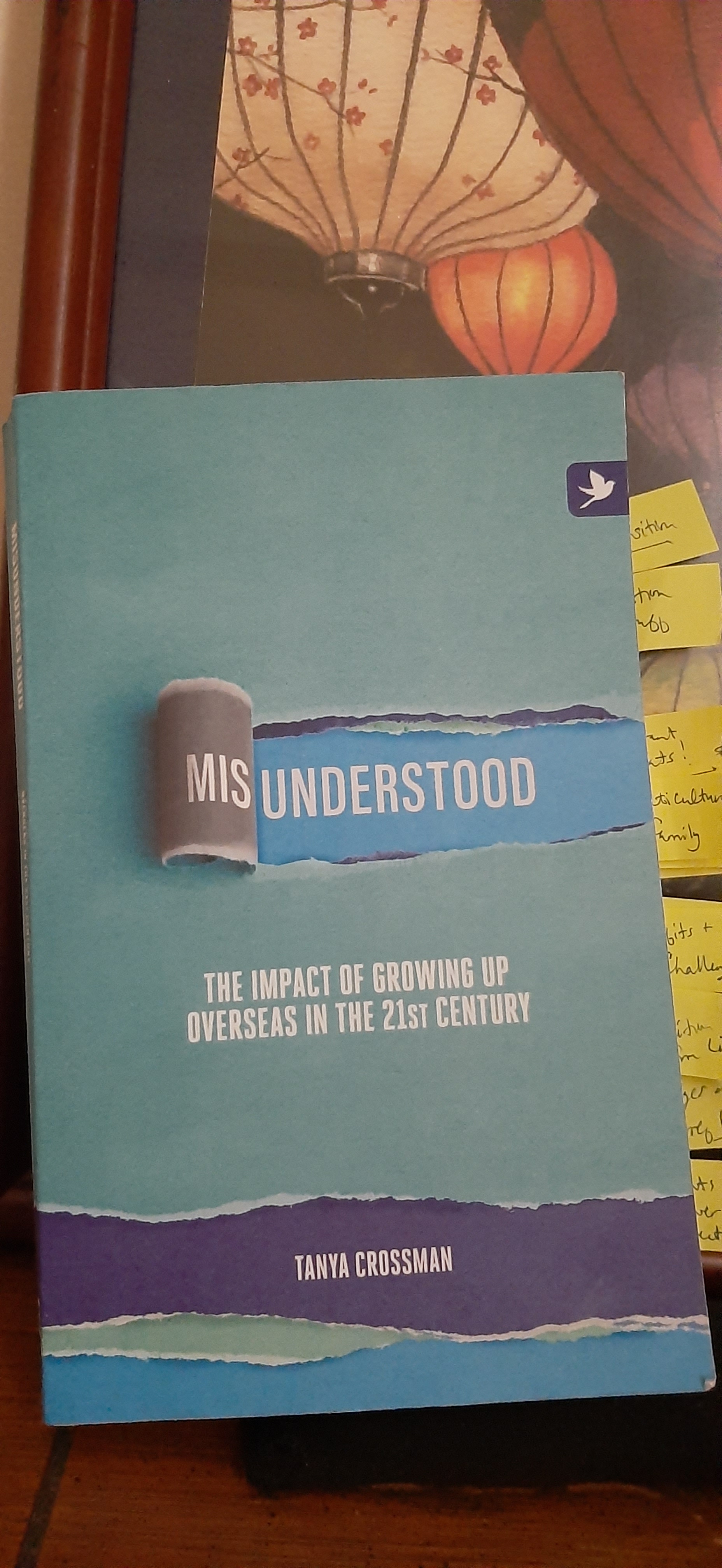
Misunderstood is a resource book for ATCKs, those who support TCKs, and those who are raising them. Tanya noticed differences between older ATCKs and those born after the 1980s. Through research and interviews, Tanya shares the insights she gained. This book is divided into six chapters. It covers the basics of TCKs and CCKs and how the definition is shifting somewhat. Tanya writes about the various experiences of TCK life from military to missionary, but also non-traditional to international education families. I appreciated this section as it is not always covered in other books that I’ve read.
Tanya spends a good deal of time on transition, grief, and starting over again..and again..and again. It is essential for anyone working with TCKs to understand the difficulties it can cause. The book ends with a chapter on what she titles “The Inner Lives of TCKs” and “The Future for TCKs.” Both chapters offer insights into TCKs of the 21st century and how they view life.
Why You Should Read This Book
Tanya has become known as a researcher of third culture kids (TCKs). She is currently the Director of Research for TCK Training. So, it’s no wonder this book is filled with statistics and quotes from many TCKs she interviewed. It is also filled with wisdom from other top researchers such as Doug Ota and Ruth Van Reken.
You can tell from all of my sticky notes that it is a good book. If you are seriously considering moving overseas with your child, even if you are an ATCK, this book is a rich resource. I also would recommend it to organizations who work with TCKs.
*Please note that I earn from qualifying purchases as an Amazon Associate. Please see the disclaimer at the bottom of the page.
Serving at the Ends of the Earth is divided into seven sections. Steve and Gill begin by laying a foundation for what a missionary kid (MK) or third culture kid (TCK) is. They devote a section on transition describing what it is like, ideas to help with re-entry, and even a chapter for those times when a family may suddenly need to leave the host country without warning. Another section deals with parenting TCKs and has a chapter on cross-cultural marriages, which is nice as there are not a lot of resources on this topic. These sections are helpful and bring up some points that would be good for spouses/partners to discuss during all stages of transition.
I appreciated the last three sections of the book. First, one section deals with the heavy topic of dangerous situations and keeping children safe. This section was practical and is something that more and more organizations are becoming more educated in. I was glad to see it in this book as parents also need to be educated and know practical ways to keep their children safe.
The next section was about non-American TCKs. I appreciated this section because much of the literature comes from this background, and it is so good to read about what TCKs from other parts of the world experience. Their experiences are different and the challenges of repatriating or transitioning to university can be tricky. If you work in international schools, mission organizations, or HR departments of companies that have missionaries/global workers from all over the world, then I highly recommend this book just for this section alone.
The book’s last section is near and dear to my heart – educational issues. They discuss the different options, as well as their advantages and disadvantages. Another chapter deals with boarding schools. These two chapters are logical and can really help parents figure out what is best for each of their children. The authors point out that children are different and could need different educational options to help them grow and mature. The last chapter is on special education. Most of this chapter described various impairments, but the last few pages had guidelines for parents of children with special needs and for the sending agency. While I’m glad they included this chapter, I had a lot of questions after reading it, especially regarding their recommendations about MK schools being willing and able to take these students. While one would think it might be true, in reality there are few. But that is for another post at another time.
Though the audience of this book is missionary families and those who work with them, I see benefits to any global mobile family or organization/company that works with them to better understand what families need to consider when making a big move.
*Please note that I earn from qualifying purchases as an Amazon Associate. Please see the disclaimer at the bottom of the page.
In this book, Amy Young dives into what is known as “The Fruit of the Spirit” from Galatians 5:22-23. If you are unfamiliar with this phrase or this passage, here is a quick summary. Paul lists nine characteristics Christians have in Christ. This is not a devotional or a sermon, so I will not explain why Christians do not always produce or show these fruits well. Amy does a nice job with that. But, here are the fruit listed from the Galatians passage: love, joy, peace, patience, kindness, goodness, faithfulness, gentleness, and self-control. She also explains why Paul calls the nine the “fruit of the spirit” instead of “fruits.”
The book is divided into three sections. Amy shows how the first three characteristics mentioned point upward to our relationship with God. The second section focuses on the next three characteristics and how they reflect (or should reflect) towards others. The last section reveals how the last three characteristics relate to our self.
The book is easy to read, and the concepts are simple. Her audience is cross-cultural workers, but I see how it can be used for any Christian wanting to grow in their faith and knowledge of God. My only criticism is that I wish she had added some questions at the end of each chapter that would cause me to stop and reflect on my life. Instead, I felt like I had read the chapter, nodding in understanding and acknowledgment, but was not challenged to examine my life. Maybe if I had read this book with a group of others and discussed the concepts more, I would feel differently.
Overall, it is a good book if you want a basic understanding of Paul’s characteristics in Galatians. But, if you want to grow, I recommend reading it with a study group.
*Please note that I earn from qualifying purchases as an Amazon Associate. Please see disclaimer at the bottom of the page.
Grief is common to all humans. It is something we all experience at some point in our life. It does not matter if we are rich or poor, healthy or not, or what country or culture we come from. At some point in our life, we all will experience grief.
We often equate grief with death. And although death is a big season of grief, it is one of many reasons we experience grief. Grief comes because of loss. Of course, death is a significant loss – and so the grieving is deeper and harder. But grief also visits when a friend moves away, or we move, or when we lose a job, or [you fill in the blank].
This workshop is a course in grief processing. Specifically, Lauren instructs the viewer about her model of grief – The Grief Tower. I have reviewed two books that she wrote about the Grief Tower Model. (And she has a new book coming out in March that you can pre-order here). I have also reviewed the other video for someone who is in current grief. If you are currently going through something hard, I highly suggest you read my review and check out that 35-minute video to help you process that “block” on your grief tower.
If you do not know what a “block” is or what the Grief Tower Model is, AND you are not currently processing deep grief, then keep reading.
Unstacking Your Grief Tower 101 is a 60-minute workshop teaching the Grief Tower Model. Lauren takes you through the theory behind this. But she also guides you to process a less heavy block on your own grief tower. I found the step-by-step process easy to follow and a good way to practice using the model. This workshop will help you process for yourself and help someone else process their own block(s) as well. I appreciated this workshop because Lauren talked through visceral signs to look for in yourself or the person you are working with to know when to pause and take a break.
As always, Unstacking Company warns that this workshop should never take the place of therapy. Seek help from a counselor.*
*I am a short-term counselor if you do not know where to find one. Please reach out by email or go to my company’s website, Global Crossroads Consulting. I do offer a 30-minute free consultation.
*Please note that I earn from qualifying purchases as an Amazon Associate.
Summary:
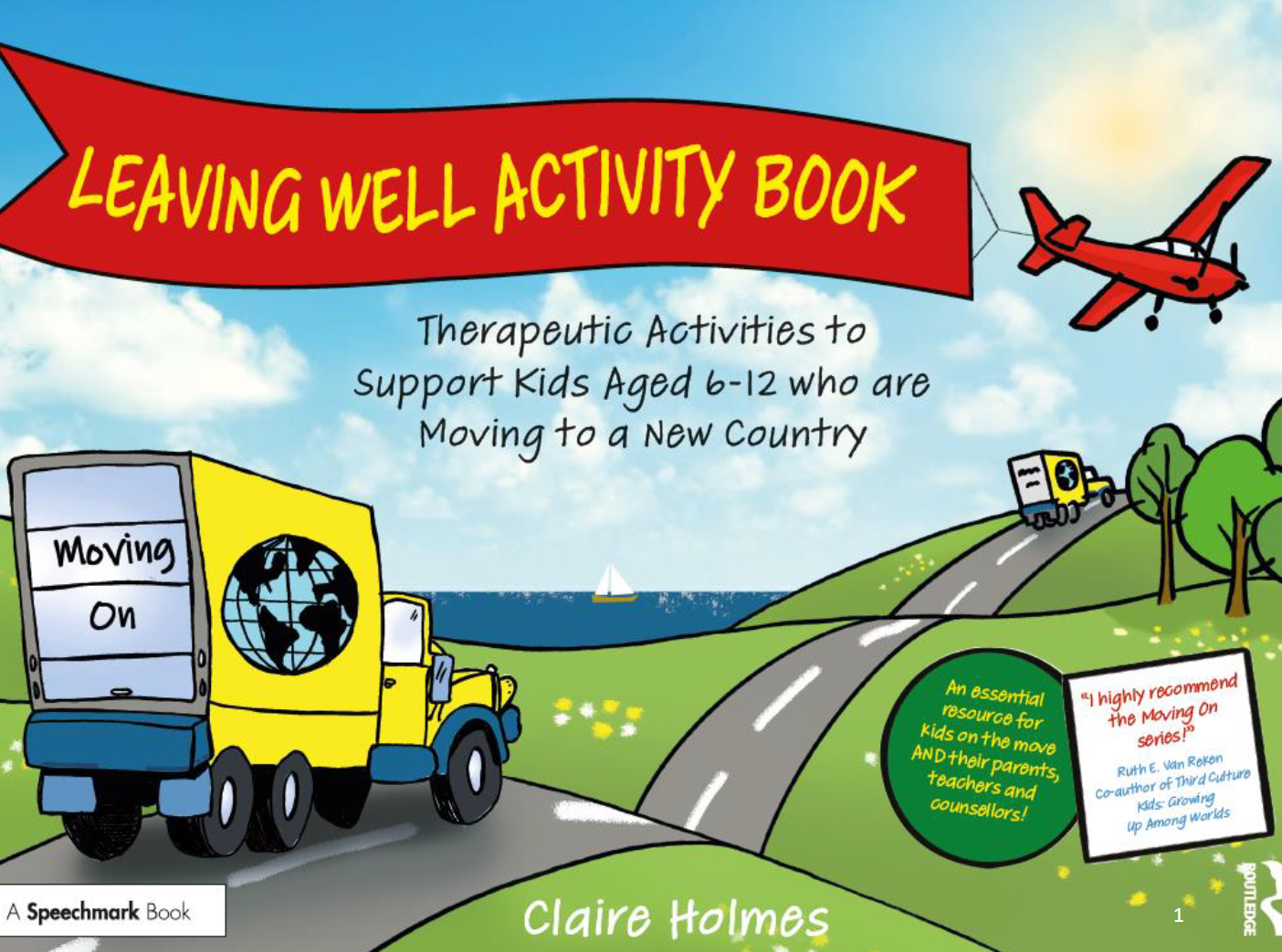
Claire Holmes is Head of School Counselling at Tanglin Trust School, Singapore. She has worked with TCKs for 14 years. This small piece of information significantly impacted why I wanted to review this series. Plus, the fact that it is for the younger TCKs is something I feel has been lacking.
There are two workbooks with one facilitator’s guide. Both workbooks are filled with activities that help children process their emotions and thoughts about transition. You can buy the workbooks individually or in a bundle with the facilitator’s guide.
LEAVING WELL:
Claire uses activities that start when the parent(s) tell the child they are leaving. She has the children look at their feelings using an adapted chart of culture shock but does not use that vocabulary. Many people who have lived overseas for long have heard of RAFT. It is a great tool, but the concepts are challenging for children in the age group. Claire uses GUTSS but has the same concepts as RAFT, just in simpler terms.
ARRIVING WELL:
In this workbook, Claire begins by letting children chart their times of transition on a timeline. She has various activities to help children recognize stress in their bodies but also provides ways to cope that help relieve anxiety. Again, the simplified version of the Stages of Culture Shock graph is used to help children name the emotions they may be feeling at this time in the move. She ends the workbook with ten tips and appropriate activities to help transition into a new place.
FACILITATOR’S GUIDE:
This book is designed like a teacher’s manual. Every activity in both workbooks offers the rationale for the activity, how to set the scene for the activity, materials needed, directions for the activity, tips to make it easier, and extension activities that you can add if you would like. I have not tried the manual, but it seems easy to use with clear directions.
Overall, I think this is a perfect resource tool for the school to help younger children who are ready to move or have just moved to the school. I like that Claire used vocabulary that helps children at this age grasp the concepts of transitions while offering them space to process their emotions. I believe that giving children language to express their feelings empowers them to communicate clearly and better understand what they are experiencing during this significant life event. Claire does mention that the LEAVING WELL workbook should be started around eight weeks before departure. I agree, but I would also encourage you to start earlier with the goodbye pages so that if there are any lasts, you as a family can not only plan them but have time to make them happen.
*Please note as an Amazon Associate, I earn from qualifying purchases.
Serving Well is a compilation of short articles and blog posts that Elizabeth and Jonathan wrote during their time in SE Asia and after their return to the States. It is organized in such a way that readers can easily find topics that apply to what they are looking for. In fact there are eleven sections: Preparing Well, Moving Well, Grieving Well, Talking Care of Your Heart Well, Taking Care of Your Marriage Well, Taking Care of Your Children Well, Working Well, Anticipating Well, Recalculating Well, Communicating Well, and Returning Well. The book really covers from preparing to leave to returning and everything in between.
Neither author expected to be writers, but they have developed the craft of writing and produced a book that is a useful resource for any family about to embark on this journey of living overseas. My only critique was that they had an article titled, “A Letter to Singles” that was directed to single women missionaries, not all singles. I do think that if they ever write a second edition, adding some articles to each section for singles would be make this book a valuable resource for any mission organization or member care team.
Overall, I do recommend it for families living abroad.
By Cate Brubaker, Doreen Cumberford, and Helen Watts
Published 2018
Please note as an Amazon Associate I earn from qualifying purchases.
Book Review:
ARRIVING WELL is a collection of five stories from people who moved to their passport country after an extended time living overseas. Otherwise known as repatriating. Each story is short and easy to read. Though there are only five stories, they come from a rich background across the globe; not just from one common country. The stories are real and vulnerable to the point of sharing their failures. Two of the contributors include Jerry Jones and Michael Pollock.
After each story, the three authors collaborated, offering their thoughts and wisdom as transition coaches. They highlight main points from each story while offering questions for the reader to continue processing their own journey. At the end of the book, they list ways that they can be contacted, along with their websites where more resources can be found. At the time of writing this review, all the links worked.
I would recommend this book to those who have moved or are about to embark on this move to their passport country. I believe it will help them begin to think about what struggles they may meet, but also seeing the struggles of others can help normalize some of the emotions and feelings that they are going through. I will note that it does not talk about how children may be experiencing this transition, but I do believe that healthy parent(s) will help a child(ren) needing help.
*Please note as an Amazon Associate I earn from qualifying purchases.
This is a good resource/workbook for any young adult about to go into adulthood, but especially for TCKs. Megan is the daughter of a US diplomat, so she understands the ins and outs of being a TCK. She has taken time to write about what she has learned from experience, but also through research to help adult TCKs thrive in adulthood.
As human beings we all have the desire to belong; to know and be known. Megan explains how finding community and growing roots in that community is the key to belonging. She gives practical examples of how to do this. She acknowledges that before one can really be known by others, they must really know their own identity. She allows for the reader to look past their identity of being a “third culture kid” to explore explore their values and to realize their own core identity. Through this I feel she helps to normalize the confusion of wanting community, but feeling lost in how to get it. Throughout the book, Megan uses the analogy of a garden. This analogy is more then just “growing deeper roots”. She uses the science behind some gardening techniques used by avid gardeners to explain her points. And she does it in a way that the reader does not need to be a gardener to understand. I feel this quote from the end of the book reveals the heart of the book, “Gardens are places where you can bury your troubles, griefs, and pain and grow beautiful, new life. Gardens become (re)generative spaces that offer healing and harmony” (p. 291).
*Please note as an Amazon Associate I earn from qualifying purchases.
This guide book is designed for families that are about to embark on a family adventure of living overseas. Anna surveyed over a hundred people that included parents, but also third culture kids, on the good and the hard of living overseas as a family. The people surveyed were from a variety of backgrounds that included military families, expats, families working in non-profit work and those in ministry. Anna uses quotes from the survey throughout the book, but also references from other resources that speak on TCKs, living overseas, and family connection in general. This makes the book stand out from some of the other guidebooks that have been published.
The book is organized in three sections which makes it easy for the reader to directly read the chapters that apply for that moment in time. Anna took time to write a good chunk on preparing to leave which includes a chapter on fundraising and what to do that last week before leaving. The second section is titled “Going” and involves ideas for your family while traveling to the new location. The last section is about living in the new location and how to go from scary to thriving. Throughout the book, Anna offers practical ideas and tips from her own experience and from those who took time to fill out the survey.
One of my favorite quotes seems to be a theme throughout the book. Anna writes, “Having a successful family experience in a new country is not contingent upon having a positive experience. It is contingent upon family connection, despite how good or bad your experience is” (p19). If you are about to embark on this journey with children, then I do recommend this book. If you are already living overseas with your family and looking for new ways to connect with your family you might be interested in this book as well.
*I did receive an ARC of this book from the author to review, but the above book review is my honest opinion.






 raisingTCKs