
Unknown's avatar

About MaDonna

I grew up in mid-west, USA. Moved to mainland China after college hoping to change the world. But, instead, my world changed. I entered TCK-land. I married a German TCK and had three little TCKs of our own. I describe the five of us as the "Fusion Family". We are fused together by cultures and disabilities. All three were born in mainland China. One has a genetic disorder called Cri-du-Chat. And one is adopted. The other is just a typical oldest child. I'm still that mid-west girl who loves a good steak, but with a splash of Asian flair caught eating curry in her tuna salad sandwich.

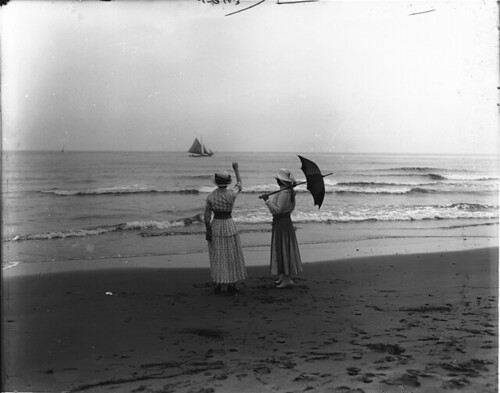
Saying Good-bye Stinks…

photo by flickr The Commons

Good-byes are never easy, especially when you live overseas. In many ways it is like death. You say your good-byes not knowing if you’ll ever see the person again here on earth. You depart. You cry. You see old photos. You cry some more. Then time passes and life goes on. You keep in touch with Facebook, email, and possibly even Skype, but most of the time you don’t.

It is hard, but what about our kids? Third Culture Kids grow up saying good-bye to friends every year. It is normal for them. Either they are the ones moving or a friend is leaving. It is just the way of expat life.

In a few days we will have to say good-bye to a couple of dear friends. We leave for the summer to visit family and when we return they will be gone. They are close friends of mine and their kids are close to my kids. So, how do we, as parents, help our TCKs deal with the coming and goings of people in their life? I’m not sure I have all the answers, but here is what I am trying to do this week.

1. *Talk about it. I have been talking to my kids about their friends leaving this year. We’ve talked about where they are going, how they feel about it, and to some extent what to expect next fall. For my oldest, he understands and has gone through this too many times for his ten years. As for my youngest, I don’t think she gets it. This will be the first time really for her to experience it. I’m expecting tears.

2. Listen. Stop talking and just listen to what your kids have to say about the situation. When my son was four, I cried with him when his friend returned to South Korea. Now I listen to my daughter tell me where her friend is going next. And I will sit and cry with her when reality hits.

3. Photos. Take photos of them together with their friends. Even if you have to force one from your older kids, they will be thankful later when they see it. This has been great for my whole family. We have photo albums of friends we’ve met along this expat journey. Make these photos visible if your children want that. Let them make a photo album of their own with memories of their friend(s) that are leaving.

4. Say Good-bye. Make sure they get the chance to say good-bye. Even if you need to drive a half hour to do so, just do it. Kids need that part of closure. Even better, offer to take the kids for ice-cream, swimming pool, or to the park. I’m sure the parents would appreciate the extra uninterrupted time to finish packing plus it is a great memory for both children. Another idea is to have them make cards for their friend leaving and be sure to exchange contact info with the family if you don’t already have that.

5. Listen. After the friends have long boarded the plane and are gone, listen again. It maybe a month later, but listen. Sometimes kids just need you to be there to cry with them. To know that it is painful and that you care about them. And then again, maybe they don’t want you around. Be flexible – don’t hover, but be available to listen. It’s a balance act that I can’t say I have mastered, but trying to fine tune it.

Saying Good-bye is never going to be easy, but I think we can help our kids make the transition by being there.

*I just read this article today by Julia Simens about transitions. I really like the idea of teaching my children that transitions happen ALL the time no matter if you are TCK being “left behind” or if you are in elementary school going into middle school. Transitions are a part of life, but I do believe that we need to help our kids through them. As you know,some transitions are a whole lot more fun than watching your best friend pull away in the car loaded with suitcases.

Your Turn: Got any tips on helping TCKs say “Good-bye” in a healthy way? Did you read Julia’s article? What are your thoughts? Please share in the comments below.

Enhanced by Zemanta

5 Packing Tips for Visiting “Home”

You know every few years (or maybe every year) expats travel back to their home country for a few months to a whole year. This is our year to go to the US to visit my family. We’ll just be there for a few months, but we leave in less than a week and I’m just starting to think about packing. Yep, I know I’m a bit behind to be just starting (at least some of you are saying that…)
One thing that I’ve noticed since having kids is that packing a suitcase has become more of an art. Packing clothes for the five of us, making sure the “I can’t live without it” stuffed animal gets in the carry on, shoes for all occasions, toiletries, etc.
Maybe you are in the same dilemma and are wondering what to pack, how to pack, etc.  Here are my top 5 tips.

1. List it.  This sounds crazy organized, and it probably is, but I list out what each person needs to take. (Note: I don’t pack for my husband, we have different tastes.) Do note that I’m packing for 4 people. I don’t make it specific, just general. Then when it goes into the bag I cross it off. That way I know what I’ve packed and what I haven’t (unless little hands help out and unpack it all for me). Because I’m a list freak, I also list out what is going in the carry-on.

2. Stack it. After I make a list I usually usually stack the clothes on my bed. I do this for two reasons. One it gives me an idea if I’ve over packed or not. Two, I can estimate how many suitcases I’m going to need.

3. Half it. I look at the clothes on my bed and I do just that. I take out about half from everyone’s pile and put it back in the dresser. I have found that we rarely wear all of the clothes that I’ve packed, so do the math. Half the clothes = more space on the return trip. Besides, the extra space is usually filled with clothes from the extended family or from the stores that we just can’t resist. You know what I mean, don’t you?

4. Stash it. I’m talking about putting a suitcase inside another one. I always do this because we tend to bring more back on the return trip than we do going there. This way, we have the empty suitcase already and we don’t have to buy another one once we are there.

5. Roll it. This is an old trick, but one that should not be forgotten. Roll everything you can. It just saves space. And don’t forget to roll the socks and stuff them in shoes.

As for gifts for the family…I stopped doing that awhile back when I realized that they pretty much had everything I could think to bring. Well, I might stuff in some Asian candy just for the fun of it….that always brings a good laugh with my mid-west family. Besides, it is a taste of “home” for my TCKs, which is always nice for them on these longer stays.

Your Turn: What is your top tip for packing? Please share in the comments below.

*photo credit: microsoft.com

Enhanced by Zemanta

Mother’s Day

Happy Mother’s Day!

A simple pink carnation…

Green plants with pink flowers dotting the arrangement….

Pink construction paper folded with a note scribbled by a child…

These thoughts fill my head when I think of Mother’s Day.

Having lived in Taiwan for a few years another thought has come to mind…Mother’s Day Ads.

Yes, ads selling cakes and cookies at the convenience stores, restaurants having special Mother’s Day meals, and other places offering whatever for a good price for your mother. It’s like Christmas for the Mom’s only club, which is great if you are a mom and if your family goes for that type of thing. 

I’m a mom, but my kids don’t get into the “buy mom all the great deals”. Do they love me? Yes. Do they appreciate me? I’m pretty sure most of the time. Does my husband not care and love me? He cares greatly and loves me way too much.

Why not go all out and get me the works? Because I don’t want all of that. I’d much rather spend time with them. In fact my favorite Mother’s Day was just a few years ago when they didn’t buy me a thing. Instead, my husband planned a day at the beach. He had a picnic packed and we left early before traffic. We were the only ones on the beach and it was perfect.

Waves splashing….

Sand in my toes…

Those are now my newest thoughts when someone mentions Mother’s Day to me now.

Your Turn: How do you celebrate Mother’s Day? Any special one that you remember the most? Please share in the comments below.

Happy Mother’s Day to you all!

Book Review: “Home Keeps Moving” by Heidi Sand-Hart

by Heidi Sand-Hart

Summary: Heidi shares her life as a TCK/MK from India moving from country to country from continent to continent, and from culture to culture. She shares the joys, the excitement, and the hard ugly truth of the pain from her experiences. She uses many quotes from other TCK related books and then shares stories as examples. Some stories are her own, others are from fellow TCKs who have written about their own experiences. She discusses issues such as loss, grief, education, and “rootlessness”.

My thoughts: Loved it! I checked it out from the library and had a hard time not writing in it – so I am ordering my own copy soon. It’s not a “how to” book that gives tricks and secrets to making a TCK’s life work out perfect. Instead, Heidi gives the reader a glimpse of her journey in life. It gave me some insights to not only my children, but to my husband as well. She tackles some pretty tough subjects and I like that she doesn’t give a recipe on how to approach the difficult times. She reminded me that each TCK is different, so therefore the process for each is going to be different as well.

If you are a TCK and haven’t read this, I encourage you to check it out. It just might give you the courage to continue to seek out some unresolved issues in your life.

If you are a parent to a TCK – I recommend it just to be able to hear views from a TCK who is open and honest. You just might be get a few insights of your own.

You can get the book here at Amazon. Or if you want possible free shipping click here at Book Despository.

Your Turn: Have you read the book? What were your thoughts?

Enhanced by Zemanta

A TCK kind of ad…

Maybe you’ve seen this commercial from HSBC, but I just watched it today while waiting in the lobby at the American Institute of Taiwan. It made me giggle. I thought: This has TCK written all over it. Watch and see what you think…

I could totally see my kids doing this, couldn’t you?

Children and Visas…


“If all this trouble saves one child from being trafficked, then it is worth it,” my husband said after he told me what all we needed to do to get visas for the kids for a two day trip to China.

Yep, I love that man.

Why are we going to China? It’s a fun expat story…

We decided to try to use our miles to get at least one ticket back to the US for the summer. Turns out that after years of traveling and saving miles we were able to get THREE tickets using miles. Amazing, isn’t it? So, I and the girls are using those tickets.

There’s a catch. There is always a catch. We have to make a stop over in China.

“That’s okay,” I say. “It is still cheaper to get three visas and a hotel than to buy three tickets. And, hopefully I’ll get to visit some friends while we are there.”

Last week I had a good friend book the hotel.

Visas. We called and found out that we need documents. Lots of documents for the kids. Original birth certificates. Passports. Old passports with old China visas. Adoption records. Basically anything that shows these kids are ours, legally.

My mind was blown. So. Much. Work. UGH!

But then my brilliantly smart compassionate man said, “If all this work saves even one child from being trafficked, then it is ALL worth it.”

My mouth shuts. All my complaints deflate because I know he is right. And I’m glad he’s right.

Your Turn: Ever used miles to buy tickets before? What is your story on the prep work to travel with kids?

Enhanced by Zemanta

Cherry Coke, Kinderschokolade, and Seaweed

Cherry Coke has made its way back to Taiwan. At first, I thought it returned to only the special “expat groceries”. You know the ones that carry all the yummy delights that you miss from your “home” country. Nope, they can be found at pretty much any convenient store. Which didn’t excite me, because I’m not a huge fan of soft drinks, but many of my friends posted it with photos on the Facebook status.

I guess it excited my son as well. He just had to have one the other day. I laughed to myself because I don’t think he’s ever had cherry coke, and if he has it was at least 2-4 years ago. How could he remember THAT? It’s not that special. Could it be because it is “American” and we are visiting family there in a few weeks? Or because his American classmates/teachers were all raving about its return?

His excitement spilled over onto my youngest, Mei Mei. I know there is no WAY she could remember drinking it, but it is now her favorite “soda” (btw, we only drink soft drinks about once a week if even that).

This incident made me analyze what my kids say their favorite snacks and beverages are. The results were interesting, but not really surprising. It was a mixture of cultures.

  • “American” culture – Cherry Coke, Nerds, Cheese Puffs (just found out this one today)
  • German culture – Kinder Eggs and Nutella
  • Asian culture – seaweed, kimchi, seaweed flavored chips, shrimp flavored chips

This is just a basic lists of their favorites, but I think it shows a visual of who they are as a TCK. Not that each “culture” is filed and organized, but that it is mixed together forming a part of who my kids are. Ge Ge’s mixture might have many of the same ingredients as Mei Mei’s, but they differ each other just as much as they differ their sister, Jie Jie.

I’m reading a book on TCKs right now called Home Keeps Moving by Heidi Sand-Hart. Though I’m getting some great insights about my own TCKs, I must remember one thing while raising them: They all are third culture kids, but they are very unique and differ from each other. 

Your Turn: So, what do your kids find to be their favorite foods? Have you found them to be a mixture of cultures? 

Enhanced by Zemanta

I Am a Hero Games

Today my daughter is participating with all the local special needs kids…and the sun is shining after two days of straight rain. I’ll post pics and thoughts next week.
The above video is from the same event that she participated in a few years ago. My husband is the “foreigner” being interviewed.

Have a great weekend!

Enhanced by Zemanta

Interview with the Lai’s, authors of “I Am Special”

As promised, the interview with Lai Yit Loong and Catherine Lai, parents to a special needs TCK. All answers are from Catherine unless otherwise noted.
Where did you grow up?
I was born and raised in Singapore.  Loong was born in Malaysia and went to Singapore for education when he was 15 years.  We met each other in Singapore.
How old was Benjy when you began to notice something was different?
Benjy was about 8 months old when I noticed that he was not meeting the milestone of babies that age.  I sent him to the doctor regularly to follow up on his progress and we all thought he was a late bloomer.  I enrolled him at Tiger Tots when he was 2 years old.  About 6 months later, his class teacher suggested that Benjy might be autistic and told me to look into it.  Benjy was diagnosed as ASD at about 2 years and 10 months.
How did you react to the diagnosis?
From the suspicion that he was autistic to the final diagnosis, I was just very anxious and I was scared.  I was sad too because he was our only son, the son that everyone in our family (especially my in-laws) was waiting for.  It was difficult to accept but I knew that God has a plan for us and there is no reason why I should question Him.  Loong and I accepted this very well and we were more interested to know how we can help our son.  Sometimes I do feel sorry that my husband could not have a regular son that could rough it out with him, but I am sure Loong does not feel that way.
(Loong’s input) He has made me a better father. I have become more sensitive to and aware of Benjy’s developent, attentive to his needs, and become more involved in his life. Benjy has also bonded the family closer together. He has become the center of our universe and focus of everything we do. I have learnt to do many things which I have not attempted before, such as changing his diapers and cooking his meals. He has also inspired me so much that I wrote a book last year just for him.
You have three other children. How did they react to the news?
In the beginning, my girls could not understand what Autism was.  They were very curious about their little brother and they tried so hard to help him achieve the different milestones.  To teach him to crawl, they would literally be on the tummy, wiggling around to demonstrate to Benjy how to crawl.  They love their little brother very much and they are extra gentle, caring and patient towards him.  They allow him to get away with many things.
Did you ever think that you should move back “home”? Why?
I did not want to move back to Singapore because my husband’s job is in Taiwan.  I was afraid that moving back might affect his employment.  I believed that God has given us a special child and He will provide a way for us to be able to help Benjy.  I pray a lot and make use of all the resources that God has put around us.  Loong and I were prepared to move back to Singapore should we fail to find resources to help Benjy.
What has been the hardest part with raising a special needs child in a foreign country?
It was easier to handle when Benjy was a baby because he did not display behaivour that tells him apart.  As he gets older, it becomes more obvious and Benjy sometimes will behave odd in public and it can be a little embarrassing because people stare, judge and sometimes become excessively ‘helpful’.  Taiwanese are outspoken. They like to come forward and tell you what to do.  There are also people who come and openly criticize us because they think we spoil our son.  In the beginning I try to explain his condition but I got tired of it and realized that I did not have to justify my son or my action.  It is more and more challenging to bring Benjy out without causing a scene.
Do you have any advise for others who are raising special needs TCKs? Please share.
The earlier we can accept their special condition, the better it is for parent and child.  Your spouse and you must agree to accept, move on and work together to help your child.  Read as much as you can about it.  Be open about it, the more I talk about him to my friends, it actually made me feel better.  I mostly find my strength from God and in the bible.  Attending a good bible study class (like BSF) helps me whenever I feel depressed.  Whenever I am depressed, I seek God.
If you are more interested in reading more about the publishing side of “I Am Special”, check out this interview I did with Yit Loong here.
I’m so thankful they were willing to come and share what they have learned as a parent to TCKs, and to a special needs TCK.
Enhanced by Zemanta

CPR/First Aid trained? Why you should be, especially if you are an expat…

First Aid

*photo from flickr

CPR stands for Cardiopulmonary Resuscitation, which is a medical term that means heart (cardio) lung (pulmonary) revive to life (resuscitation).

As a teacher I was expected to keep up my certification in CPR and first aid, which I did. When I had my own children and decided to stay at home I did not re-certify. It was not expected of me and it was difficult to find a class where we were located at the time.

And then the day came.

We were in Germany packing to return to Asia. My husband was out with our son buying new shoes before we left. I was with the two girls squeezing the last of the necessities in the last suitcase. The youngest was taking a nap. Jie Jie, the non-verbal special needs child, was playing with toys in the playroom. Before I knew it though, she had slipped out of the playroom into the kitchen. When I found her she was bent over with drool dripping to the floor. She looked up at me with wide eyes and fear. She was choking.

My heart stopped. I yelled for my mother-in-law. She didn’t hear me.

I was alone. Bits and pieces from that CPR/First Aid class came to my mind.

I began the Heimlich. A few seconds later, which seemed to be minutes, out popped a blue plastic object covered in saliva. And then the greatest sound, a cry.

She was breathing again. We sat there on the floor crying together. I knew right then that I needed to get re-certified. Not because certification would give me permission or status, but because I needed to refresh my memory. It had been too long and I felt I had forgotten too much.

Just this week we had another experience with choking due to eating issues. My heart jumped, but because I just re-certified a few months ago it didn’t stop completely. I knew what to do.

It made me think, though. Are you certified? If not, why? Here’s why I think you should be, especially if you are an expat-parent.

1. Alone. You could be the only person with your child when that time comes. Husbands travel, housekeepers have days off, and neighbors vacation. Knowing these simple skills can really save your child. Another tip: Have a SOS number of a friend who speaks the language who you can call if more assistance is needed.

2. Language. The emergency operator may not speak English. Having a little CPR and first aid training can give you a head start on saving your child. Use that SOS number of a friend who does speak the language. Have them call while you are administrating CPR/first aid.

3. Time. In cases of choking, you don’t have time to call for help. Knowing what to do can help reduce further injury from pushing in the wrong spot.

I hope that you never have to administer CPR/Heimlich, but if you should one day, I do hope that you have taken a class. I’m so thankful that I was able to get re-certified here in my city. I highly encourage each of you to find a class, whether in the city you live or when you go back to your home country. It is something you won’t regret.

Enhanced by Zemanta