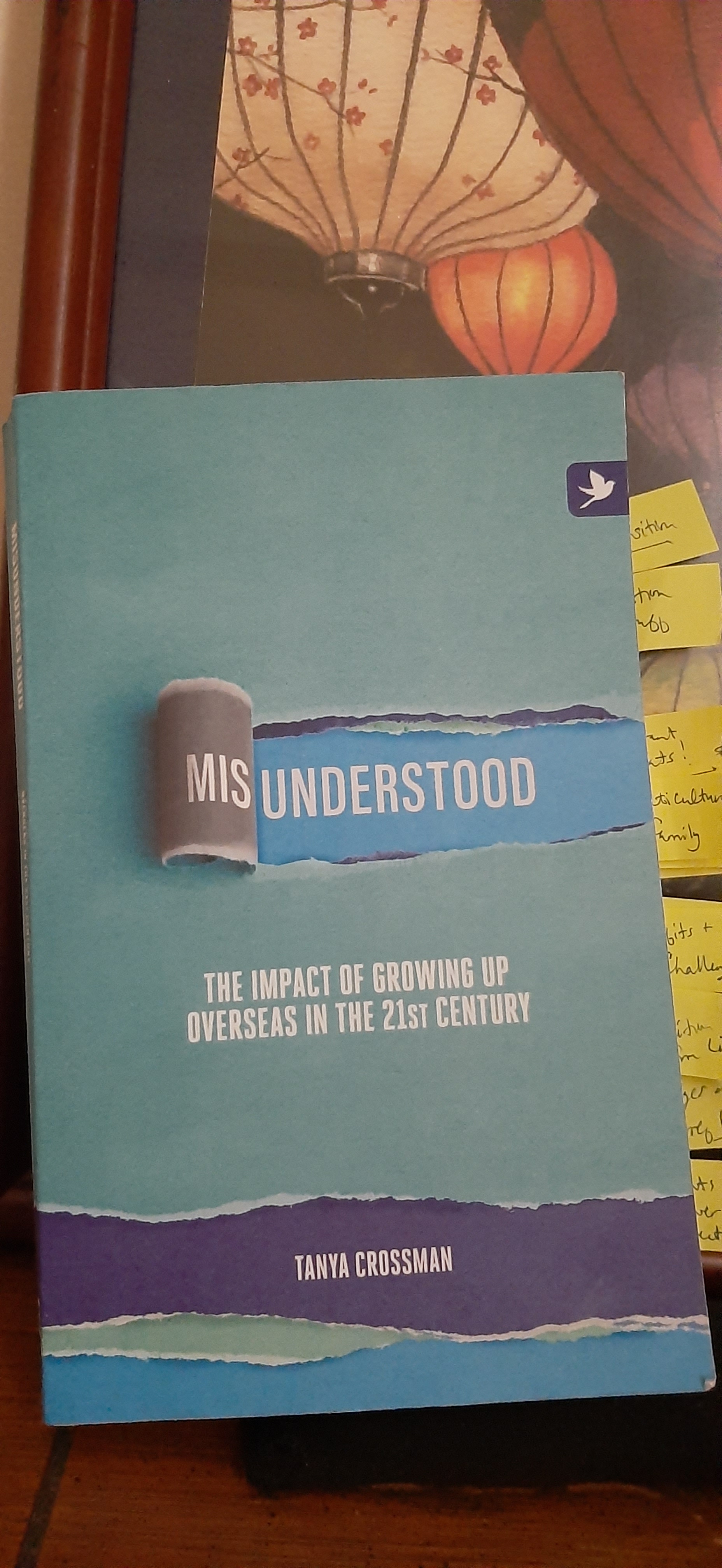
Book Review: MISUNDERSTOOD by Tanya Crossman

MISUNDERSTOOD: The impact of growing up overseas in the 21st century

by Tanya Crossman

Published: 2016 by Summertime Publishing

*Please note that I earn from qualifying purchases as an Amazon Associate. Please see the disclaimer at the bottom of the page.

Summary

Misunderstood is a resource book for ATCKs, those who support TCKs, and those who are raising them. Tanya noticed differences between older ATCKs and those born after the 1980s. Through research and interviews, Tanya shares the insights she gained. This book is divided into six chapters. It covers the basics of TCKs and CCKs and how the definition is shifting somewhat. Tanya writes about the various experiences of TCK life from military to missionary, but also non-traditional to international education families. I appreciated this section as it is not always covered in other books that I’ve read.

Tanya spends a good deal of time on transition, grief, and starting over again..and again..and again. It is essential for anyone working with TCKs to understand the difficulties it can cause. The book ends with a chapter on what she titles “The Inner Lives of TCKs” and “The Future for TCKs.” Both chapters offer insights into TCKs of the 21st century and how they view life.

Why You Should Read This Book

Tanya has become known as a researcher of third culture kids (TCKs). She is currently the Director of Research for TCK Training. So, it’s no wonder this book is filled with statistics and quotes from many TCKs she interviewed. It is also filled with wisdom from other top researchers such as Doug Ota and Ruth Van Reken.

You can tell from all of my sticky notes that it is a good book. If you are seriously considering moving overseas with your child, even if you are an ATCK, this book is a rich resource. I also would recommend it to organizations who work with TCKs.

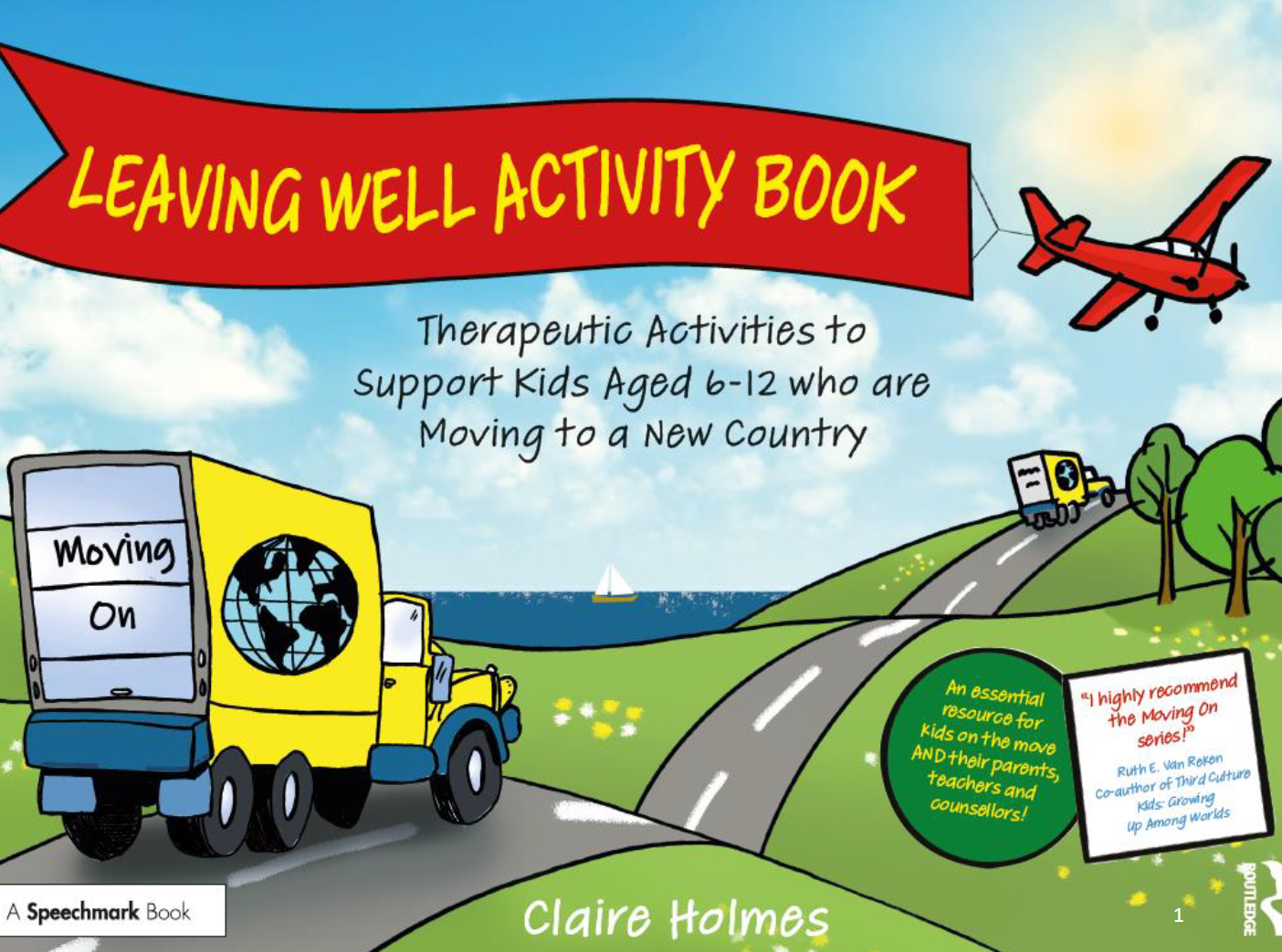
Book Review: MOVING ON SERIES by Claire Holmes

  1. LEAVING WELL ACTIVITY BOOK
  2. ARRIVING WELL ACTIVITY BOOK
  3. MOVING ON FACILITATOR’S GUIDE

by Claire Holmes

Published: 2023

*Please note that I earn from qualifying purchases as an Amazon Associate.

Summary:

Claire Holmes is Head of School Counselling at Tanglin Trust School, Singapore. She has worked with TCKs for 14 years. This small piece of information significantly impacted why I wanted to review this series. Plus, the fact that it is for the younger TCKs is something I feel has been lacking.

There are two workbooks with one facilitator’s guide. Both workbooks are filled with activities that help children process their emotions and thoughts about transition. You can buy the workbooks individually or in a bundle with the facilitator’s guide.

LEAVING WELL:

Claire uses activities that start when the parent(s) tell the child they are leaving. She has the children look at their feelings using an adapted chart of culture shock but does not use that vocabulary. Many people who have lived overseas for long have heard of RAFT. It is a great tool, but the concepts are challenging for children in the age group. Claire uses GUTSS but has the same concepts as RAFT, just in simpler terms.

ARRIVING WELL:

In this workbook, Claire begins by letting children chart their times of transition on a timeline. She has various activities to help children recognize stress in their bodies but also provides ways to cope that help relieve anxiety. Again, the simplified version of the Stages of Culture Shock graph is used to help children name the emotions they may be feeling at this time in the move. She ends the workbook with ten tips and appropriate activities to help transition into a new place.

FACILITATOR’S GUIDE:

This book is designed like a teacher’s manual. Every activity in both workbooks offers the rationale for the activity, how to set the scene for the activity, materials needed, directions for the activity, tips to make it easier, and extension activities that you can add if you would like. I have not tried the manual, but it seems easy to use with clear directions.

Overall, I think this is a perfect resource tool for the school to help younger children who are ready to move or have just moved to the school. I like that Claire used vocabulary that helps children at this age grasp the concepts of transitions while offering them space to process their emotions. I believe that giving children language to express their feelings empowers them to communicate clearly and better understand what they are experiencing during this significant life event. Claire does mention that the LEAVING WELL workbook should be started around eight weeks before departure. I agree, but I would also encourage you to start earlier with the goodbye pages so that if there are any lasts, you as a family can not only plan them but have time to make them happen.

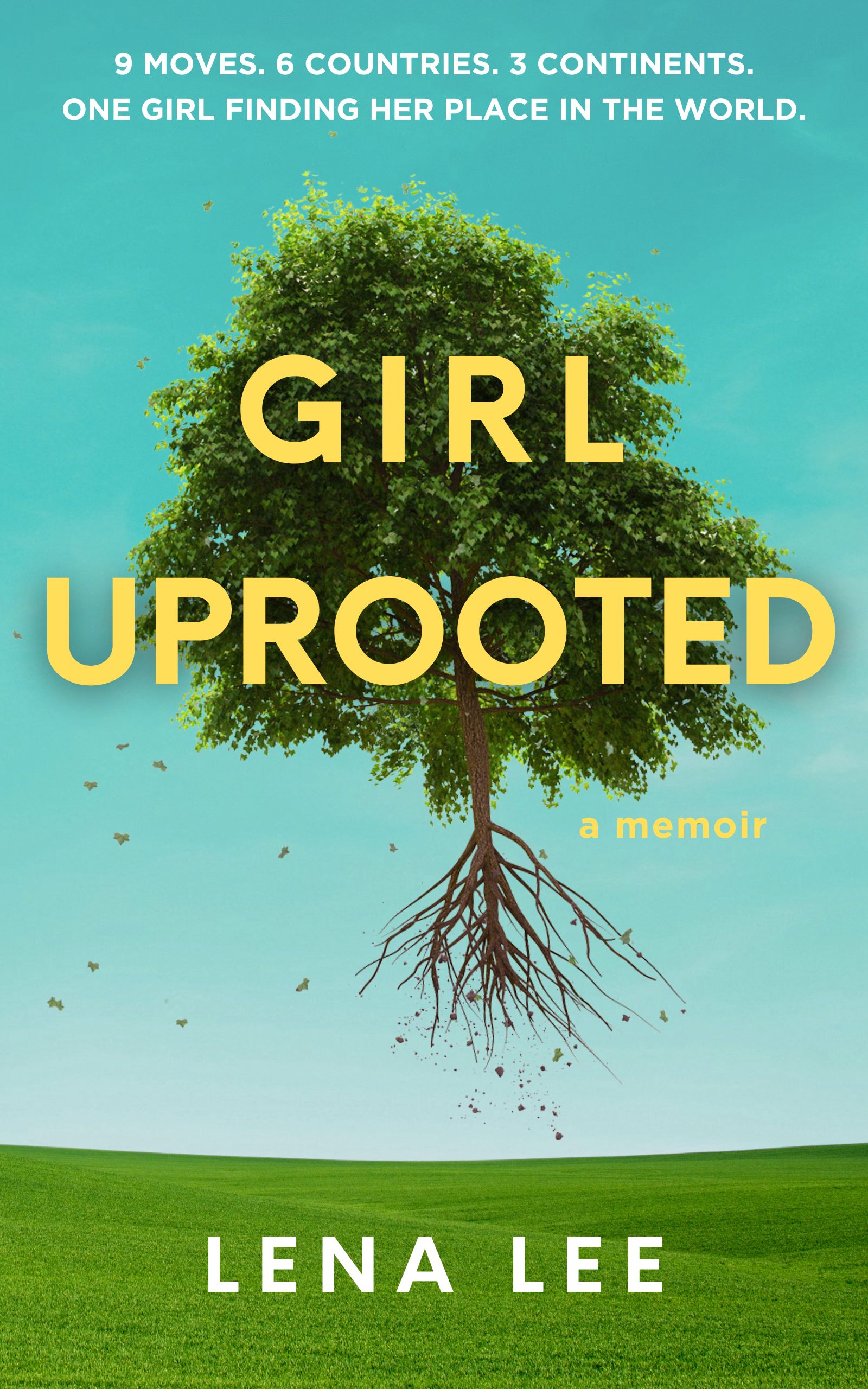
Book Review: GIRL UPROOTED by Lena Lee

Girl Uprooted: A Memoir

by Lena Lee

Genre: Memoir

Published: 2023

*Please note that as an Amazon Associate, I earn from qualifying purchases.

Lena tells her story of growing up as the daughter of a South Korean diplomat. She shares the hardships of balancing the traditions of Confucian values at home and western thoughts and culture in the various countries and international schools she attended. Lena is honest in what brought her joy as a child, what confused her and what she is still learning about herself today. Often she is confronted with the typical question that many TCKs deal with: “Where is home? Where do I belong?”. But, as more research is showing these questions are complicated, especially for TCKs not from a western culture.

The reader is invited into Lena’s life. She is vulnerable in what she shares, which makes her brave. She has a strong voice, which is something I love in books. Her story is unique because it is her story, but I believe that the issues she battled is not unique to many TCKs who come from families of cultures that are similar to hers. She brings a face, a life, to the research that is being done.

I highly recommend it to teachers at international schools and are not familiar with East Asian cultures. I honestly believe it will help teachers understand their student(s) better – to maybe even give them the right questions to ask as their students navigate life. Adolescence is not always easy, and we need to have better understanding so that we can help. I believe it is a must read for international educators as Lena shares what your students may not feel comfortable sharing with you unless you build that relationship and ask.

I do give warning that this book is for more mature readers (upper level high-school and above) because of the issues of mental health issues of anxiety and depression.

Book Review: RAISING UP A GENERATION OF HEALTHY THIRD CULTURE KIDS by Lauren Wells

RAISING UP A GENERATION OF HEALTHY THIRD CULTURE KIDS

by Lauren Wells

Published: 2020

Genre: Nonfiction, Resource

*Please note as an Amazon Associate I earn from qualifying purchases.

Review: 

Lauren Wells created a resource book for parents using her experience and knowledge of third-culture kids. This book takes what encompasses moving and living overseas for children and puts those ideas into a practical guide. Lauren deals with leaving well, unresolved grief, identity, restlessness, and trauma, to name a few of these ideas. 

My Thoughts: 

If you are moving to a country other than your own with kids, you should own this book. Lauren has some great ideas to consider as your children process the move. It is an excellent bridge to understanding the world that your children will experience. It helps you engage in meaningful conversations to help them navigate all the emotions and feelings that they may go through. For me personally, this book was not as helpful. My children were born in Asia and have never lived in their passport countries. I know that TCKs have many of the strengths and challenges others have, but many chapters deal with children leaving their passport country. So, I didn’t find all the chapters applicable to our situation. With that said, I am glad I bought the book because it is a good resource. It has caused me to ponder some of the issues and helped me to start conversations with my teenage TCKs.

Transition Roller Coaster

PC: “Roller Coaster Ride” by Angie via Canva.com

Change. Unknowns. Transition.

This seems to be the theme of 2020 for me. Our oldest graduated from high school, decided on a university, and will get on an airplane in less than five days. To be honest those three words bring out emotions, but with this pandemic can I demonstrate by writing “EMOTIONS!”? Seriously, I think sending off your first is suppose to be a roller coaster of emotions, and having a TCK and all that entangles makes those drops a little more steep, but throw in a pandemic and it’s like a sudden double loop with a fear that the safety harness is faulty. This is coming from someone who doesn’t like roller coasters. For those of you who do, well, come up with your own analogy. But, to break it down, this year has brought out these emotions:

Fear. Excitement. Anxiety. Stress. Joy. Regret. Doubt. Stress.

And here’s the thing I’ve noticed this week. Especially this week. I’m not the only one going through these emotions. Of course my son is going through some of this, but my husband and daughters are as well. And as the time of departure nears, the emotions heightened.

And get this – we all respond to these emotions DIFFERENTLY! Maybe you already knew this and I think I did, too. But, this week with everyone just a little more on edge I’ve really noticed it.

So, what to do?

I’m not sure I have a complete answer, but here are a few things I have tried to do to help.

  1. Be aware. Be aware of your own feelings and responses to those feelings. Be aware that others may be acting out of response to anxiety or deep sadness or even fear.
  2. Choose Grace. Grace is a Christian word that basically means gift. Offer the gift of understanding when a young child throws a tantrum at the table. Give grace to your spouse when you find them “hiding” in a book, TV series, or game. Giving grace sometimes means forgiving before it’s been asked for. Don’t forget to give yourself grace. It’s easy to be hard on yourself, but you need grace, too.
  3. Communicate. When you are aware of your own actions and responses you can communicate with your family how you are feeling. You can ask for forgiveness when you’ve spoken in anger because of stress. You can ask how they are doing with this upcoming change. You can talk with them about their own responses/actions. Remember though, that HOW you communicate is key – go back to #2 for guidance.

This is not something that comes naturally for me, so please don’t read this and think, “Wow, she’s got it all together.”

Uh, no, I fail multiple times a day with this. I sometimes I wish we could just rush through this hard part of transition – but I don’t want to miss it. So, I will hold on to that safety harness and force my eyes to stay open through all the dips, the dives and the loops that this roller coaster brings.

Have anything else to add to this list? Please share in the comments.

Book Review: LOOMING TRANSITIONS Amy Young

LOOMING TRANSITIONS: Starting and Finishing Well in Cross-Cultural Service

by Amy 28256660Young

Published: 2015

*Please note as an Amazon Associate, I earn from qualifying purchases.

Summary: LOOMING TRANSITIONS is a navigational book for those processing a cross-cultural move. It is not a “how-to” book. There are no lists of what you should do or pack; instead, it is a book that outlines ways to process emotions. Amy’s knowledge and insights on this topic come from her experience of moving overseas and repatriating back to the United States. There is a workbook that can be used for individual use, but Amy has also written another workbook for families to use with their children.

My Thoughts: I have read several books of Amy’s and enjoy her candid, transparent voice. It feels like you are sitting across from her, drinking coffee and talking about hard things. This book brought up some emotions from past moves that I thought I had processed but needed more work on. So, even if you have moved several times, it might be a resource for you to help process those moves. I glanced over the workbook and activity book but did not use them. So, I cannot honestly say how useful they were to me personally.

The Leaving Series Part 3: You Can Take it with You

Welcome to Part 3 of The Leaving Series. If you are just reading for the first time, you may want to go back and catch Part 1 and Part 2.

Today’s post if from another friend, who I have had the opportunity to work with on team. Christa, may look short when standing next to her husband, but she is full of life and energy. I think you’ll sense that today as you read what she would have liked to have taken with her when she left…
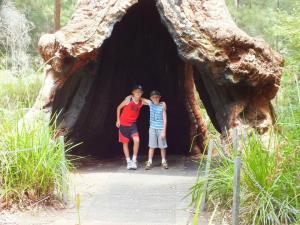
Valley Of the Giants Western Australia

If you read the title and got upset then give me just one second because I am not talking about passing away, I am talking about moving. Of course it all depends on what the “it” is that you want to take with you. Our family lived in Shenyang, China for 12 years: both of our boys were born there and my husband and I were married there.

Before we left China there was quite a bit of debate about what everyone would be taking with us. When we decided to move, my children wanted to bring their best friends and every toy they had ever owned. My husband wanted to bring every book on the six bookcases in our home. I was much more unreasonable; I wanted to pack the Shenyang Imperial Palace, my best friends, my entire apartment, Starbucks, our school, every book in our home and every toy the boys had ever owned. We could negotiate on some of these items, but I did eventually have to admit that the Imperial Palace wouldn’t fit in my suitcase and I had to accept that skyping friends would be enough.

Our negotiation and moving process took an entire year. I started whittling down items as we used them. As I used items, I thought about whether I would give them to someone, sell them at the garage sale we would host, or pack them to take home. I would also figure out when would be the last time I would use that item then pack it in a box. Yes, in case you are wondering, I am a type A personality. Most stuff got left behind with beloved friends. When I visit now, I get to see my things being used by other people and I have to say it is one of the nicest feelings in the world.

24

We worked out that we couldn’t take things with us but we could take experiences with us. We could take parts of the culture and language with us. We also got to take a lot of love and care with us because people did so much for our family to make sure we each knew we were cared for as we said goodbye.

We did quite a few things to make moving easier for the boys. We knew they would miss China, so we made sure to take a long trip around the country to see important places before we left. We talked with the boys and asked them what their favorite places were in Shenyang. We visited those places one last time to say goodbye. We made sure to talk through it with them when we were going to a certain place for the last time. We also made sure to take photos of them in those places. We let them help with packing their own things, so that their things didn’t just disappear one day. We also encouraged them to think through which items they would give to friends and which they could give to children in need. This made leaving things behind more acceptable to them because it was an act of generosity.

We looked to the future in Australia by talking about living close to a part of our family, going to the beach and having a house with a yard. We talked to them about what they were looking forward to and then made sure to mention those positive things with enthusiasm when we could.

The boys wanted a dog in Australia and my husband and I both thought that was reasonable request and something that could help them get through the transition. They looked forward to having Bolt, (our dog), for months and he has helped through emotionally difficult times. He has helped me, too when I think about it.
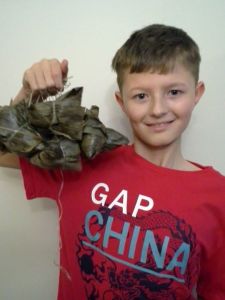
20.5The experiences, the culture and the language have stayed with us. We have made great Chinese friends here in Australia. I now write for a Chinese magazine here and we speak at a Chinese church in Perth. The boys talk about China often and have kept some of the language as well. The office Darren and I work at is a 5-minute walk from Chinatown in Perth and it is a wonderful way for us to stay connected to a place we all consider home or at least one of our homes. We celebrate the Chinese holidays and enjoy eating Chinese food as often as we can go to a restaurant or cook it. We also keep China in our home by having photos of friends from China, hanging scrolls and keeping things we brought with us from China displayed in the house.

Making sure to keep China a part of our lives, talking about it and participating in Chinese cultural events here in Perth has helped us to feel complete. There is no hole in our heart where China was because it has remained an integral part of what makes up our family. It is our children’s birthplace, and the place where Darren and I were married. Saying goodbye and moving to a new place cannot diminish how important China was and is to us.

Head Shot (1)Christa and her husband lived in China for 12 years. She met her husband, Darren, in China and they married there. Both of their two boys were born in China andlived there until 4 years ago. They moved to Australia, her husband’s home country, in 2010. She has been working with TCKs and other expats since moving to Australia. She is also the China promotions manager for Stacey College and Director of Student Services for Sheridan College. As part of her work she assists students in coming to Australia to study. You can visit her blog at staceycollege.com.


Thanks Christa for sharing today! So, readers, what do you want to take with you as you are preparing to leave? For those of you who have transitioned, what are other things that you were surprised about that may have followed you to the next destination? Share in the comments below!

Book Review: SAFE PASSAGE by Douglas W. Ota

SAFE PASSAGE

by Douglas W. Ota

Published: 2014

SAFE PASSAGE LowRES COVER
 
 
Regardless how long someone has been an expat, mobility issues are a major part of their life. Many expats can quickly estimate how many boxes will be needed to pack their belongings. They know the routine of good-byes and hellos. From personal experience, they know the grief that trails after them from place to place.  They recognize this grief in their children, and may long for a ‘quick-fix’ to help them cope with this grief.
 
A new book by Douglas W Ota, Safe Passages:  How Mobility Affects People and What International Schools Should Do About It, might just be the essential resource needed for expats.
 
 
If you’d like to read more about this book, check out my review at ExpatArrivals.

The Transition for the Child with Special Needs

I just wrote about helping your children transition from the summer holidays to going back to school. You can read that by clicking on “The Transition“.

How about kids with special needs? They may need a little more time and creative ways to help them with this transition. Below are just some additional ideas to help them adjust to the transition.

  • Talk about it. Talk about what school looks like. Talk about their friends and what they will do while they are there. Even doing some role-play activities to help them get into the mindset will help.
  • Count down – Make a simple chart with the number of days left until school starts up. Let your child mark off each day. HINT: Don’t start too far away from the first day as it might be too overwhelming. You know your child, so adjust accordingly.
  • Visit the school: If the school allows it, make a trip to the school to go and see the classroom, to reconnect BRIEFLY with the teacher. (Hint: Don’t stay more than 5-10 minutes. Teachers love to see you, but they do need to get their work done.)
  • GRACE: Give your child grace and give yourself grace those first few weeks that school starts back up. Remember that sometimes change and transitions are not always what we hope or dream they will be – but they eventually do adjust.

I know I need to get started with this transition with Jie Jie. Otherwise she just may think that I threw her into the Arctic Plunge Swim.

If you have a child with special needs, how do you help them get ready for going back to school? Please share in the comments below.

The Transition

The word transition means different things to different people. For instance:

  • Parents bring home their newborn from the hospital
  • Freshman in college (or high school)
  • Soldier returning home from deployment
  • Family moving to a new country
  • Summer to Fall
  • Summer holiday to “Back to School”

Though, expats and TCKs relate the word with “good-byes”, new countries, and new friends, I’m going to talk about that yearly transition from summer holidays to returning back to school. It is an adjustment – for everyone involved.

For the parents: It’s the return of the SCHEDULE – either homeschool or taking them back to local or international school. Either way, we don’t hear the constant two words, “I’m Bored”. Okay, maybe if you’re like a super Pinterest mom and don’t deal with this issue skip this section, I’m not talking to you. If you are like me…well, I’m still trying to “enjoy the summer,” but I’m ready for everyone to get on a regular schedule.

The kids: You remember. Come on, I know you do. Sleeping in just a little bit later (or a lot later) than school days. Swimming, snacking, playing with friends, and swimming some more. That first morning of school was like being thrown in an Arctic Plunge swim. It shocked your system and was just not a pretty site. Times haven’t changed – it’s tough for our kids, too. Okay, my kids can’t wait to see their friends All Day Long, but they are NOT looking forward to early wake-ups and the dreaded homework.

So, what can we do to help them?

  • Start waking them up earlier. It doesn’t have to be the exact time, but definitely maybe trying for a half hour difference. This doesn’t have to be done weeks in advanced either – just a few days before to help their bodies start to adjust.
  • Earlier Bedtimes – This goes hand-in-hand with the above. Same rules, a week before or a few days put kids to bed at their normal “school night” bedtime.
  • Review Math Skills – This tip is more for elementary school aged children, but buy flashcards and a few weeks before school starts have your kids review them. Their brain has had a break, hopefully, so now is a good time to help them “think” school.
  • Reading – If you haven’t had them reading at all this summer, then start. This year we actually are paying our kids to read. They are getting a set amount per book they read and record on their chart. It was an incentive to READ – and I’m afraid that it may just have hurt our pocketbooks, but totally worth it!
  • Collect Meal Ideas/Make a Meal Chart – This one is for the cook in the home. I’ve found that when I take the time to make out a two-week meal plan that I actually feed my kids healthier and spend less money at the grocery store. It’s fairly easy to do this at the beginning of the year, but think about doing 4-6 of these charts and rotate them throughout the year.

What do you do with your children? Do you help prepare them? Do you just “throw them into the Arctic Plunge?” Please share in the comments below. Me? I’ll be doing some of it…I’d like to get to the meal plan, but that all depends on how I do with my lesson plans. Remember…I’m not the super Pinterest mom, though I so wish I was.