Letting Your TCK Go: Graduation

It is four weeks until graduation and eight weeks until the flight. It’s not the flight that leads to a busy summer of visiting family and friends (though there will be some of that). Not the flight of our family leaving our host country to start a new adventure. No, it’s the flight where our TCK leaves the nest.

This is the second go around, so part of me believes that I should know what to expect. To be better prepared for the hard good-byes.

Nope. I’ve been busy going down the aisles of denial. You know, those store aisles where you find yourself meandering because they just have a little of everything that is interesting, but you never commit to putting it in your shopping cart?

That is how I’m feeling. We’ve looked at future options. We’ve planned a last trip. I look at all the things that need to be packed or sold because we will return to having ONE home. But I’ve only taken note. I’ve not actually packed anything. I’ve not put up any advertisements for things for sale. And I’ve not written anything because it feels raw.

Because as soon as I do any one of those things – I will have stepped out of that aisle and into reality.

It’s kind of funny because I give talks and help people transition. But I have avoided my own transition. It’s always easier to help others than to deal with our own grief, right?

But this week, starting with this post, I am committing to enter into this reality that soon she will leave. Soon she will pack up her room. Soon we will go to the airport. Soon I will drop her off wherever she will be going and I will leave. Soon I will return without her.

Just writing that my eyes become blurry. But I need you, dear and faithful readers, to keep me accountable. To be present in the moments we have left where we are. To be in the midst of joy and celebration, alongside goodbye and grief.

She’s been RAFTinG.
And I’ve helped her with that.
But what am I going to do?

Work on my DOCK. You can read more about this tool for Stayers over at my business site, Global Crossroads Consulting.

  • But it’s leaning in and being self-aware of your own emotions.
  • It’s listening and acknowledging all the emotions and thoughts your TCK is experiencing.
  • It’s remembering.
  • It’s finding good and healthy ways to stay connected.
  • And it is about finding space to process the grief.

Anyone else finding their family in this kind of a season? How are you coping?

Book Review: LOST COLONY by Tonio Andrade

Subscribe to continue reading

Subscribe to get access to the rest of this post and other subscriber-only content.

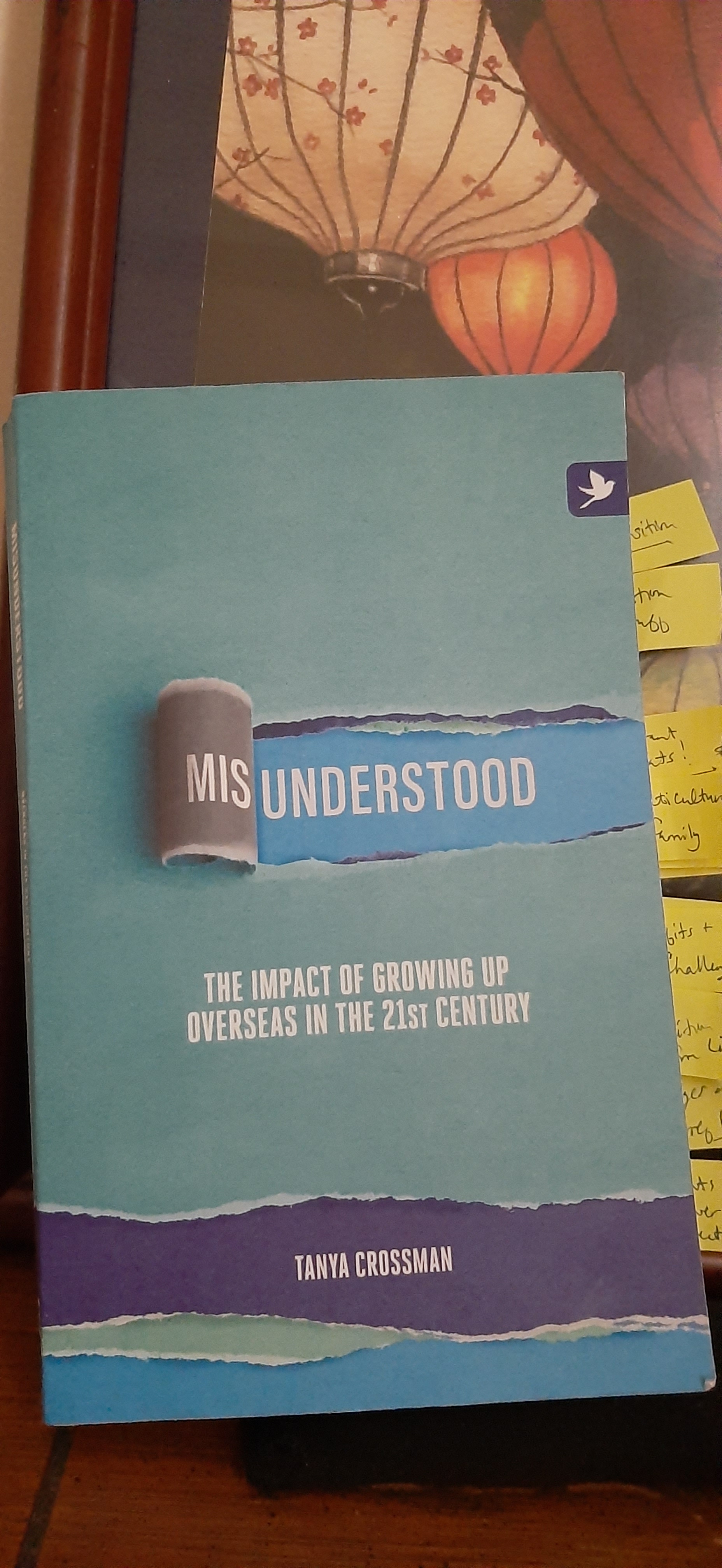
Book Review: MISUNDERSTOOD by Tanya Crossman

MISUNDERSTOOD: The impact of growing up overseas in the 21st century

by Tanya Crossman

Published: 2016 by Summertime Publishing

*Please note that I earn from qualifying purchases as an Amazon Associate. Please see the disclaimer at the bottom of the page.

Summary

Misunderstood is a resource book for ATCKs, those who support TCKs, and those who are raising them. Tanya noticed differences between older ATCKs and those born after the 1980s. Through research and interviews, Tanya shares the insights she gained. This book is divided into six chapters. It covers the basics of TCKs and CCKs and how the definition is shifting somewhat. Tanya writes about the various experiences of TCK life from military to missionary, but also non-traditional to international education families. I appreciated this section as it is not always covered in other books that I’ve read.

Tanya spends a good deal of time on transition, grief, and starting over again..and again..and again. It is essential for anyone working with TCKs to understand the difficulties it can cause. The book ends with a chapter on what she titles “The Inner Lives of TCKs” and “The Future for TCKs.” Both chapters offer insights into TCKs of the 21st century and how they view life.

Why You Should Read This Book

Tanya has become known as a researcher of third culture kids (TCKs). She is currently the Director of Research for TCK Training. So, it’s no wonder this book is filled with statistics and quotes from many TCKs she interviewed. It is also filled with wisdom from other top researchers such as Doug Ota and Ruth Van Reken.

You can tell from all of my sticky notes that it is a good book. If you are seriously considering moving overseas with your child, even if you are an ATCK, this book is a rich resource. I also would recommend it to organizations who work with TCKs.

Book Review: SERVING AT THE ENDS OF THE EARTH by Steve and Gill Bryant

SERVING AT THE ENDS OF THE EARTH: Family life and TCKs, 3rd edition

by Steve and Gill Bryant

Published: 2017

*Please note that I earn from qualifying purchases as an Amazon Associate. Please see the disclaimer at the bottom of the page.

Serving at the Ends of the Earth is divided into seven sections. Steve and Gill begin by laying a foundation for what a missionary kid (MK) or third culture kid (TCK) is. They devote a section on transition describing what it is like, ideas to help with re-entry, and even a chapter for those times when a family may suddenly need to leave the host country without warning. Another section deals with parenting TCKs and has a chapter on cross-cultural marriages, which is nice as there are not a lot of resources on this topic. These sections are helpful and bring up some points that would be good for spouses/partners to discuss during all stages of transition.

I appreciated the last three sections of the book. First, one section deals with the heavy topic of dangerous situations and keeping children safe. This section was practical and is something that more and more organizations are becoming more educated in. I was glad to see it in this book as parents also need to be educated and know practical ways to keep their children safe.

The next section was about non-American TCKs. I appreciated this section because much of the literature comes from this background, and it is so good to read about what TCKs from other parts of the world experience. Their experiences are different and the challenges of repatriating or transitioning to university can be tricky. If you work in international schools, mission organizations, or HR departments of companies that have missionaries/global workers from all over the world, then I highly recommend this book just for this section alone.

The book’s last section is near and dear to my heart – educational issues. They discuss the different options, as well as their advantages and disadvantages. Another chapter deals with boarding schools. These two chapters are logical and can really help parents figure out what is best for each of their children. The authors point out that children are different and could need different educational options to help them grow and mature. The last chapter is on special education. Most of this chapter described various impairments, but the last few pages had guidelines for parents of children with special needs and for the sending agency. While I’m glad they included this chapter, I had a lot of questions after reading it, especially regarding their recommendations about MK schools being willing and able to take these students. While one would think it might be true, in reality there are few. But that is for another post at another time.

Though the audience of this book is missionary families and those who work with them, I see benefits to any global mobile family or organization/company that works with them to better understand what families need to consider when making a big move.

Workshop Review: Unstacking Your Grief Tower 101

Unstacking Your Grief Tower 101

Company: Unstacking Company

Instructor: Lauren Wells

*Please note that I earn from qualifying purchases as an Amazon Associate. Please see disclaimer at the bottom of the page.

Grief is common to all humans. It is something we all experience at some point in our life. It does not matter if we are rich or poor, healthy or not, or what country or culture we come from. At some point in our life, we all will experience grief.

We often equate grief with death. And although death is a big season of grief, it is one of many reasons we experience grief. Grief comes because of loss. Of course, death is a significant loss – and so the grieving is deeper and harder. But grief also visits when a friend moves away, or we move, or when we lose a job, or [you fill in the blank].

This workshop is a course in grief processing. Specifically, Lauren instructs the viewer about her model of grief – The Grief Tower. I have reviewed two books that she wrote about the Grief Tower Model. (And she has a new book coming out in March that you can pre-order here). I have also reviewed the other video for someone who is in current grief. If you are currently going through something hard, I highly suggest you read my review and check out that 35-minute video to help you process that “block” on your grief tower.

If you do not know what a “block” is or what the Grief Tower Model is, AND you are not currently processing deep grief, then keep reading.

Unstacking Your Grief Tower 101 is a 60-minute workshop teaching the Grief Tower Model. Lauren takes you through the theory behind this. But she also guides you to process a less heavy block on your own grief tower. I found the step-by-step process easy to follow and a good way to practice using the model. This workshop will help you process for yourself and help someone else process their own block(s) as well. I appreciated this workshop because Lauren talked through visceral signs to look for in yourself or the person you are working with to know when to pause and take a break.

As always, Unstacking Company warns that this workshop should never take the place of therapy. Seek help from a counselor.*

*I am a short-term counselor if you do not know where to find one. Please reach out by email or go to my company’s website, Global Crossroads Consulting. I do offer a 30-minute free consultation.

Day in the Life: A “No Regrets” Story

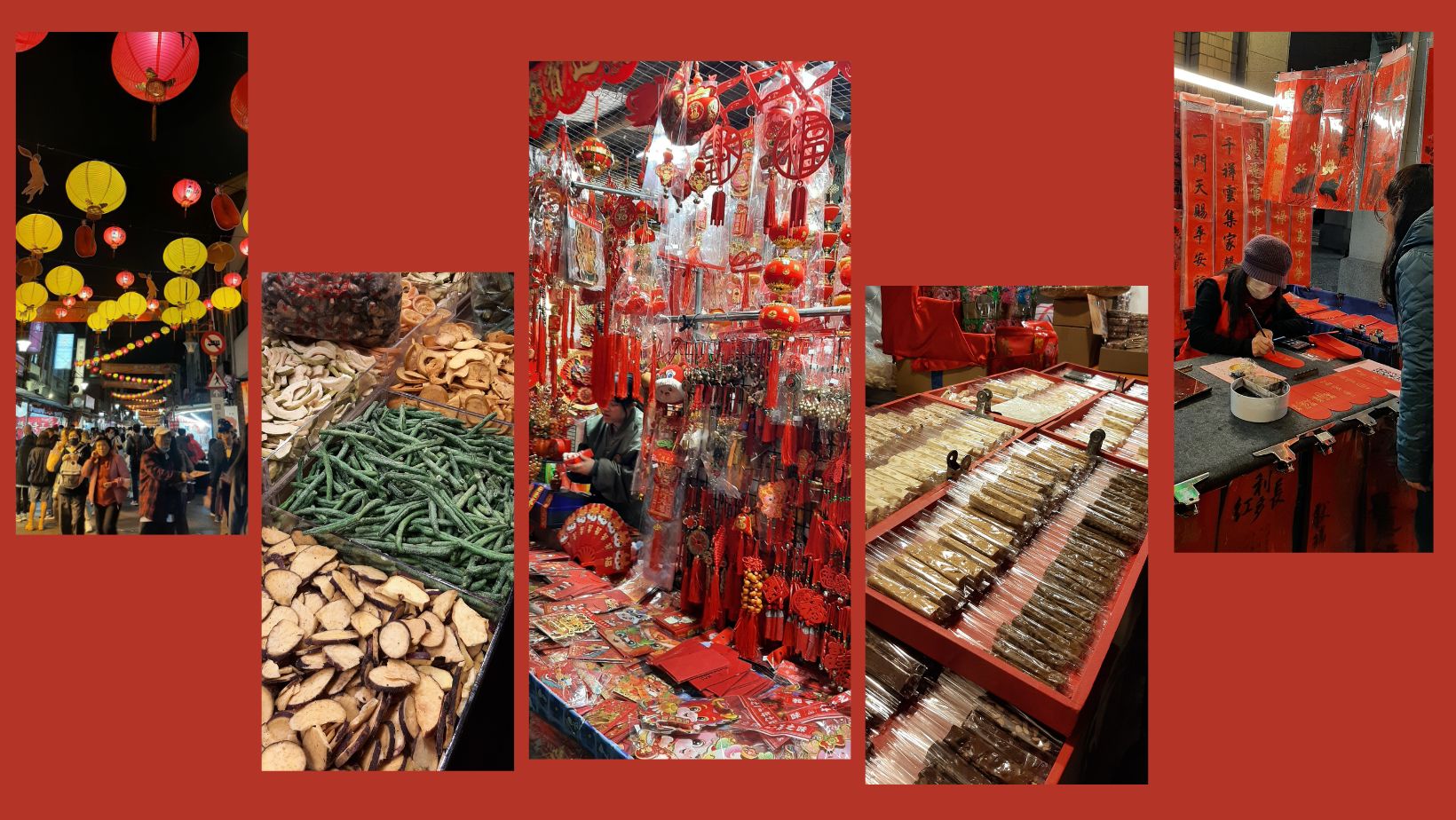
My youngest TCK will graduate at the end of this semester, and we are starting to build her RAF(G)T while I build my DOCK. Since Chinese New Year (also known as Lunar New Year) is quickly approaching, I thought going to the oldest market in Taipei, Di Hua Jie (迪化街), was important.

The Decision:

We live in what is called New Taipei City. Traveling into the city can take up to 1.5 hours by bus. Driving might take less time, but finding parking is not a game I like to play, especially on a weekend. All week the weather was dark, raining and cold. Everything in me rejected the idea of going into the city to do this with my daughter. Even she was not thrilled, but we looked at a weather app, which forecasted an “8% chance of rain.” It was going to be this night or not at all. We grabbed our coats and bus cards and briskly walked to the bus stop.

The Journey:

The bus was running the air conditioner. I kid you not. For one hour, I sat rocking, rubbing my arms trying to get warm, thinking, “Why did I think this would be a good idea? Why did I agree to this?”

We exited the bus at the Main Station, and I saw this statue that said “Father’s Love.” I smiled. It was not raining, and it was much warmer than the bus. Plus, just a few hundred meters away we spotted one of our favorite meals, hotpot. Perfect for cooler winter days.

The Time Together:

If you have ever been to an open market, you will understand the crowds, the hustle and bustle of everyone. If you have not, then imagine this: Dads holding the hands of toddlers. Moms pushing strollers. Grandparents showing their grandchildren bright red ornaments. Children stuffing plastic bags with bright-colored candy. Slowly moving along to the music of vendors calling out to buy their goods. Stopping every few steps to accept the offer of said good. Samples of spicy peanuts, dried pork, dried squic, dried veggies and fruit, sweet and sour candy, and nougat candy – it’s a paradise for any Foodie.

But it is also the opposite for those who are quick to get overstimulated. This is one reason why we only went one time as a family. It would have been when I was the mom pushing the double stroller while my husband held our toddler’s hand and parted a path through the crowd. I smiled and nodded to many parents with littles remembering those long ago days. Was it really that long ago?

The Conclusion:

As we slowly shuffled down the street, sampling a little of this and a lot of that, I noticed my daughter shifting from the follower to the leader. Isn’t that how life is supposed to be in a way. We lead our children in the ways we hope they will go. We teach, we guide, and then one day, they go off on their own, sometimes leading us.

Part of my DOCK was completed that evening. I started the evening wondering if I would regret the decision we made to venture out on a cold evening. The only regret I have is not buying another strawberry redbean mochi.

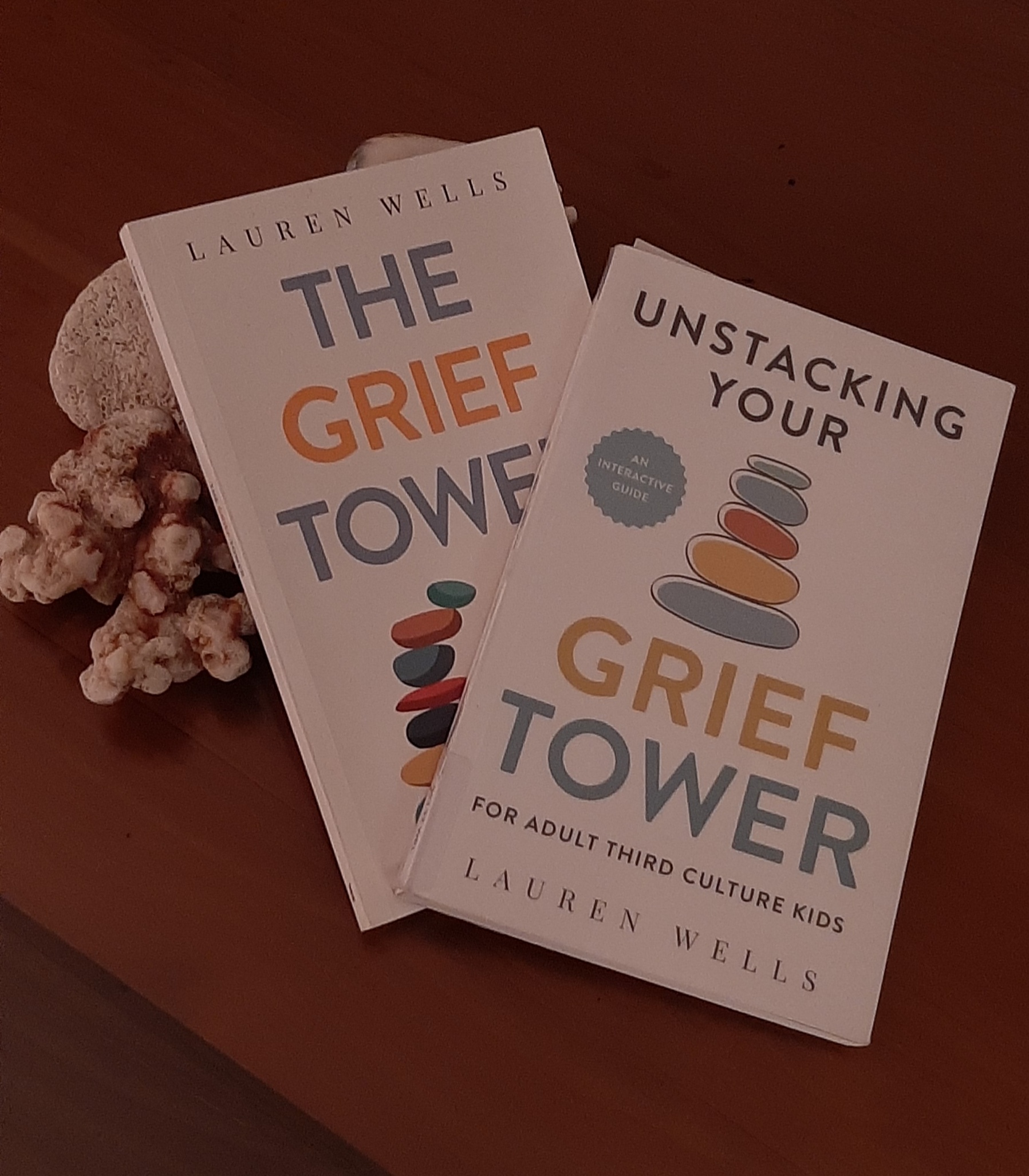
Book Reviews: THE GRIEF TOWER & UNSTACKING YOUR GRIEF TOWER by Lauren Wells

THE GRIEF TOWER: A practical guide to processing grief with third culture kids

Published: 2021

UNSTACKING YOUR GRIEF TOWER for adult third culture kids

Published: 2021

Both books were written by Lauren Wells.

*Please note that I earn from qualifying purchases as an Amazon Associate. Please see disclaimer at the bottom of the page.

Summary:

Lauren Wells is the CEO of TCK Training and the Unstacking Company. The TCK life is an ampersand where life is both exciting and hard. As a TCK and working with a number of TCKs, she found that processing grief and loss was hard work. She also noticed a gap in the care for TCKs and started to fill that gap with her book, Raising up a Generation of Healthy Third Culture Kids. Soon after, she released her books based on the Grief Tower Model that she developed. This model is to help process grief and loss.

THE GRIEF TOWER

This book is only 84 pages long. The chapters are short and easy to read. It is the theory behind the Grief Tower Model. Lauren offers clear understanding with practical suggestions to help TCKs process their own grief and loss. I appreciate this book as it breaks up the ideas for younger and older TCKs and how to relate to each group. It is a good book if you are curious about a grief model that looks at the life of TCKs. But if you plan to use the model with others, I highly recommend taking one of TCK Training’s workshops on debriefs or transitions.

UNSTACKING YOUR GRIEF TOWER

This is a practical guide for adult third-culture kids (ATCK), not children. It complements the book THE GRIEF TOWER, but you would not necessarily need to read it first. Lauren spends time in the introduction explaining the whats and whys behind this model. Each chapter guides you in processing your grief tower by asking questions or providing activities to work through. It can be done individually, or it could be done in a group where individuals share and move along together. This would need to be a “safe” space with guided rules of conduct, but processing grief with others can be healing. The Unstacking Company also offers a guided video workshop called Unstacking Your Grief Tower 101 led by Lauren. They also offer a workshop Processing Current Grief. Both workshops can be found here.

Both books warn that they are for educational purposes and not to be a substitute for “professional medical advice, diagnosis, or treatment.”

Workshop Review: Processing Current Grief with Unstacking Company

Processing Current Grief

Company: Unstacking Company

Instructor: Lauren Wells

Grief. It is not something anyone likes to talk about, but it is one of the most important emotions that needs to be discussed. Many cultures do not know how to grieve and therefore people are left with coping strategies that may help them survive the grief but become an unhealthy coping mechanism.

That is why I was pleased when I heard that the Unstacking Company was producing some self-directed videos to help people walk through their grief. This 35-minute video is packed with some good information.

Lauren first explains a little about the Grief Tower Model and how this video looks at just one of the major blocks on the tower. This block could be some significant loss, such as a move, a death, a diagnosis, or anything that seems really hard. She then goes into coping strategies that people use and how they are helpful, but also highlights when those strategies become unhealthy. This is helpful for self-evaluation of your own coping mechanisms that you might be using.

I felt that the analogy of being underwater was helpful in understanding where a person is and how they are feeling. Lauren then offers suggestions to process those feelings depending on how deep you feel you are in the water.

Unstacking Company is very clear that this video is NOT intended for those in the midst of severe grief and trauma. Nor is it for anyone with thoughts of suicide or thoughts of hurting someone else. Lauren is very clear that it is always best to get help from a professional if the grief is too deep.

I do recommend this video to anyone who wants to learn how to grieve in a healthy way because that is one of the commonalities of humanity. We all suffer in some way.

I also recommend it to someone who just experienced a loss and needs information about why they are feeling the way they do. It is a good introduction to grief and will help you decide if you need further help with a professional.

*Please note as an Amazon Associate I earn from qualifying purchases.

Building the “F” in RAFT

For many expat families, this is the time of year when decisions are made about leaving the host country for a new posting. Or, in some cases, repatriating to their passport country. In my case, my youngest is in her last year of high school. There are nights when our eyes are glazed over from looking at university applications together, but I am reminded that she also needs to build her RAFT.

What is RAFT? 

RAFT is an acronym created by the late Dave Pollock to help teenagers (and adults) in their transitions. It stands for Reconciliation, Affirmation, Farewell, and Think Destination.  

It does not guarantee that everything will be smooth sailing, but it gives thought to various aspects of moving and allows the person to process. About this time of year, I usually talk with a group of students in their final year of high school, focusing on building the “F” in RAFT, or Farewell. I challenge them to begin their “[insert host country name]’s Bucket List” now.

So, I am challenging you as a parent who is getting a family ready to move, or if your child is about to launch into adulthood, to start your “Bucket List”. 

What Should Go on the “Bucket List”?

If you want to know, please read the Multicultural Kids Blog to read the rest. I was a guest writer for them this week.

Book Review: BELONGING BEYOND BORDERS by Megan C. Norton

BELONGING BEYOND BORDERS: How Adult Third Culture Kids Can Cultivate a Sense of Belonging

by Megan C. Norton

*Please note as an Amazon Associate I earn from qualifying purchases.

This is a good resource/workbook for any young adult about to go into adulthood, but especially for TCKs. Megan is the daughter of a US diplomat, so she understands the ins and outs of being a TCK. She has taken time to write about what she has learned from experience, but also through research to help adult TCKs thrive in adulthood.

As human beings we all have the desire to belong; to know and be known. Megan explains how finding community and growing roots in that community is the key to belonging. She gives practical examples of how to do this. She acknowledges that before one can really be known by others, they must really know their own identity. She allows for the reader to look past their identity of being a “third culture kid” to explore explore their values and to realize their own core identity. Through this I feel she helps to normalize the confusion of wanting community, but feeling lost in how to get it. Throughout the book, Megan uses the analogy of a garden. This analogy is more then just “growing deeper roots”. She uses the science behind some gardening techniques used by avid gardeners to explain her points. And she does it in a way that the reader does not need to be a gardener to understand. I feel this quote from the end of the book reveals the heart of the book, “Gardens are places where you can bury your troubles, griefs, and pain and grow beautiful, new life. Gardens become (re)generative spaces that offer healing and harmony” (p. 291).