All the Colours of The World: An Activity for Debriefing TCKS

Today I have a guest writer. I sort of met Christa in college *ahem* years ago, then re-met while living and working at the same school. She is from the US, but married an Auzzie, and is living there now. I asked her to share a tool that she uses when working with TCKs as they transition from one place to another. I know you will LOVE this idea. It’s simple, brings out conversation, and turns out beautiful.

Four years ago when our family was moving from China to Australia we went to a departure seminar led for all of the team members who were moving. We were very fortunate to have a culture in our team of giving those who were leaving a weekend away with caring facilitators to think through the leaving process and to plan our goodbyes.

We were also very fortunate that departure activities were thoughtfully chosen and prepared for our two boys. All weekend long they took part in facilitated activities that led them through a process of grieving and thinking through their departure.

Well I can say I am very thankful for the time our children had at that seminar and the lessons they took part in. There was one lesson in particular that was so special I have used it each time I am asked to debrief or talk with a TCK now. When I lead children through this activity I use scrapbook paper and photos but it was originally done with my children using fabric to make a pillow. The activity is so perfect because it is easily adaptable to using whatever materials you are comfortable with.

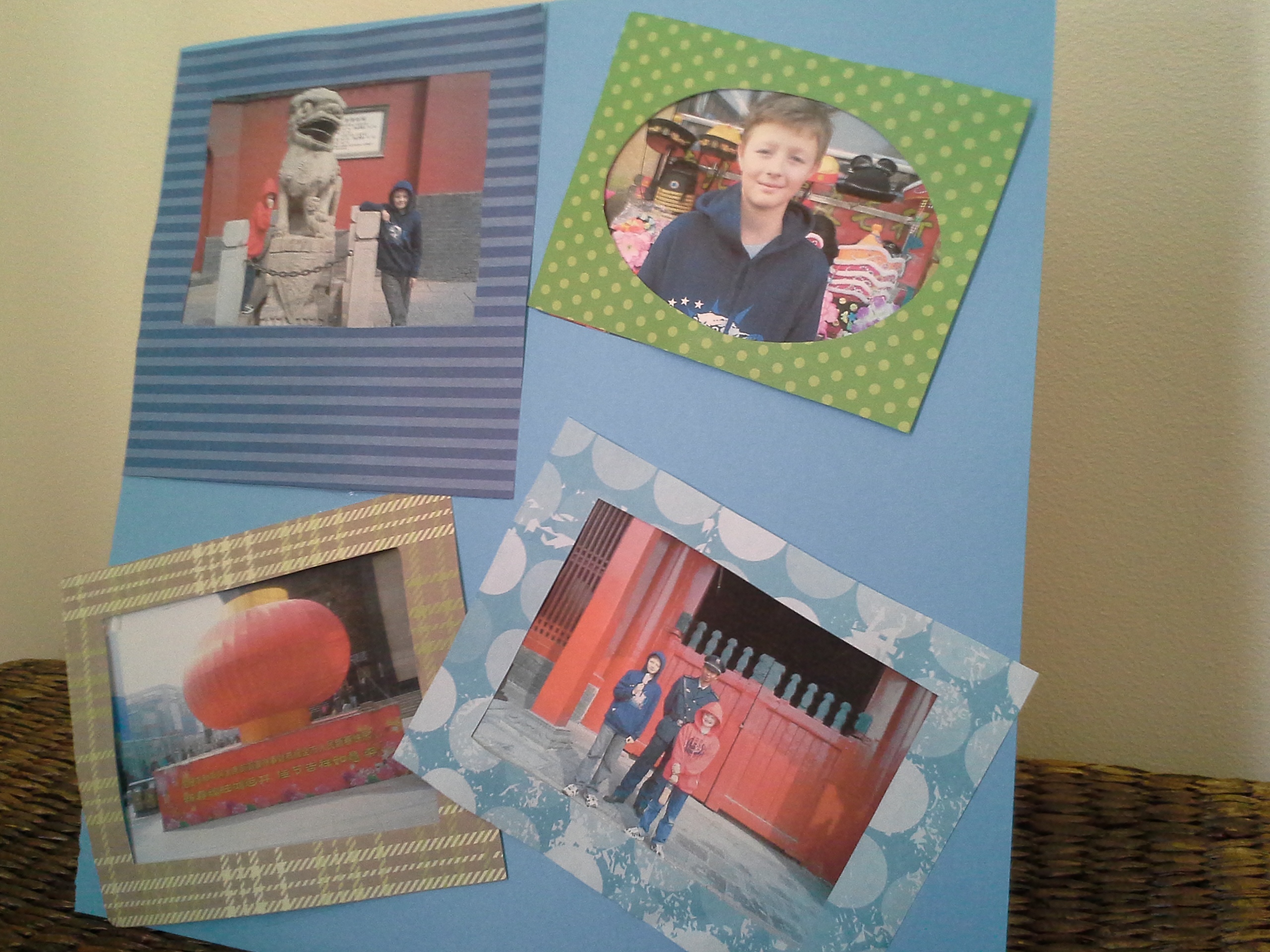
First, I ask parents to work with children to choose or print off four photos of their time in the host country they have recently moved from. I bring with me a large selection of scrapbook materials and paper. I asked children to choose a background colour and then explain for the next step we will choose two pieces of paper we really like and two pieces we don’t. While we are doing this I ask children to recall two things they really miss and they love about their host county and two things or memories they don’t like about their host country. We each share these memories with each other and it is often surprising even to the siblings what each child shares. Once we are finished sharing our memories we cut out frames for the four photos using the two pieces of paper we liked and two pieces we didn’t. We place our photos in the frames and onto the background.

After that is finished they use the other materials I have provided to decorate the page. I then ask the children to step back and look at the page. Do they like it? What do all the photos look like? Are there individual things they like and don’t like about the page they created? During this time I intentionally compliment different aspects of the page and I also draw out more discussion and details about their time in the host country. We finish up by discussing that even though we might not like some individual things about the pages they are beautiful as a whole and in that way they are just like our time in our host country. God has used the not so beautiful times, (referring to things they share that they didn’t like), and the beautiful times to create something gorgeous and unique in our lives.

The pictures shown here are of this activity which I recently did with our boys after returning from a visit to China. There were so many emotions during and after the visit I felt it would be good to work through our time by doing this activity. 20140613_111438There are also pictures of the original pillow they created at the departure seminar four year ago. The leader did the actual sewing for all the children. What a dedicated leader! Our children still take these on every flight.
Front side of the pillow

Front side of the pillow

Backside of the pillow.

Backside of the pillow.

I hope this activity can be as useful to you as it has been to me when helping kids talk through their feelings. It will always be a continuing process and no one activity or weekend will work through all of their feelings but it has been a huge help to us and helped us to remember all the colours of our time in China in a positive and realistic way.

Head ShotChrista and her husband lived in China for 12 years. She met her husband, Darren, in China and they married there. Both of their two boys were born in China and lived there until 4 years ago. They moved to Australia, her husband’s home country, in 2010. She has been working with TCKs and other expats since moving to Australia. She is also the China promotions manager for Stacey College and Director of Student Services for Sheridan College. As part of her work she assists students in coming to Australia to study. You can visit her blog at staceycollege.com.


Book Review: B AT HOME: EMMA MOVES AGAIN by Valérie Besanceney (Bonus interview)

B AT HOME: EMMA MOVES AGAIN

by Valérie Besanceney

Genre: Middle Grade

Published: 2014

*Please note as an Amazon Associate, I earn from qualifying purchases.

Book Review:

Emma is a TCK. She has made several international moves as a 10-year-old. This time, when her parents inform her they are moving again, Emma’s emotions are all over the place. But, her faithful companion, who has trekked everywhere, is with her. “B,” her teddy bear, listens to Emma share her feelings about goodbyes, hellos, and learning about “home.”

Valérie uses this book to help children in the middle grades grapple with the ideas of home and identity in a language they can understand. I recommend this book for kids about to move or have made several moves. I think it can also help give words to some emotions they may be experiencing. It would be an excellent book to read together and discuss how they can relate to Emma and the other characters in the book.

Interview:

I had the opportunity to interview Valérie about being a TCK, writing this book, and publishing. Below are the highlights from that interview.

As a Dutch TCK, Valérie knows about packing belongings and moving worldwide. As a child, she moved five times and countless times as an adult. She understands the ins and outs of being the child who feels they had little or no choice in moving to new places, learning new languages, and making new friends.

All transitions have advantages and challenges. Children, and many adults, usually only acknowledge the challenges. This is true during the transition of a move as well. As an adult, Valérie now sees the advantages of being a TCK and shares this knowledge in her book through the sideline character, B. The idea of this unique character came from her childhood. B was her traveling sidekick during those transitional years of maturing into adulthood and transitioning from country to country. Today, B is still a part of her family as he sits peacefully on her bed. Valérie believes that having a “sacred object” helps TCKs as they make their transitions, just as B helps Emma make hers.

 Where is home?

Like most TCKs, Valérie has had her struggle to find where “home” is. After university, she returned to the little village in Switzerland, where her parents took her on holiday. There, as a ski instructor, she met her husband, an American. They worked and backpacked together until they earned their Masters in (International) Education. From there, they taught in international schools worldwide: Egypt, Bolivia, Aruba, and now back in Switzerland. They have two daughters, and can’t wait to show them more of the world. For now, though, that consists of holiday trips, as they have chosen to plant some roots –

“Even though my husband and I both easily get itchy travel feet, there is also a certain calm charm to being able to plant some roots in these early years of their childhood.”

Valérie appreciates the time her parents took to return to the village in Switzerland that became a sort of home to her as she became an adult.

Write what you know.

Valérie has always loved writing. She took classes in university and enjoyed writing fiction based on her personal experience. Writers are always told to write what they know, and Valérie knows about “moving.” As a child, she struggled with the feeling of not belonging. She explains this by saying, “Partly, I needed to write this story for myself. But mostly, as a primary teacher and as a mother, I felt a growing sense of responsibility to let children know that they are not alone in their search for ‘home.’

Although it took her three years to complete the book, she could write a large portion of it during her maternity leave. Like most writers, she needed encouragement and support from those closest to her. Valérie says, “I am lucky to have a very supportive husband who is a wonderfully involved house-husband and father to our girls.” She continues to write now that she is back in the classroom but admits that finding the balance is “tricky.”

“They described my experience better than I’d ever been able to myself.”

Before Valérie began writing about her TCK experience, she first read Third Culture Kids: Growing up Among Worlds by David C. Pollock and Ruth E. Van Reken. She says that after she read the book, she “felt an overwhelming sense of recognition and relief.” She had the opportunity to hear Ruth speak about her work. The stories “were even more powerful in person.” It was from this opportunity that Valérie found the courage to pitch Ruth her story idea about Emma. From there, Ruth put her in touch with Jo Parfitt at Summertime Publishing, and as the saying goes, “the rest is history.”

 Valérie’s thoughts on publishing~

  • I think it’s important to know that it will take time and that you must be patient.
  • Take the time to edit your work until you’re pleased with it.
  • Take the time to let your target audience read it and give you honest feedback on the content of your work.
  • Take the time to let it rest once in a while before you continue writing.
  • After many people, including professional editors, have edited it, have someone you trust to give it a final read-through. I’ve learned it’s easy to become ‘blind’ to minor errors, and ‘fresh’ eyes are always helpful.

Valérie’s thoughts on helping kids transition~

“I think the best thing you can do for your child is to accept that your child will likely go through many different emotions during different stages of the transition. It’s important to acknowledge all of these emotions, not to underestimate the grief that saying goodbye will cause them, and to comfort them without judgment.”

Wise words to part with. I want to thank Valérie for taking the time to answer all my questions and for allowing me to share her story.


We’re moving back! How do we tell the kids?

In this two part series, I’ve talked (emailed) two families about how they have prepared their children for the move back to the parent’s home country. Notice I didn’t just write home country, as we all know our TCKs don’t always feel it is their home country. This first post is from a family with younger children and the other is from a family that has older children.

going&coming-6

I’ve been digitally following this family for over a year now. I enjoy Kim’s writing style and her photos capture the moments. I’ve known Kim for….we’ll just say many years. I think I was a newlywed and she one of the cool single teachers that let me hang-out with them. We have quite a few things in common. We both met the love of our life in Tianjin, China. We both taught grade 5. And we both have three kids all born in China. Her kids are younger than mine, but they follow the pattern: boy, girl, girl (and the third child is also adopted from China).

Kim and her husband, Patrick, just repatriated to the US almost six months ago. She blogged about her experience with the move and some about what she did to help her kids (ages 6.5, 5, and 3) with the transition. I knew I wanted to interview her about it because she just has wisdom pouring out from her. And don’t we all want to hear from people like that?

“We got a lot of advice. We knew about two years in advance that a relocation was coming up, but that such young kids did not need to know so far in advance.”

        The key is to balance two needs…

Kim and Patrick asked adult TCKs and early childhood specialists about how they should explain this move to their children. The consensus seemed to be within six months. Kim explains that the key is to balance two needs: 1) As small children, too much time with news of a big move was too abstract to be of any real benefit however 2) waiting too long to tell them increased the risk of them hearing it from someone else.

“Six months allowed for openness within our community for an appropriate amount of time, but did not burden our little ones with a hard-to-grasp impending move for too long.”

     Lasts, Losses, and Logistics…

As the community and the children all knew of the move, Kim and her husband began talking with their children about lasts, losses, and logistics. They made lists with their kids what they wanted to do one more time, or as Kim called it their “Tianjin bucket list”. Some ideas were fun places in the city they loved like the TV Tower, but many were typical day things they did like play-dates with specific friends or even certain foods from the local market. From this list, Kim and Patrick calculated around sixty days before departure and marked the items on the calendar. They were intentional to make sure that the kids got to celebrate the “lasts” that they wanted. I believe this is important because it gives the children a chance to say good-bye not only to people, but also to places.

Tip from Kim: Towards the end, limit the activities to only a few a day. They limited the kids to one activity/day. They allowed each other a few more, but then took turns watching the kids at home. I think this is great as it helps the kids to feel stable, especially as time gets closer to the end.

Losses are part of lasts, but still need to be talked about. Kim talked with her children about what they were going to miss: people, pets, places and possessions. She knew that this was important – even if it seemed silly, like the blender that stopped working right before the move, but apparently her oldest is a kitchen fan. Check out this post on saying good-bye to the zhou-maker.

Kim and Patrick also talked about logistics with their kids; from packing, shipping and flights. Kim said that the question, “How will that be different in Texas?” brought up all kinds of talks about what to expect in the new location. And her “Moving Book” she made helped with the transition for her youngest. If you don’t check out any of the other links, this one you just must look at. Seriously, a great tool to make for your kids.

“Preparing our family for repatriation was a huge job…one that we did with lots of help and advice, and one that we did imperfectly. Like any parenting endeavor, it is impossible to fully anticipate and fully meet the needs of every child.”

Kim, thanks for sharing your experience and your wisdom with us. And though you may feel like it was “imperfect”, I do believe you did it with grace and wisdom.

The US Dialect Quiz and TCKs

Maybe you’ve seen the US Dialect Quiz roaming around on Facebook. The quiz is from NY Times and questions are based from the Harvard Dialect Quiz. Basically, you answer twenty-five questions about how you would say certain words or which word you would call an object. Then based on your answers a map is shown where in the US your dialect comes from.

Any expat parent that is not a citizen of the US can probably say that their child has “lost” some of their accent. I know this to be true because my German husband has an American accent. As a teacher I have seen students from other countries speaking with an “American accent,” this includes countries where English is the official language. I vividly remember many years back a little Korean first grader saying good-bye to her teacher in a southern drawl – no hint of a Korean accent. And now, I see it with my Auzzie, South African, and even New Zealand friends – their children have only a hint of their “home” country’s accent.

So, what about an “American” TCK – yes, they most likely will have an “American accent,”but even the US has many varied accents and even vocabulary words. I had two thoughts about this quiz: 1) I wondered if my accent/dialect would be different since I’ve lived overseas for sometime now and 2) if my children would be relatively close to my score. And then the question of just wondering where my husband’s accent/dialect fell since he has an “American accent,” but had only lived there for a total of four years for university (two years on the west coast and two on the east coast).

The results? I scored southern Missouri/northern Arkansas, which I’d call the Ozark region. I grew up in northern Missouri, but went to university in southern Missouri. So, okay I’ll take that.

I had my oldest take the quiz. He scored Washington state.

And my husband? St. Louis, Missouri. Maybe I have had an affect on him after all, or the east and west balanced out? Actually, probably neither.

My thoughts on this? I believe that my son’s language has been affected by his teachers and his classmates just like all other expat children. As I think about it, he has had teachers from Washington state and Canada. And I bet if I asked my husband, his accent would probably be because of teachers and coaches.

I’m not the only one finding this quiz to show a differences between child and parent, though. A friend of mine also discovered the same thing. She scored Texas and Oklahoma, while her son scored North and South Carolina.

So is this breaking news? No, but it may give us another example of why our kids don’t feel “at home” in the place we may call “home.” It is a tiny example, I know, but still an example.

How about you? Have you taken this quiz? Has your children taken the quiz? What were the results? Please share in the comments below.

Painting Pictures Series

Harbin, China Russian Orthodox Church

I’ve been married now for 14 years to a man who is a third culture kid. We definitely have our differences – like how often we should/need to rearrange the furniture. I have to talk myself into putting the effort into painting rooms of our apartment, for fear that he will come home and tell me that he wants to move….again. (This has actually happened. I painted one wall and he came home and asked me what I thought about moving…)

But, with all the differences I have learned so much from him about TCKs and how to relate to them. If you want to read about what I’ve learned you can go here. I’m a guest this week at Djibouti Jones in her series “Painting Pictures”. This has been a fun series from fellow writers that are TCKs or raising them.

Book Review “Expat Life: Slice by Slice” by Apple Gidley

Expat Life Slice by SliceExpat Life Slice by Slice

by Apple Gidley

Genre: Memoir

Published: 2012

*Please note that I earn from qualifying purchases as an Amazon Associate.

Summary: Apple Gidley is not only a TCK but one that has parented and now grandparenting TCKs. She shares her life from the beginning in Africa with her pet monkey, to the various moves and boarding schools, to life as a young mother, and the challenges of elderly parents. She offers insights and tips throughout the book that all expats can use.

I received this book from Janneke, a fellow blogger-friend who writes at DrieCulturen. I was excited to read it after Janneke’s review because Apple has been an expat all her life. With a full understanding of the TCK experience, she shares her frustrations and excitement living and traveling around the world not only as a TCK but also as a trailing spouse, or as she renamed this group STARS (Spouses Traveling And Relocating Successfully). I enjoyed her humorous stories and related to many of her interesting experiences. I liked this book because it wasn’t just a memoir of an expat’s life. At the end of each chapter (slice), she gives tips and thoughts that she calls the “Take Away Slice.” Although I didn’t agree with everything that she wrote, I do think it was a good book that made me think through some issues.

This review was written in 2013 and updated ten years later. I still recommend this book to those who are about to venture into expat life, those who are in the midst of the adventure, or even those who have left or are about to return “home.” She has much to share, even though I do not think her idea of STARS caught on, but I kind of wish it had.

Interview at Expat Child

Today, I’m over at Expat Child being interviewed. If you want to find out more about me and my thoughts about living overseas, then click here.

**I’ve been moving these past few weeks, so I’ve been quiet here. I’ve had a couple of you check in on me this week. Thanks for caring enough to ask. We are all doing well, just adjusting to new apartment and new school location.  *sigh* back to unpacking and lesson plans.

If you haven’t checked out Expat Child, you should. Great resource for those who are raising kids overseas.

Debunking the Excuse Rail – Part 2

For the first part of this series click here to read.IMG_2608

Living overseas can be adventurous and exciting. It can also be lonely and hard – even if you have a family. I’ve had my seasons of it all – or at least I think I should have by now, but I’m sure as seasons come and go they will each return at various times in my life.

One season that seems to return quite frequently is the Season of Feout (pronounced fe-out, combo of fear and doubt). This one pops up when I mention things or people from the US and my kids look at me with a blank stare. It also pops up in the fall when many Facebook friends start posting pics of their children at the pumpkin farms, hayrides they’ve taken, or tree leaves in their brilliant autumn colors. These I mentally add to my “list” of all the things I’m failing at with my kids because I have them here and not there. Here where there are no pumpkin patches, where the leaves don’t change colors, and hayrides? HA, we live in a mega-city. Here where they can’t get to know their grandparents, nor their cousins. Here where they constantly have to say good-bye to great friends who move. Here where “here” may be a new location in a year.

Do you relate to these “feout” questions I have sometimes? My mind can really get out of control with all the emotions swirling around.

I sometimes struggle – not always, just sometimes. It is during those times though that I want to “make-it-up” to my kids. I want to make up for all the losses they have because of the decision I made years ago – way before Uwe came into the picture – to live overseas. When we go to the US (or Germany) I want to take them to all the “fun” places – so they don’t miss out. I want to take them to baseball games, to amusement parks, to zoos, to farms/ranches, to fairs – whatever I can find. I sometimes want to make sure they “experience” the culture, not just hear about it through stories of my past.

Maybe you’ve not had these feelings above, but maybe you felt your children “deserved” something for all the loss in their lives. You know that the transitions are difficult, so you buy all the kids a smartphone so that they can “keep in touch” with their friends better. Or you think everyone deserves an iPad mini because let’s face it, it sure would make travel easier on the plane if everyone had their own. Or maybe you feel just the opposite. You feel as if you can’t give your children anything too nice because you work for a relief organization or are a missionary – and it just wouldn’t look good to those who support your work.

Either way, it’s all an excuse.

An excuse to do, buy, or not to buy for our kids (and let’s face for ourselves, too). Fact is that transitions are hard. Fact is my kids are going to miss out on some of my cultural activities. Fact is our kids are going to be fine. Yes, they will be fine if I take them to every fun thing I can find, or if we just play in the grandparents’ backyards. They will be fine if I buy them all an iPad mini or (more likely) not buy any. Point is, they will be fine. I shouldn’t, and neither should you, fall into that trap that we should “make-it-up” to our kids for living overseas. If you want to buy them an iWhatever, then do it. If you don’t have the money, don’t feel guilty. If you want to “experience” a cultural event like a baseball game with your child, then go. I really believe that our kids will remember the time we spent with them more than the actual event or gadget we buy them.

How do I know that our kids are going to be fine? I’m married to a TCK, have TCKs for friends, and have watched countless TCKs grow up. They all survived the experience – and most would say they are glad they grew up the way they did. That’s how I know my kids are going to be fine. This is how I get through those Seasons of Feout – I remind myself of other TCKs that were taken on this path. I don’t have to go far to be reminded – I just have look across the dinner table.

Your Turn: Have you ever had a “Season of Feout”? If so, how did you get through it? Please share in the comments below.

*Note: As far as I know “Feout” is my made up word from “fear” and “doubt”, but if it should be a word in another language please forgive me.

If you like what you are reading, please subscribe on the right side. New posts will be automatically emailed to you. Also, be sure to like the raisingTCKs Facebook page to find more articles from other websites on TCK related topics.

Related articles

Enhanced by Zemanta

An Expat’s Letter to Santa

Dear Santa,A&P, COFFEE, SANTA CLAUS

I’m sure you are one busy man this time of year. I can’t imagine, as I only have three kids, not millions to check on. I don’t want to take up too much of your precious time, as I know you have quite a few of these letters to read. So, here it goes:

This year I’d like…


1. Language – the ability to communicate clearly with the locals around me. I know I could study more, but if you could just give me the language, then I would be able to understand the man on the phone telling me that a package has arrived for us and I need to get it soon. I’d also like to be able to read in this new language. It would be so helpful with the public notices in our elevator, especially today when the water went off during my shower. That would have been very helpful.

2. Lifetime of free airline ticketsOkay this maybe steep, but hey I’ve been REALLY good this year. I love to travel, but it just costs so much money to go places, especially with a family of five. So, maybe you could put at least a few years worth of free tickets in my stocking?

3. Cooking classes – A personal tutor to teach me how to make all the wonderful food that I have eaten in the various places that I have called home. It is difficult to find the exact same food after we move on to the next destination. I’d even settle for a recipe book, but they have to be authentic recipes. Please don’t send me the recipes that are westernized.

4. Home – Yes, this maybe the most difficult as we are not really sure where home is. To spend the holidays with the entire extended family each year would be just a dream come true. For us it’s difficult because my family and my in-laws live on different continents. You are creative, so I’m sure you will come up with a grand way for us to be able to celebrate with both families this year. (If it doesn’t workout, then I’ll settle for a GREAT connection on Skype.)

Thank you so much in advance. And in case you didn’t know, we no longer live where we did last year. In fact, we don’t even live in the same country. So, be sure to pay attention to the return address. Don’t worry though, I smuggled in my suitcase the special ingredients so I can make your favorite cookies.

Your Biggest and Most-Well Behaved Fan,

The Expat

Your Turn: I had fun thinking about what an expat might ask for. Now if you could ask Santa for anything, what would you ask for? Share in the comments below.

Be sure to subscribe if you’d like to read more about raising TCKs. You can also like the Facebook page. Both can be found on the right. Thanks!

*Photo Credit: Flickr, The Commons


Enhanced by Zemanta

“Rise of the Guardians” and my TCK

data:image/jpeg;base64,/9j/4AAQSkZJRgABAQAAAQABAAD/2wCEAAkGBhQSERUUExQWFRUWFxcaGBgYFxgXGBUaHBcVFxgYFxgaHCYeHBkjHB0UHy8gIycpLCwsGB4xNTAqNSYrLCkBCQoKDgwOGg8PGiwkHyQpLCwsLCwsKSwsLCwpLCwpLCwsLCksLCwsLCksLCwpLCwsLCwsLCksLCwpLCwsKSksLP/AABEIAP0AowMBIgACEQEDEQH/xAAcAAACAgMBAQAAAAAAAAAAAAAFBgMEAAIHAQj/xAA+EAACAQIEAwYEAwcDBAMBAAABAhEAAwQSITEFQVEGEyJhcYGRobHwBzLBFBUjQlJy0WLh8TOCorJDksIW/8QAGQEAAgMBAAAAAAAAAAAAAAAAAgMAAQQF/8QALREAAgICAgEDAgMJAAAAAAAAAAECEQMhEjEEE0FRImFxgbEFMjNCUpGhweH/2gAMAwEAAhEDEQA/AONg6VaVNomNOtVrCzpU+HsnvFEcx9d66UXRlkjx2rwCpWs6j0FbizTkLIYrIqcWK3XDGiS2VaIhZ0B5VqUq2bHlvWhw56HrHlRuikQ5/uKwtP36VN+zHoa9SwehiPl1q02TRXiti9WWs9P9vvavDhW6H4GreidlU6/8VstqdvjU/wCzHpW64Zuh+BoVV7LZSdYNaxVxsPMVGcOaqUaImVoryrHc1qbNDRdmmWRzqJxBHXSrN2wck+n0+lQ9xEE0uQSaKzGsrCK9pIZgmi+F1NuRJLW9fVjv1ihqrRfBp4rP91r/ANjVxQM2Q202nmBV+3g6ht2py/2j6Uw4K0CjT/L+u1PxiJsG2+G8ztW37vnlTBgsN3ihqv2+FeVNtUUkwNZdQmHBtuTh2LKe8gGbounw5DG0b+eu1Xm4tNy45tNFx0cgXYbwOzZM+T8hmCI5TRJeFeVbDhPlQfSMUWBrGNyrYXI/8Bw4i7AaLzXgIyaCWygSYgVatcXbMzG2ZZbYOR8gzJc7wsBlMZjuB1omnBz0q7Z7Nk6mAP8AUQPqaCTguw+MhVxt43bPdm2B/EZwQdFzO7lVEflljoSYrdcQZstlfNaFkaXIzCycyx4dCTEnXnprTaOzMiVZW6QQSfTyqvf4CU/MPoaFTiycJC5iMczC54CrXEtqSjZQGRy5cLHMmYBEV6vEiLhco5Bs91lNzbW3meSnPINI96OHhXlUbcJ8qK4lcWJF7h0kmDqSdTmOpnVuZ8+dRNw6fWnW5wqqd7hlOjIW4sTXwMVA2FpwfASCY1HzoXisHH3603jaFct0BGswo9V+YNDcWDm+GnSmq5wxzbDBSRmGw2gDU+WvyoDxOwoywZZoMDYDlJ86y5Gl0Mx2BytZWFPKsrJZpJbdGcGnitf32v8A2NB7Qo7gh4rX91v6mnICRlu1ov8AaKLYC0crdCPjVXDrt6Cj2Ctgzy0oXKgowtII9lrQJK9dqb7PCvKlLgd7u79sQDLgSTAAOnSusWMD5Un19Gn0q7F5eE1MnCQJJ0A3JpkXB0o/iVxLuLCou7yT6DQfM/Kg9Vy0i+KSA/GO2FixKrE6iSJM8oApSsXDi7mrspJ1JJ57H0pexpVoUk5ufWd2o3wrEBLK6HOZmNyJ2+RpnQlu+xz7E32S4UgzMEEhiYMdNqdcXwdLhkHK3Nd6T+zOKtwBEsJhjoWOhHvuPhThwwvIZyrArm10Yf5pUuwosH3+D5arnh3lTHbsBwGXY/cV6cDVLIxySYqXeHVQxHDqc7uCoeuHUnWDvoDvrAE+v0NMXkKKtgvHYmvw7RvQ/rQLEcOgMzbLA6STsP1pj41xDJfuRHmRoNAZgUv47ipbKIGUEMR1I8/vetkc0pQ0Y3jSlsrdq7gtG1ZQEBAMwk+InOQD5bGPOkbisZgBsI9zprTNxjHNeuG427OvtoQB9KCY/h8lTOpGbyCj6k0HGkrK/m0LrvrWVLcQSd9+teUFDCXD8qYMCnit/wByfU0Bw8UwYLdPVPqaaugGX8NZ29BRzA4ff0oPgH29BTDadR4mIUedZp3ejZiSrZvZwZBEbimvtl+Iw4bhbUILuIZV8JMBRtmcjUTBgc/Suc8W7dZWyYcakxnO/sKB38Szg5yWJESxLE+pNDHx29svJlT0h64Z+PzM476zbVdJyydPUn9K2/EHtLYxy2rlhzlyEaiIYMZBn2rjLkI0qI8jtRPh/FAlqHYnOST0SP8AP6UEsbjsqDTeyy7+OTpvRvhPH8jroDoIkbEGfntVRcICC41J1E7VD+w4hAbmjAFfBlMmd4jaKB5fgv0/k6J2e7SFmKFF0cQRykHfykjX0p6/Z3uKIfK6CRH86ny+Irk3Zhgx75lKFYEAyGJ5SfP6V1/spYvMua6q5AITXM5g/mkaZekbzyqvUsp46D2DSEWd4E8uVSXvyn0NbmqD4ks8A+HWaWwopsSuJcavWNQSxcAsDyJGkabACT5mgD8cvL4kkSOQ013+p1pl7VYv+IEGwBH6n6UsKyLsPFEe29SGOXVmvlGraBeNxDQxMSw57+lULx8II1kf80w3MSDIIAjbn1objgCJPy/xXSwx1bZzcz3pC8ySV83T9RUvaFQuaNOXsNqsDErbbN+Y8gesRP1pe45xI3HHIdKOa2IiAX3NZWGsqg6JLHKjuA1Keq/rQTBxKztPw13o0cQIhdASP1q0BLugxgGGlD+K41nO4y9OlTYS5A9qW+LtrIO9UtXIbeqLWBwc3Cx1Ciffl+tb4vE5Vjr9xXnAbfd2mZt31HoBE+9VMbBM6+UGjTqNg+4LxNwGqrNV82V9/v8A2q9geGJd8J0PXpWd45ZOg+SiHeEcTW5ZBG40I6EUyYXtGiWSCJIEUj4bgd7DYtEhsj5ZYDMMpIGYx0Jp9wnYt2u93cDI0xIUkN5qdiKw5cTg6ka8c+SHLsALT4SAFLNcMiNYjn5b0/G7lUBdAKG8D4KuHsqgMwNzGtXLppK0Hpsiu4uTGbU9f8VR4hjhZQsSonnMGkntlgbjX++tXChgCC5WIJGgG86VT7Q8DN+9bLXg6ZVMlmDAg+ILHhHrvrSuT5djvT1YV4riM7zMxz9RQfErzijDYfQSOX00BqniFrVFka0DFsFgY5CTVK+hOUDmKIOutVbtwDxHkK2Y5Mx5YpAHimHymOYImlvFWjm+FNx4bcuvIBJY+vrr0H6HpU79iXuKSqk5fiT5VtULRzHmSkc4Ya1lHr/Zi6GINtt/vlWUPpsP1ogWyNqKoPCPb9aq2lGU8vvlV42z4Tyioo0RyJ7TeE+lDcdw0pdCPqIzSNiv3pROwNR97a0R7Z2VMun8jZf+1v8ABj40L+BlizfxXT4VTe9NV79w1NwTAPiby2156sRyUbn9PelSlYaRvicG6KrMpVW1UnmOv1o3wOyCwPWpu3mQXu6tmRZVVMbBon/FRcBvS3UnU/U1p8ZqxWXoa+JY9bVlM5OYvbhR+Zra3Ve77ZRHTUUWxX4zt/8ADZUf3mT8FMDnz50jdubkGywJIa2R6ENJ+IYfA0sJjDrWDzN5WjT46SgjrOG/F3GXXRES1mJA2JkzvvtHLyrofDsdcIBuXFZuYACqOsc/nXzt2e4gFxCE8/CPU/Y+Ndf4RxoRmOkbzyrBKLRoTGHi1h2M22RWbRiVzSNdPKg3D8Ddw6gLeGQtqpRRqTqp0mNasfvgaxrlBJ9fKgeN4xNkXNhKmOgzLJ+FRRRHJh/G4lHtkZskyJWNPMTpXN+0nE8ThXCd9nVw2ViBPmCBzEjyopxjiZUlPIkdOY/WkjtZxTvCqzMHN8o+dNUQVJoltdo7w/8AknYDQHQUydkxcxGJQuCwUyYAgBQWEaRMjnXPOGy1wDUyeVdxwBt4PDm5oCU1YDeBrBnTnWzx8bezD5mfiuPuwp3FnC2puORMsVnWTEAjeYA36mlDi/b1pAtwoU0t8T4++JcuSTyAPKhOJJmCfvSt8TBHF/UOw7fTqVUnrWVzg3D9mspmhvposYCyOcGjf7vGXSB50DwTkDSKLXb8oBIPsZ9DrVpaAyN2QYVSWgESZA6bGPjRTH3O8tf3IQfX/INBnXLqP+K8vcb8UEb7+s71kyLi7NWKXJCo9086d+y1kYbCm6xh70R5WxO3qZPwpaxPCy2IybZ2BHo2pPt4j7Vb4vxDvWCJMAZdOSjkKzPW2aXvSK17EG611z/MxP109hFE+zF2TCjxyNN9OfttQi9buJA7twvM5Ttz1rbh997VyUMEHemYMiTBnG0OnHrXfKJCyjTtoAVIO3nHwoLb4ZncA5FU7+KPYSp1+NTvxdjbKR4gemrRyHnM0tni90vOYoQdI0ykfrWfy05ZeS6N3jZIQwqL7tjFxLsvbILYa5LjXuywJJH9LZRrPKr2F48zr3JOS4wnaDmGsHprStau3HcBWcuxEanVidCY031mn3h3YYFs913a8joiEmFaWAPmQpJnX61l/d7Ka5u0Sp2lVLD3Ny6DTnqOntQrH4q47IWbQEFVGzTM/wCPSmvD/h+kw5PkDcIndeuo1ipbnZXDWwhhNICkawsgTJO3iNVzRfpNnN+JdoyVctGcFkA6QcsfKaWTcLMJ1Og035QK7RxAYOyJuqhVgwKkBiYPmIg+lco4nesm+zYcFEOwM6ek7LRqVgyx8e2NXY7gUnMFAywWZiAE1ABY/oNelOfaxwLHc75l1MR8J1H/ABSj2Asd4xLvsRC8yQOQj/yO3nRDtBxGbrgkEjkDsI0+WvvWht48P4sDGoeR5aTWooXuG4AaiQcp576669a94hh1HKo7Dwc071mOuEnRgR6ae1dbFqCOPk/iuvlgR7WprK1uHU6/KsqrQ6iaxdosryAecUFwpmBRazeKfQg69ZqRk6sRkWyKSzfelaYXgL3LxzJc7lCGuMqE6b6DnrG3KieGw/eB2UgEH8g5Dbc710f8Pe0+He33N6EvyEIOguLsCPPXWsmTIpL7rs04oSh+D6YhcTNgKXQMWBFv8ryGAOhMCIBPxoLY4DdKi4iEZjtv76V1Xtrwo2sQiKLSYZoYkkcozSOpG3vQfj34h27KMMNaUgJoxGo3G1ZpSUjSk4iY/E3w9w2nIzKBIkaSJgz5fWgOMxYF0uAIYgwNgelC8Ri3dy7sWZjLE8yedeI/I86RjfGVjZbQ7cEvpcEGAevwqTtJ2a7wG5a8TgawP+oB5f1j50p4DFlDE07dn+JlmCyNPnpXZi45ocZGGV45ckCvw9ZBjA7wQgkTyOusU+4ntCqoniAK3jcmDBBYmJI6fSlTtJwEz+14fwaHvRDaRBzCJ1jT2pfscYdtCwjflBrkZsLhKmdHDmUoj2/a9RMs3UiYkkgmOYkgGB0oU/Hbl5sloFM0Ae/nyApVvWC2tuS39PX+0nf0PzqfhnGmw5EDUSTmEEyIOh8qVwQ31PZj3hOxZcE3SzsSfFuBGh+c61T4r+Gim2zISHVSRpuRrB019qFYLtu4IAJ5COviJ3mefyFN9m73ltzdxTIpABW2GzDQSFdvDOm++8VcMcmysmWEY7B3DeDjhuFe+BnvKhJ7yVRG5AJozctzE6Cub3OJ3GvPcdjNwksTz3+Qpt7TdoUFo4ewIR95Yu2uuZ2aSXPntQPs4bZuKL0BVKuGgtqpBCwN822ulaci0kYMLcW5XslwrkgDl1rXF3zJjYD7NEeI4i0zfwlKgmTPUmTEbD0qhxGwUXXcxPw0FdNOopGGrk2B2vGsqNjrXtK5GiibDPEGiQfNA5mP1oVa2FEbB8Seq/Wjg9Cci2Fuz3E7dosXQux0mCQo/wAk6e1WeEXbC4pL1ucgc5luTpP5hPoaDYXEw1tdgXQseZ1A+VVcJiGS8QJgsZHWDyrF5HNJtdmzx+DpPo6b2p7L95D2rzd0RJzEtkXyn6VXs4XDrbKIgSPDNzXOTMFiev8AigdjtC9lDlYta1lGI/L5RsflWl3jyvbuM2qsqgSsjQnMDPOMppOCUZRtjc0XF0LnanCILhKoEM6hSCp8wBoDPSgRQVbv3cwXSBroNtTy8qgapL7FL7kJfQUQ4ZxRrR660PYdansYeRvRQyuAXDnofcR2vzKuRiNII0gq3512gyCR5TSNxPAGzcyzKnVD1WTHuNjW1lyjqJ8JMT05V1bAdh8FjcKiA3EuLqt3MSZMSGQ+Er7T50efNHIr9wceKUHSOd4O+rKJI3gH0iR6aiiLFLu8EnQaaztppzoxhvwtxFvENafKABIuDVXSdCo3nfw8j8aa7PZfC4Fe9u3Mz8gViDyhZOtJWO9kn5Cj9PuKHC+y2GwwF7FM5I1VApCjnqY8R+mnrQ7G8ZW6wS25SzmllJ1cE6gEc4kCjHaDiAxJ8ZlDIAAKgdJ/zy89aTsVw02niZB/Kdp1gg+YOhFN+yF0+5FzjOGsqclkllEksxmecewge1XLXDwloOdc2gjQeEDxH3PyqthcEbkqokxt9+9NXHuB90LawciKAdfzOfER8IqlJLJGN7F5Wq/wBOHYQaXH/KCMo/qI5+gNDOK4suxPU+dF8delY/KNPYRsPOgONU7xppH/ADW+72JpLSBbVletWUA0ks7CiFjdPVPqaFo2gongrbMyBQSZTYE899KkZJLYE47Ig8FSOUGmPtDwELLoRucuuszrtQz9z3EZC4VNR+d0U6QT4S2Y+wNFGsCVm/KkwMlq4Qs6A5mgR1rJ5GeKjaNHj4m3TFx7DmQ4InYgwJ5giqowTXGyBfGacP8A+cKuDcZiFBMAAISNg382u/tQe4q2zmgrc65uh9CPlXOx+ZCWv0OjPxJoqXuGraMXgZj8qkgD/uMk+1REW5EWxHq36k17i8crGcoZjqSzOx9tQI9qhXFf6VHsT9TWxLlv2MnLjoixmXkmU+RkH41vgrR00Jmrtjiqrq1sXOiQqqeuaNfhRXhfEMS5i0iW1PKzaB9RmIZoEHnVNaoKM6lYBxWDLFQNGJ0ENv8ACuhdlMW+GdUugpMHXTQ/pTl2PwzWbZe8ToNmAn1Mn6CKRvxM7X2b99AkwikZ1/nJIIj/AEjrRSxfSIj5TllpdHTMR2jS1YdmMm2Ggcz4SwjnqBXH+I9pb2Jul2VvICTHxoMO0Fzx6/mBEkydQB9NKrWMQJ1M0EFJKmOkoOXJdjAl0RDo6zzA+oiqnE76sABGkH15THIxp6RVc4mRp8dSfaasNwMhFe40Zjos+I+dM5cVZnytWrY0dlODP4bijMCwGhE5gJiKm7XcQuQBc8JJMZlKnTc7a8qj7OWHw38YNktqJ1mQebATr70F45xZ7945mZzrlzRMEk7df8Ck+Olly86FZceJ7T/L2BmLvTGs7enOqj8QIUoRmUxoZ9REeetWsbgnQKXXLmIgdREz6f70HxLeL4V1nVCo7ZWdtdqyo2aspNo0UFMJh2gG3YzRzubfAkL8Zo7gmcFe8xSWh4ZS3Bjyi2Mo9ppYONdgMzE1PafVfVfrSvTclt/7/UuUq6GoXcALZzd/euGIP5NI1jXfbej3CuD3Fy3cOUvWHAlMo0jp/S8/HnXN+929BT9wTtOcLhcM1lAc7XO+EQWKsAMrHfQ/KuR+0PHlGH0O2/nr/h0PBzfVTj/bsa8b2YUpmCyIJJzEa9IrmXFuy1+602rTefiEL6liKcuL/iLak9094aEGAAs+QYH6VzLjXH+8Jg3JmSS2s+1czw8eVPqjreRkjx2Wz2MxK/mCgf3T+kfE1F+4yv5sx9IA+poQvFbxEd7djp3jR9a3t22unUk+sk/5mu9BZK20cOXG9It4PC57oVELejb/AC0+FOWB7rBqLl12zx4UGaI10gEdTMjWlxMT+zWs6WwRmylt8r6kAw0gkAkdYNA72Na42Zmkn70p6aQpw5BztB2wv4hoZyqckXQR0Mb0BNwtuSSAPlUVx5NYr+dVbfZOKj0Wg9T3MO1swwI5+x2OnlVMNRDBN3km5chEE6+KTyUDz2ogS7hcQLKd4QDcb/pg6hF/rI69BW/DS124XuOSx5n72oTiLxaWO5PLl6eQq9h7pW0WG4psdszZI6+7GLi+LK2hbZyc2gHLTWgt26CobN45gj02aflW+PuZhanUkyfgBVC4dSOf1p9paAxwqCLOJxTOAWYmCN9YGpj5mheIPi+FWGf6iq15tfhVSkMjGiowrK8Y617SbHm9s6Cr2GOoHmPrVC3sKt4dfEvqOXnpUi3ZUke3W+gqzg+K92jKcxBKssNGQj8x910jyFUXBn2FRu1BlippqReNuDTidd4xwnCuA6gKGBMiYOgMwdNprmvG+DojNBO/lHlNSYftA6WlXMWy8juvp5UPxfEs/P76VwsHj5cUmr0drLnxzgn7g6INW0xH5Qo8RI1k9RVRlrAY9a60ejmz7OljA8Tw+HSwuGw62ytxZNy0XxDHQ3Ac4bMJIXTTMZnSAuO4nirt9g/DsMbylS6ixvyGaGkg8yD+tNWK7FLjLPCrT38gexcdDlJa4FFkuqjNAcgg89q97O40Y7it8or2jawxQLc1chScxYjQHUaa+VXoEV+GdocaUZbOBstbnxAYYlJgqScpAzdT/pHSst8RxVzPHDMNcJe5mYYclw2Y5gHVpBBMDmABvTBgsMnELOG/YccMPesoqnDliniEE+Hw5hJHiE9N6lw/ArlnhmMbE4g4ZxjT3rIr+Bm7o+EJqVYFTI2zQdjUIc240lxbpF2yLL5VOQLkEcjlGgJ8o9BVJXNXu0N8tiLgNw3QhNtHYyWRSQhnnI196HA0QLLIuaD3/SrdrFDumWhuY1tabXX7jWjjOmA4p6CdzFhsvQCtDdzeo+Y1PyqLDcPuvae6ltmt24zsBok9ajV+Yq+duycdUXM4CyddvXbl51TuNrVvFOHllGUSNN40MxFUrg1o5MGKK7Gsrxq8pVjSVW0FW7LjQk6iCJHMTHOqSjQVu1yKilRTVlq/eDbb0Tu8AQ2i9q4zlSQwIG43FDeB8TSxeFy5aS8o/kcBgdpMHn58qY+D2lGGuO0olxy0DVlt7eGdzExPQVnz5JLaZu8LDCbcZK9P8glwTsphsLgP3hxBDczx3NjMVB/pzQdZ1MHQDfpVfh/azB4lnS/w/CWZS53T21yZXyHKGAgMehPONKO/jijLZwCqT3OVyvIHw2gh9YLfE0odiexS8RS8Fum3dsgNqoe2yEHoQQwIPtFMMjVaA9/s5iLdhL72mFlwMtyQVPuDQ3LqRGvnpFdL7aYZrfZ7AgsrL3ogqZUyl4zPpVzE4MXeJYTv8rWLWBW9dDqGXIEadCIJJy/CoVQucX7ad5Z4bbsB0v4GArHLlcnuxpB6qBB3BM00N2ot4bH38d+z3EL2AlxQyEM7yM6x/aRr0qvxvs1hbHGVwzYcNbxXcd0FYoqS8MyFTI0E6aSatXuzuHxONxeDuWblpbKyMT31xlBVQVzhzl0zNpPWoWLfC+EYS5+yuLd/vRbV4ttbC3e7uC2XltVlxB58/Oi3aD8QEv4W7axlu6BjLqYhe6KHIgW0qL4ucICfU1XuYaxhOF4HGNZd2uk2/DfuJlXM1w5BqB4hmjrRXA/h3ZvYmx+e7hMRhHu2Q7MGt5O78GYRIhxv08qmiHNeL3cKUtjCrcEZ+8N3LmJJXLqukAA6evWh1u0TMAmBJgEwOpjYedPn4S8GsXr125iUttaHdIodcy97dfLbUTtrp70z9g8GMNieKYW8R+y2olWEqFdiNfLKQD6VLJRz3sv2KuY1HdbiqqMiRBZy7kBNIgLJ1adIpgxdnhOCxS4W5hrmJdHVbt17jKuYxMIrAQJGho/guGPwZccwBa2l3DXU/wBVvOdAesArPoas4ns5wvjTm9Zu5b9z8wVgryNPFab2EjQ1RYidoFlcQ2HOS3314MqfldM0j/xy/ClO38q6RxDsgcChwt0gt4mDRGdWJAIGsbRHlXOMXbyMVPI/HoaVhnbkn8mzy8KjCE17rf4lhbgPPbUaf71BceT6VEGivTrFaeRz6NCaytWOtZVBGxfSpSRlqG2asAiKtAsJdl+K3bFwtaIC6Z8y51O4QESDMnQgg70+4vidsWihtWyzau+US2+2vh35Ug9m+IFL6p4ijkZkAzZyJySB0JNF+K42zbuMpEMNCuU/4isOdS5Ukdfw+Cg5SdDPhO0tnH4JcBiGVL1pv4FxiAuXUQWM6hTB5xJHkQ/DXgrcNOM797M3rOW0EuByzAOToNhB51yjiV0Ewqx6AAe1QYa6bbh0OVlMgjl/tWnGm1swZuKm+PR0e9bbiHZ/C4fCrnuYe6TcSQGGlxQdT0YH3oz2g4tZw9i/deyl9u6w2EguwGVQTdEodpZRI3IIrk3DsPdd+7sZy5BMK0Fgok8xMCdKs2uzWKdVyW2ZWAKgOCCskAgTtMj1o2khR0+5x44n91420O6ew/duisf+kYkEsZKgrH/fPKteKcR/eX7dgXOS6H73DmcocZB4CQfEpMgzIGYdK5bZ7P4lghVCc7C2vjGreA5N9/Hb/wDsKucM4LjFi7bt3B3a95mBAZFBZc0E7Srgg9DUVEHTjWDxOL4VgsMF/iWX8feOqlRldfFmOw2pg4N2rW1icLhbNwXbeEwj27jKQUZz3Q/NzPhO3WlHiDXb7Mb/AA1Lt9EV3ZXyEiJU3ADr4RPWBvSa2Bv3le+lqLYBY5IVEVYB8MyANPOo6IhwwfGrfDuG4e3cwveXL903n/ishBtsvdTBOv5Wy7U5dpXNz9uv210xXD4ZV1IuW2MyB/pZPn0riAw11mCkPJ2zSN5119G+BonfwuNw9pp71LbEZ4bnLoM5UzGYOIOkihIdA7PdqxxDhT4HENF0XLFsP/MbT3FWddysml3hv4cY61iYazlyGRdDHL4WHitsmpkaiY84pLFwjVSR6GPPlVleOX9B394qI8PevB8t6tlo7F2s7VLcxTOjK+W2LQbcDUkwY+PqRSFxftA65ltm0c8yCitrEaD8swOYNV7naxSgm0VGwynQ+m01VxmLZ7ffKjZVYeMqMoaZAPuKxqM+VtHUnLEsXGEl19wGja+vlt7CvHbxVYN3MczbkzyGp15VHcNb60ce9ldqytYrKoM2FEsNwpnUMGUAzuTy9qGqlEhxBBYNrJLf1zrMz8I0irQLRNb4JcDSrqpUjUMQQfIgVHi+EXCwJYMzTJLHkQNSedSDiyx+Q7Dktajiq/0n4JV6K2Rvw12Cy4OkCWOmoEDSsTgbkZsyxE7n16V7fx4ZSMpk84UfStHvobOXUXBJmTrPI8oAH160NILZNg8E4Ia26ajQywg7ggiCGBAgjmBRS7xjGwSby5gfzqoDkBzdjMFGmaW68ttKDs9mVi3cA1zePf8ALBGun8/xFbpi8NzS6dv5/LXnVELtrGXmXKHtMA73P5gA7hQxhQANEQAAaAQIkyQ/f+OgjvbX8RCpOUSQWuOZ8MSWLnbnS82JsSIS5H8wmJ21Bn+74ivUxNkMCFcQeZkRBjnvMGidEDw47jc91g9sFlVbhykh1UABYM+HLpAjc8yTVLDm/bttbQ2gpV7bGDJW5lLSf+1fFEwoGwiqWOxtliYV/Igx11M+1a3cXh8pypdDRoS2kwd9dtqqkiWy73mIfIM9vKGzKpGgYCM0xI0I2PIHcCvOIcSxNy2yvcTKcoeBBfxtcGaBqodnb1O21UWxWH5Jd2/q3Ma89q87ywWEJdy65hI10GWDPWfjQlmW+DMRIdCPU/LStf3C5k5l08z/AIqJmTO0Bwh/KMwkac50qYYlP6G5cwdqvRNko4PcIVC4I3UZjAk+m+9etg3juu+hSJCZmg6k7baan4VSusupXODy1WB8Kkw+KUABrYPVp1Op8/arVfBTssLwRokMsAdT1I6eVD2NXb2PT+W2PeR/+jVFlB1+VEDRGVr2vCKyqCPA3rXucdT9+9aRpWtLsIl7wdT9+9e955n796hrKrkSibvfM/fvWd4Op+/eoaypyJRZF/zP3717o3t99aq1sm9EpFUTKore3bE+9aoZMbVLNPjFAtm95AYqqVH3yqwWqO4NJq5pMGLNLaCfT761hxHmfv3qN9qjrM3WkNomN3zb796zvfM/fvUNZQ2WTC75n7969N3zPx/3qCsq+RVE3eev371mf1qGt7QkxVpkowt61lY+5rKhD//Z

My son just watched “Rise of the Guardians” a few nights ago with some friends. He came home and told my husband that it was a funny movie, but he had one question.

Who is the Sandman?

This could seem like a funny question, maybe even a dumb question to many parents. I mean, in today’s age kids have the opportunity to watch cable TV, Movie on Demand, Netflix, etc. One would think that they would be up-to-date on all the stories and fairy tales from their “home” country, right?

This is not always the case – and we need to remember that as parents. We can’t assume that they know everything about our home country. And with that assumption, we can’t assume that our kids will figure it out or transition well if/when they move there.

How can we help them?

I think the best way is to inform them that although they may look like everyone else, they will be different. Actually, they probably have already figured that out if they are in elementary school and have made the return trip to visit family. Although they may know this, do they know how to cope with it? Can we teach them how? Can we encourage them?

I think we can.

1. Clueless does not equal stupid. I believe this is an idea that many TCKs may battle with as they enter the “home” country and not know what everyone else round them seems to know. It could be TV shows, it could be an expression/idiom, or even a name of a candy. They will feel stupid, but they need to remember that they are not. We can help them by reminding them that they are going to experience it and that this situation is normal. They are definitely not stupid.

2. Laugh – Laughing brings healing and can soothe the heart. Learning to laugh at ourselves is not always easy, but it can be done. Kids need to see that everyone messes up and are not perfect. Maybe you can share with them a time you messed up culturally when you were home – because let’s get real, even we forget what “home” is like. Just this summer, I had trouble counting money in my home country – It’s moments like this that I want to use as a model for “marking it up” as a living-overseas moment for me. For them, a TCK moment. Nothing more.

3. Bridge-people – You may have heard this term when you first moved overseas – you know the person that can help you understand the new culture better, be the bridge for you. I think this is needed for older children who transition into their parent’s home country. They need someone around their age who can help them navigate the teenage/university cultural differences. Someone who has been there and can relate to them, possibly another TCK or mentor who understands the issues of TCKs.

Whoever thought that the one to bring sleep and good dreams would turn out to be the one that stumped a TCK. Thanks Sandman for helping me remember that though my kids live in a world of technology, they still will not get all of my home country’s culture.

Your Turn: What have you seen from your children in regards to “missing out” on the home culture and helping your children cope with this transition issue. Please share in the comments below.

*If you like what you are reading you can subscribe at the right and get the next posting in your inbox. Be sure to “like” RaisingTCKs Facebook page and read more articles from other authors about raising kids overseas.

.

Enhanced by Zemanta