
Book Review: BEING ELISABETH ELLIOT by Ellen Vaughn

BEING ELISABETH ELLIOT

by Ellen Vaughn

Biography, Published in 2023
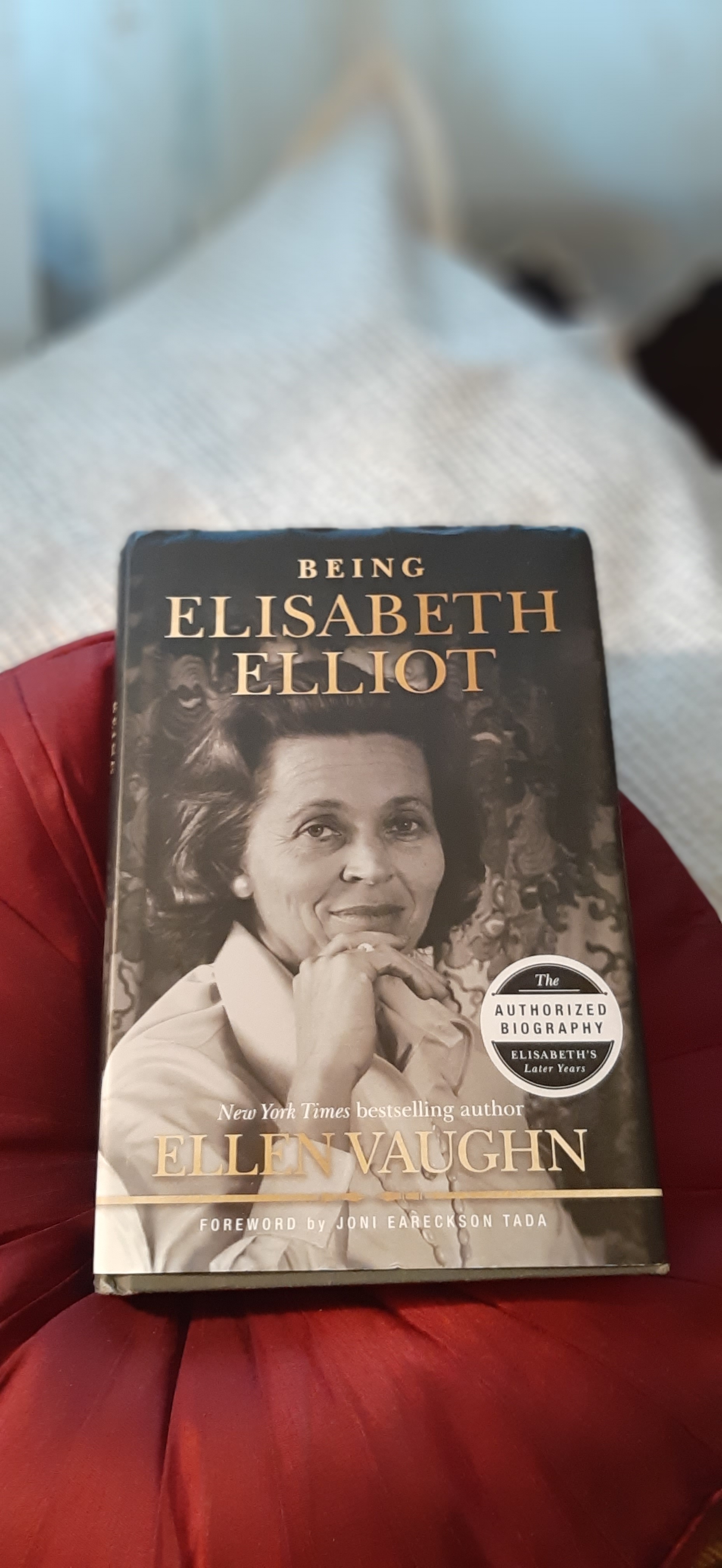
*Please note that I earn from qualifying purchases as an Amazon Associate. Please see the disclaimer at the bottom of the page.

Summary:

Being Elisabeth Elliot is the second book in the two-book biography series by Ellen Vaughn. She weaves historical events, life events, and Elisabeth’s thoughts from her private journal in both books. The first book is Becoming Elisabeth Elliot. It covers her early years, her courtship with Jim, and their brief marriage. It ends with her decision to leave Ecuador with her daughter, Valerie, to settle and begin life in North America.

Being Elisabeth Elliot begins with her adjustment from the communal culture of the people living in the jungles of Ecuador to New England suburbs and the harsh winters. Many people may be familiar with Elisabeth’s speeches, writings, and radio programs. Still, Ellen Vaughn shares Elisabeth’s unknown personal struggles – her struggle to be published and the criticism of her earlier works.

Ellen also shares how Elisabeth unexpectedly fell in love again while trying to do what was right. There are a few surprises about the person and character of Elisabeth Elliot that were unknown to the public and maybe only known in her private journal. Those surprises have caused a little stir in some circles on social media and possibly within close-net friendships and book clubs. I will not disclose those surprises, but I will share that I found some relief after reading this book. Relief that this woman, who so many look up to, is human. Like you. Like me. She was not perfect. Elisabeth failed in some areas of her life. However, one evident thing was that Elisabeth loved God and honestly wanted to do what was right until the end. Some may even say that the desire to do what was “right” may have been too strong, but you will have to decide on your own after you read the book.

Why Read this Book?

Elisabeth Elliot was a missionary, a wife, and a mother who lived in Ecuador and repatriated back to her passport country, the U.S. Like many who have repatriated, hers was bumpy along this path of transition. I loved that this biography was not polished and clean. Ellen Vaughn does an excellent job telling the truth while still honoring the main character, Elisabeth Elliot – a woman many admire.

Book Review: ARRIVING WELL by Cate Brubaker, Doreen Cumberford, Helen Watts

ARRIVING WELL: Stories about identity, belonging and rediscovering home after living abroad 

By Cate Brubaker, Doreen Cumberford, and Helen Watts

Published 2018

  • Please note as an Amazon Associate I earn from qualifying purchases.

Book Review:

ARRIVING WELL is a collection of five stories from people who moved to their passport country after an extended time living overseas. Otherwise known as repatriating. Each story is short and easy to read. Though there are only five stories, they come from a rich background across the globe; not just from one common country. The stories are real and vulnerable to the point of sharing their failures. Two of the contributors include Jerry Jones and Michael Pollock. 

After each story, the three authors collaborated, offering their thoughts and wisdom as transition coaches. They highlight main points from each story while offering questions for the reader to continue processing their own journey. At the end of the book, they list ways that they can be contacted, along with their websites where more resources can be found. At the time of writing this review, all the links worked. 

I would recommend this book to those who have moved or are about to embark on this move to their passport country. I believe it will help them begin to think about what struggles they may meet, but also seeing the struggles of others can help normalize some of the emotions and feelings that they are going through. I will note that it does not talk about how children may be experiencing this transition, but I do believe that healthy parent(s) will help a child(ren) needing help. 

Home

IMG_1429

It’s that time of year when ‘good-byes’ are being said for expats around the world. Today’s post is by guest writer Dion Bos. I met Dion a few years back at a workshop. She is fun, insightful, and I love what she wrote about her transition she is going through. This post is copied (with her permission) from her Facebook status.
I recently received an IMessage from a friend living in the U.S. that read, “I heard a rumor that you are moving home. Is it true?” It caught me off guard as we had not publicly announced that we would be ending our expatriate experience in Taiwan and returning back to the Chicagoland area within a few months. As I stared at the message considering how I should respond, my eyes locked on the word HOME.

Was I moving home?

Or was I leaving my home?

I started to get a sick feeling in my stomach realizing I wasn’t sure where home was. I mean, at times when I’m going to visit my parents in the farm house I grew up in, I still find myself saying, “I’m going home for the weekend.”

So what exactly is home?

According to the Webster Dictionary Home is: “a place where one lives permanently, especially as a member of a family or household”. This simple definition seemed so off to me, when here I was, almost 40years old, holding back tears and completely struggling with the realization that I no longer knew where my home was. So, I quickly shut down my computer and closed my eyes to take a few deep breaths and think about MY home.
I realized “Home” is not a building or structure, nor is it the name of a certain city or state where you physically live. Rather…
  • It is everything and everyone that surrounds you.
  • It is everything you drive by on a daily basis.
  • It is everywhere you shop.
  • It is the school where you drop your kids off every morning.
  • It is the teachers you trust with the minds and hearts of your children every weekday.
  • It is all the friends that you can count on to help protect your family.
  • It is the coffee shop where you always meet people to share your stories.
  • It is the restaurant you love to eat at.
  • It is the park you love to sit at or the mountain you love to hike or the route you love to jog… and so on and so on.
Webster also defines Expatriate as: “a person who lives outside of their native country”. Once again I felt so let down by Webster. That this book could downplay the craziness of packing up your family, moving to a foreign land and completely altering the way you have been living your life up until that point. To me living as an expatriate is so much more.
  • It is the people that take you under their wing immediately that you can call when you are lost.
  • It is the Facebook groups you can ask where to find whatever it is you are looking for.
  • It is the community members who take on the challenge of making homemade goods and selling them because you can’t find them easily at the local stores.
  • It is the parents and teachers who volunteer to coach every sport, substitute teach, chaperone culture trips, lead Chapel, and so much more.
  • It is the abundance of people who choose to accept everyone around them instead of looking for inadequacies because we know we need each other.
  • It is taking a challenging and scary situation and instead of calling it what it is, everyone reassures you that it is just an adventure.
  • It is the confidence you gain when you accomplish a task in a foreign language.
  • It is the thrill of exploring land or even countries that would have terrified you in the past.
  • It is the remarkable ability of placing complete trust in tour guides or local people to take you out into the middle of the ocean, or the jungle, or in sidecar rides down the busiest streets in town.
  • It is gaining a true understanding of WHY another culture acts, reacts, believes or denies WITHOUT discrediting them or immediately telling them they are wrong.
  • It is putting complete trust in God that no matter how difficult things may seem, no matter how often you have to play charades to communicate, no matter how much you think you can’t live without real bacon, Reece’s Peanut Butter cups and Dee Dish Pizza, no matter how many stores, markets and fruit stands you have to shop each week for your weekly groceries, no matter how long or short you have lived there or how many hard goodbyes you have had to say, it still becomes your HOME.

Home.

It is not a simple noun. Home is the most complex word that encompasses the entire life of any individual. Now, when people ask where I AM FROM-that is different. Sometimes I’m from a small farm town, sometimes from Chicago, sometimes a suburb of Chicago, sometimes I’m just from America and sometimes I’m from Taiwan. I may always give a different answer here and hopefully I even add more replies as my life continues. But one thing I have definitely learned through this process is that where you are “from” is not the same as where your “home” is. Home is not a single place.

Home is your life story. I am not moving back home and I am not moving away from my home. I am simply adding to my home. The experiences I have had, the memories that are ingrained in my mind, all of the people who have infiltrated my heart and embraced me and my family at the different stages of my life are all home. And those things will never be taken from me. Each place I have called “home” brings me comfort in many different ways. Memories resurface and familiar faces fill my mind. Life will continue to evolve and people will come and go, but I will always be home no matter where I end up. My only wish moving forward is that I never settle in one place. I pray to God each day that he just keeps adding to my home and that I never forget those that have helped make each physical place I have lived a part of MY HOME.

Dion Dillavou BosBio: Five years ago I packed up my two daughters (age 4 and 7) to move to Taiwan for my husband’s expat assignment. I was terrified at the time, but soon realized It was one of the best decisions I have made. My girls know so much more about the world,  my marriage has grown in amazing ways, I have jump started a fitness career. Our faith and walk with God has grown in so many ways. Now the tables are turned and we are facing repatriating. Once again the feelings we face with change are real and I know so many of you out there feel or have felt the same.
Your Turn: Let us know what you consider part of YOUR home? How do you process this change yourself? What are some things that you have done or will do before you get on that plane for the next destination? Please share in the comments below.

Saying Good-bye…The Leaving Series

When I look back at my history of blogging, I noticed that I have written a lot about leaving, or saying good-bye. I’ve written about the importance of saying ithelping our kids through it; and how it just plain stinks. I’ve also written about the importance of sharing our past with our kids and taking them back to the places where we once said good-bye. And although, these posts may be helpful – possibly even inspiring – I have found something to be even more powerful. Story.

Stories are powerful tools that can speak from the heart of the writer to the heart of the reader. We connect in the story as we see that our own story is sometimes quite similar, yet different. We feel the pain of saying good-bye; or the relief of the hard-to-deal-with drama; or the difficult times of trying to balance our own emotions while trying to comfort our children in their time of uncertainty. We learn from the hardships of moving valuable lessons about life and living in this nomadic life, called expatriating.

And being that time of year, when so many of you are probably looking at your homes and trying figure out what to save, sale, or throw away, I thought maybe you’d like to read about others who have gone before you. Real people who have packed up all their belongings and moved away from dear and precious friends – and possibly first friendships of your children.

Or maybe you need to share your own story….

So, I’m asking you to share your leaving stories. It can really be anything – from the hardest move to the easiest move. It could be about your most memorable move or a tip on how you helped your kids move. It can be moving for the first time to repatriating back to your passport country. It could be from a parent’s perspective or from your childhood (TCKs welcome, so much to learn from you all as well!). I’m hoping to get my husband to write out a guest post here for this as well.

You write it and I’ll post it! I’ll be posting them every Thursday for as long as I get submissions. I’ll start the first story next Thursday, April 16th. So here are the details.

  1. Email me your story at mdmaurer135(at)gmail(dot)com (please use a doc formatting)
  2. At the bottom of your story include a brief bio. Here is where you can share your blog site, books you’ve written, etc.
  3. Please also email me 2-3 pictures to go along with the story; one being a headshot to go with your brief bio.

Okay, so there you have it. So now write those stories. I really want to hear from you all.

Please also consider sharing this with your other friends you have that would be interested in writing a guest post. ~Thanks!

We’re moving back! How do we tell the kids?

In this two part series, I’ve talked (emailed) two families about how they have prepared their children for the move back to the parent’s home country. Notice I didn’t just write home country, as we all know our TCKs don’t always feel it is their home country. This first post is from a family with younger children and the other is from a family that has older children.

going&coming-6

I’ve been digitally following this family for over a year now. I enjoy Kim’s writing style and her photos capture the moments. I’ve known Kim for….we’ll just say many years. I think I was a newlywed and she one of the cool single teachers that let me hang-out with them. We have quite a few things in common. We both met the love of our life in Tianjin, China. We both taught grade 5. And we both have three kids all born in China. Her kids are younger than mine, but they follow the pattern: boy, girl, girl (and the third child is also adopted from China).

Kim and her husband, Patrick, just repatriated to the US almost six months ago. She blogged about her experience with the move and some about what she did to help her kids (ages 6.5, 5, and 3) with the transition. I knew I wanted to interview her about it because she just has wisdom pouring out from her. And don’t we all want to hear from people like that?

“We got a lot of advice. We knew about two years in advance that a relocation was coming up, but that such young kids did not need to know so far in advance.”

        The key is to balance two needs…

Kim and Patrick asked adult TCKs and early childhood specialists about how they should explain this move to their children. The consensus seemed to be within six months. Kim explains that the key is to balance two needs: 1) As small children, too much time with news of a big move was too abstract to be of any real benefit however 2) waiting too long to tell them increased the risk of them hearing it from someone else.

“Six months allowed for openness within our community for an appropriate amount of time, but did not burden our little ones with a hard-to-grasp impending move for too long.”

     Lasts, Losses, and Logistics…

As the community and the children all knew of the move, Kim and her husband began talking with their children about lasts, losses, and logistics. They made lists with their kids what they wanted to do one more time, or as Kim called it their “Tianjin bucket list”. Some ideas were fun places in the city they loved like the TV Tower, but many were typical day things they did like play-dates with specific friends or even certain foods from the local market. From this list, Kim and Patrick calculated around sixty days before departure and marked the items on the calendar. They were intentional to make sure that the kids got to celebrate the “lasts” that they wanted. I believe this is important because it gives the children a chance to say good-bye not only to people, but also to places.

Tip from Kim: Towards the end, limit the activities to only a few a day. They limited the kids to one activity/day. They allowed each other a few more, but then took turns watching the kids at home. I think this is great as it helps the kids to feel stable, especially as time gets closer to the end.

Losses are part of lasts, but still need to be talked about. Kim talked with her children about what they were going to miss: people, pets, places and possessions. She knew that this was important – even if it seemed silly, like the blender that stopped working right before the move, but apparently her oldest is a kitchen fan. Check out this post on saying good-bye to the zhou-maker.

Kim and Patrick also talked about logistics with their kids; from packing, shipping and flights. Kim said that the question, “How will that be different in Texas?” brought up all kinds of talks about what to expect in the new location. And her “Moving Book” she made helped with the transition for her youngest. If you don’t check out any of the other links, this one you just must look at. Seriously, a great tool to make for your kids.

“Preparing our family for repatriation was a huge job…one that we did with lots of help and advice, and one that we did imperfectly. Like any parenting endeavor, it is impossible to fully anticipate and fully meet the needs of every child.”

Kim, thanks for sharing your experience and your wisdom with us. And though you may feel like it was “imperfect”, I do believe you did it with grace and wisdom.