Book Review: SHANGHAI PASSAGE by Gregory Patent

SHANGHAI PASSAGE by Gregory Patent

Illustrated by Ted Lewin

Genre: middle grade autobiography/memoir

SHANGHAI PASSAGE is a collection of memories of the author, Gregory Patent, as a young child living in Shanghai at the end of World War II. Born in Hong Kong, Gregory was a British citizen to Russian and Iraqi parents. His stories are from the age of five, when the war ended, until he was around eleven when his family emigrated to the US.

My Take:

I picked up this book a few years ago from a school that was discarding it from their library. It has been sitting on my shelf and I’ve been wanting to read it. The cover has always tempted me to read it, but for some reason I’ve never taken the time. This summer I added it to my list for the Summer Reading Challenge by Amy Young. I’m so glad I did. Gregory’s story is just fascinating. The time period, the city, his cross-cultural family dynamic, and his opinions as a third culture kid – just a great read. He is truly a boy that has grown up, as Marilyn Gardener has coined, “between worlds“. As a mom raising some TCKs and CCKs, I was drawn to his thoughts about friends leaving, learning his father’s mother-tongue, and countless other things that Gregory shares in this very short book.

Honestly, I wanted to know more about this young man. So, I did some research and found that he is a cookbook author. You can read more about his life and try some of his reciepies at his website, The Baking Wizard.

Book Review: WHEN MY NAME WAS KEOKO by Linda Sue Park

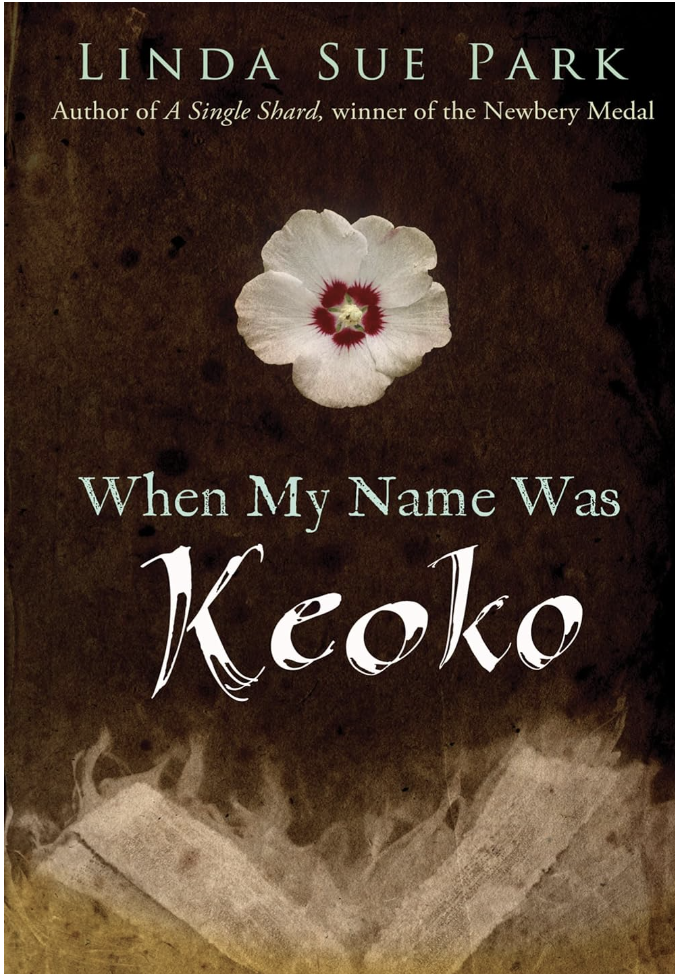
When My Name was Keoko

by Linda Sue Park.

Published: 2012

Genre:Middle School Historical Fiction

*Please note as an Amazon Associate, I earn from qualifying purchases.

Screenshot 2023-11-23 at 8.52.44 AM

WWII did not just affect Western countries, but it also affected Asia as well. Linda Sue Park shares an Asian point of view through her gift of storytelling. We watch the events of WWII unfold around Sun-yee and Tai-yul, a Korean sister and brother. 

As the term “Third Culture Kid” expands to “Cross-Cultural Kid,” I believe this book represents some broader aspects. 

  1. The characters are CCKs: The children at this time were more like CCKs, or “domestic TCKs” in their own home country. The Japanese occupied Korea. They tried to replace the Korean culture with Japanese culture. One way was by changing everyone’s names to Japanese names. So, Sun-yee became Keoko, and Tai-yul became Nobuo. Throughout the story, the family struggles to hang onto their Korean culture by trying to teach the children what it means to be Korean.
  2. Language is essential: Korean was forbidden during this time. All classes were conducted in Japanese. No one was to speak or write in Korean. Because of this, the Korean language was almost lost. Sun-yee’s father saw the relationship between culture and language, so he secretly taught her the Korean alphabet. For many non-English speaking families, the language struggle to ensure the children do not forget their “mother tongue” is real.
  3. To see the human being: I mean not being judgmental towards other nationalities. Before the Japanese came, Sun-yee’s good friend was the Japanese neighbor boy. As tension builds against the Japanese, Sun-yee becomes confused by what the Koreans say about the Japanese. Her friend is not like those descriptions. When she is older, she does become friends with the Korean girls, but she never has harsh feelings about her neighbor. They help each other out at different times. TCKs/CCKs have the opportunity because of the international schools/communities to see past prejudice and see the person for who they are, not the country their passport says they are from.