*Please note as an Amazon Associate I earn from qualifying purchases.
This guide book is designed for families that are about to embark on a family adventure of living overseas. Anna surveyed over a hundred people that included parents, but also third culture kids, on the good and the hard of living overseas as a family. The people surveyed were from a variety of backgrounds that included military families, expats, families working in non-profit work and those in ministry. Anna uses quotes from the survey throughout the book, but also references from other resources that speak on TCKs, living overseas, and family connection in general. This makes the book stand out from some of the other guidebooks that have been published.
The book is organized in three sections which makes it easy for the reader to directly read the chapters that apply for that moment in time. Anna took time to write a good chunk on preparing to leave which includes a chapter on fundraising and what to do that last week before leaving. The second section is titled “Going” and involves ideas for your family while traveling to the new location. The last section is about living in the new location and how to go from scary to thriving. Throughout the book, Anna offers practical ideas and tips from her own experience and from those who took time to fill out the survey.
One of my favorite quotes seems to be a theme throughout the book. Anna writes, “Having a successful family experience in a new country is not contingent upon having a positive experience. It is contingent upon family connection, despite how good or bad your experience is” (p19). If you are about to embark on this journey with children, then I do recommend this book. If you are already living overseas with your family and looking for new ways to connect with your family you might be interested in this book as well.
*I did receive an ARC of this book from the author to review, but the above book review is my honest opinion.
*Please note that as an Amazon Associate, I earn from qualifying purchases.
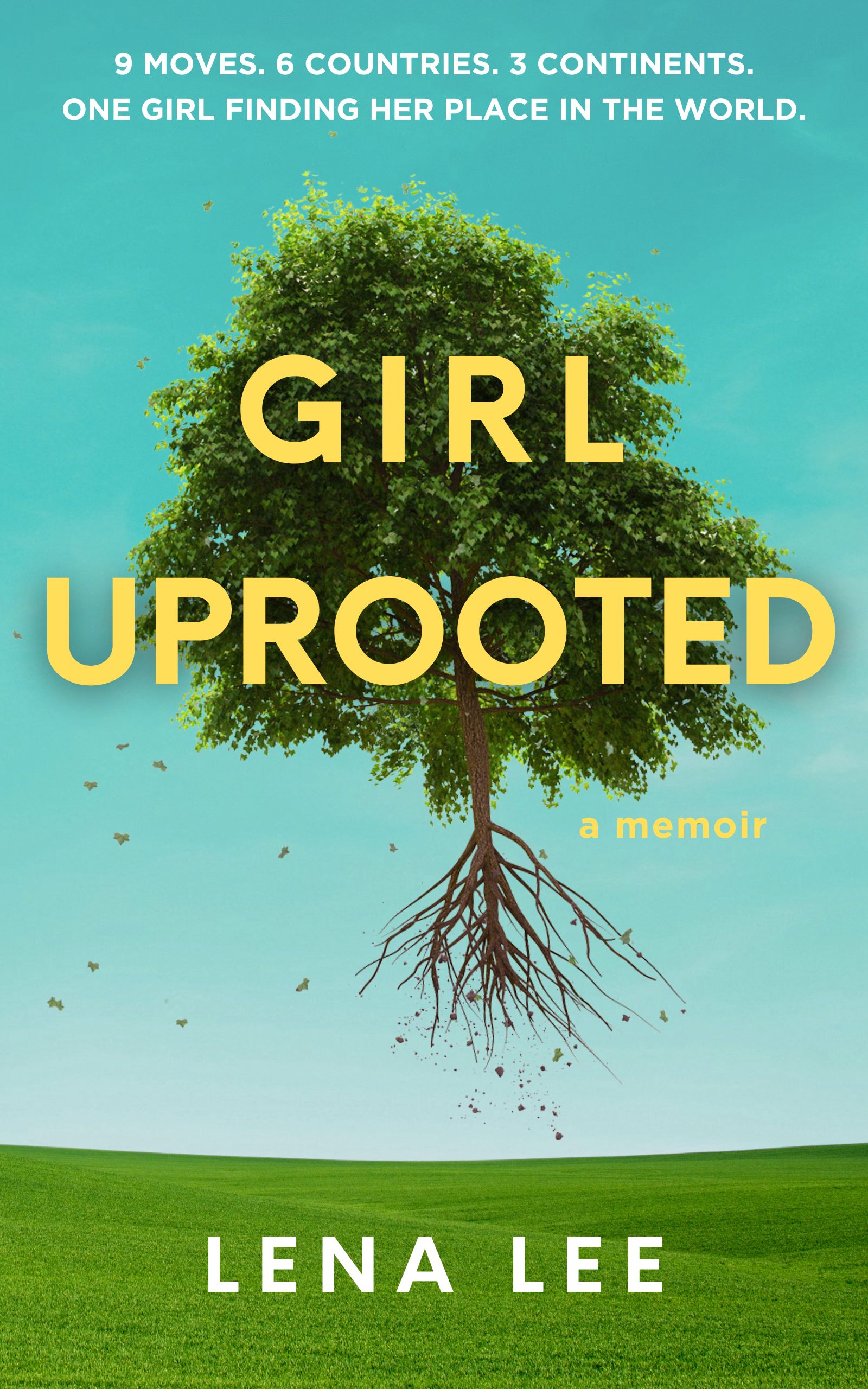
Lena tells her story of growing up as the daughter of a South Korean diplomat. She shares the hardships of balancing the traditions of Confucian values at home and western thoughts and culture in the various countries and international schools she attended. Lena is honest in what brought her joy as a child, what confused her and what she is still learning about herself today. Often she is confronted with the typical question that many TCKs deal with: “Where is home? Where do I belong?”. But, as more research is showing these questions are complicated, especially for TCKs not from a western culture.
The reader is invited into Lena’s life. She is vulnerable in what she shares, which makes her brave. She has a strong voice, which is something I love in books. Her story is unique because it is her story, but I believe that the issues she battled is not unique to many TCKs who come from families of cultures that are similar to hers. She brings a face, a life, to the research that is being done.
I highly recommend it to teachers at international schools and are not familiar with East Asian cultures. I honestly believe it will help teachers understand their student(s) better – to maybe even give them the right questions to ask as their students navigate life. Adolescence is not always easy, and we need to have better understanding so that we can help. I believe it is a must read for international educators as Lena shares what your students may not feel comfortable sharing with you unless you build that relationship and ask.
I do give warning that this book is for more mature readers (upper level high-school and above) because of the issues of mental health issues of anxiety and depression.
*Please note as an Amazon Associate I earn from qualifying purchases.
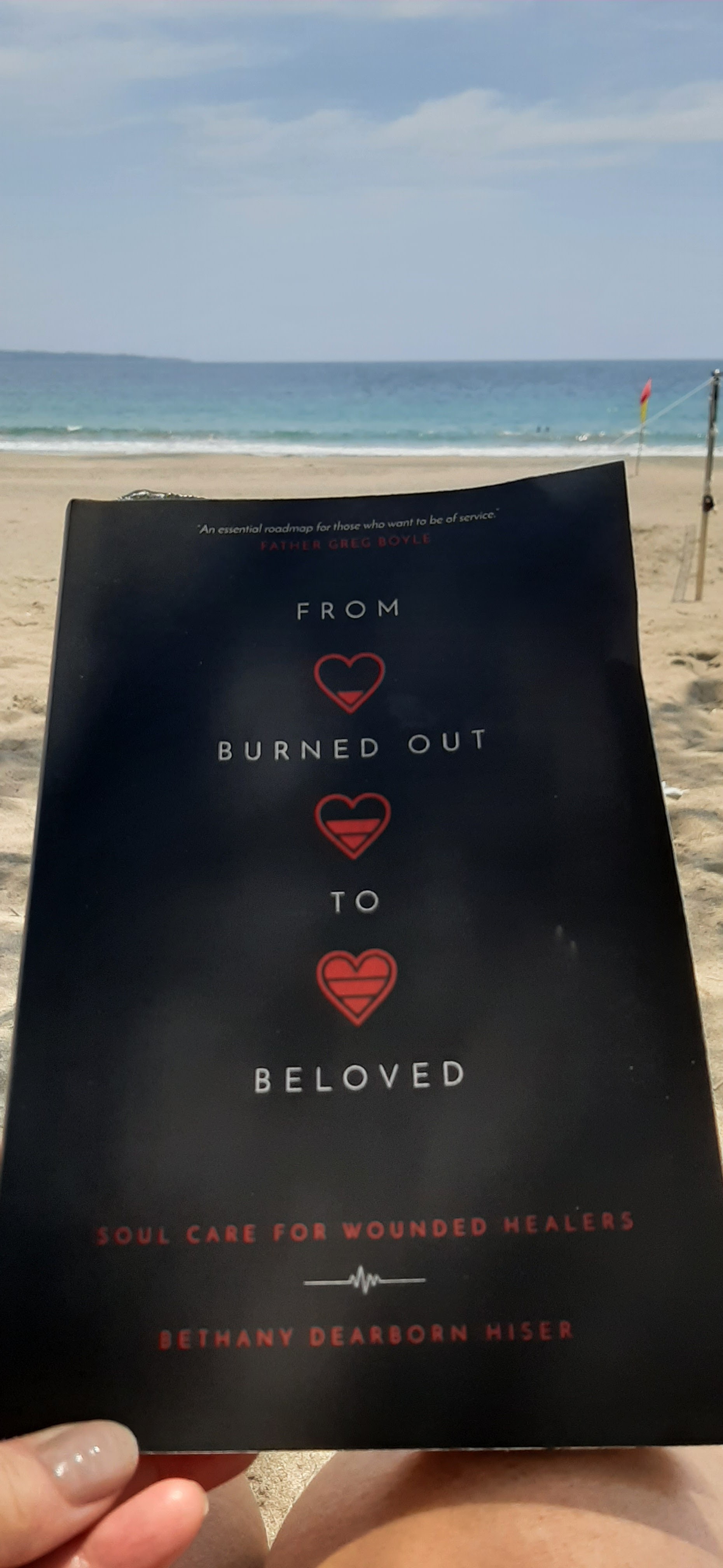
Bethany has worn many hats that involve “secondary trauma”, so her book comes from a place of experience and understanding. She invites the reader into her own personal story of burnout and recovery. She explains that trauma affects everyone who is exposed. This includes the people who listen to the stories of survivors. This is “secondary trauma”.
The back cover really describes this book well: “It’s a trauma-informed soul care guide for all Christians working in high-stress, helping professions.”
The book is divided into four-parts titled: Centering, Unpacking, Recovering, and Thriving. Each chapter offers reflection questions to help the reader process and tend to their own souls. She also provides exercises to help, as well as, other resources for further help and guidance.
Bethany doesn’t offer answers or a prescribed formula, but rather guides the reader in their own journey to taking care of their own soul.
I highly recommend this, but with a few warnings. Know that you will need to slow down and make space in your life to do the hard work. It will take time, and that this book is to help prevent burnout. So, if you are passed prevention, seek support from a trusted counselor who can walk alongside you.
*Please note that I earn from qualifying purchases as an Amazon Associate.
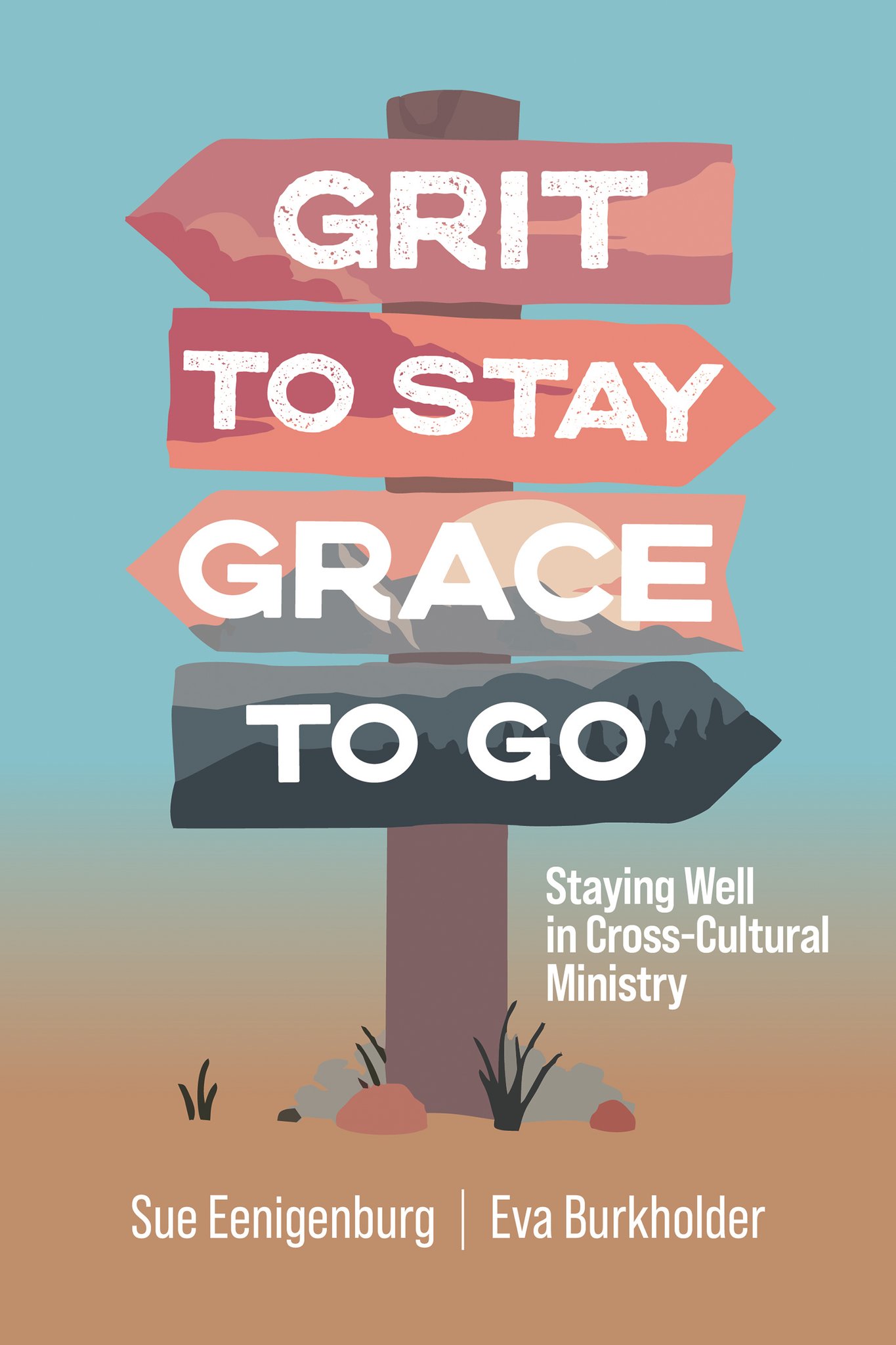
Sue and Eva wrote this book with global workers in mind. Both authors have spent many years overseas with several relocations, so they have personal experience writing this book. But they also interviewed countless others and researched articles and books, making their work stand out.
It is a workbook designed to be helpful to those who stay, those who leave, and those who are trying to decide what they should do. A section is dedicated to each of those groups. Every chapter includes reflection questions with biblical passages to reflect on, response questions to dig a bit deeper, a short prayer, and a list of resources that offers readers other articles, books, or videos to help them even further.
Whether you are a newbie or a veteran, I highly recommend this book because I believe you will refer to it repeatedly.
*Please note as an Amazon Associate I earn from qualifying purchases.
Sue Eenigenburg’s dissertation linked expectations women serving on the mission field have of themselves or others thrust upon them to burnout. She explores expectations that women have of herself, her sending agency has on her, the sending church may have, her co-workers, the host culture, and even expectations she may have of God. When these expectations go unmet they can cause stress, anxiety and even frustration which if left covered and not exposed and dealt with leads to burnout.
Robynn Bliss adds the human touch to the research that Sue has done. As an ATCK, Robynn shares her story that led to her experience of burnout. She is vulnerable and real with the hard truth of her own expectations and how she tried to push through.
This book is not just for women on the mission field, but it is a great resource for sending churches, agencies, or people in member care roles to help them evaluate their own expectations that they may have on their female team members. And then to find ways of adjusting procedures and policies to encourage these courageous women of faith to continue to thrive, not just survive in the place that God has them.
*Please note as an Amazon Associate, I earn from qualifying purchases.
Like the title says it is a journey of faith by taking the soon to be graduate on a study of Galatians and relating it to where they are in life. The scripture is printed out on the pages and followed by questions that can be answered by the reader. This is nice as the reader does not need to look up Scripture and we all know that time is precious for those in this age group.
It is also a planner that starts twelve months before graduation and ends twelve months after. There are check lists of things to think through and do, but also discussion questions or processing questions to help the graduate during this time. The authors note that this can be done as an individual or in a group.
While I think the idea is great and needed (and I’ll be buying one for my soon to be graduate because I got an advanced e-copy), I think it is lacking for an individual to do alone. Most of the questions need to be discussed because this is a new area for the student and sometimes the parent. I think that some of the suggestions need to be explained a bit more in detail to help clarify what the authors want to convey. That being said, a well prepared mentor could use this book to lead and guide graduates in helping them transition.
I also have questions about some of the suggestions for the months before. I’m not sure twelve months before they leave that graduates can find a “bridge” person (if they know what that term means) because most students at this point do not even know which university or program they will choose, let alone what city, state, country. As I have talked with soon to be graduates, they are nervous and feel enough pressure as it is, especially those that really do not know what is next. So, while the checklists are great, a well prepared mentor would be able to help individuals navigate this unknown world a bit better.
There are some great activities for the graduate to do to help them build their RAFT. There are photo suggestions and places to draw maps. In fact, I do love that they have pages called “Wreck this Journal Page” where anything goes. In fact, they have a lot of blank spaces for processing and making notes.
Overall, I think the book has potential to be a good resource for counselors or mentors who work with students in their final year of high school or first year out. It is also a good resource for parents to help think through and have conversation starters. As for individual use, I do think there are a few individuals who could do it, but discussions are always better within a group.
*Please note as an Amazon Associate I earn from qualifying purchases.
This may not be a typical book I would review here because it is NOT about TCKs. (But don’t stop reading. Read the next few sentences before you decide this book isn’t for you or someone you know.)
But it is on another topic you know is near and dear to my heart. Plus, you may know someone in your life or community that needs this book. So, here’s my review.
The title is a little misleading as it says it is for the “Special Needs Mom.” It’s not just for them; I would include the dads, the grandparents, the older siblings, and anyone who works or cares for families that fit this description.
The chapter titles are simply the best. Here’s a little snippet:
Loneliness to Connection
Grief to Hope
Guilt to Acceptance
Weariness to Rest
Fear to Trust
Disappointment to Gratitude
Aren’t they just great titles? The other ones are just as great, too. The authors tell you in the intro that you do not have to read the book in a specific order. In fact, if you are feeling guilty, then just read that chapter. Each chapter is relatively short, so it doesn’t take that much time either.
It is a Christian book, but it is not preachy. In fact, it feels like you are sitting with the three authors having a cup of coffee while they tell you that they understand what you are feeling. They share their stories of feeling guilty and coming to a place of acceptance (or whatever the chapter is on).
Living overseas with families like mine is hard. There are not many, so the road can be lonely. Though people care, few understand how hard it really can be. I’m not saying that all days are hard – unless it’s just a season of complexity, and then it can be hard days. What I am saying is that this book feels like a friend. The authors have put words to the aches and joys I have felt over the past several years.
And while that is all good, I think the most helpful part of the book is that at the end of every chapter, they have given space to process. There are 3-5 questions that make you slow down. Stop and mentally take in what you read and apply it to your life.
*Please note as an Amazon Associate, I earn from qualifying purchases.
Julie writes that this book “was inspired by Cynthia Rylant’s book When I Was Young in the Mountains.” Each page shows a day living in Myanmar before the family had to leave. The photos are captured in a watercolor-type feel, which makes the book not feel like you are looking at someone’s scrapbook or digital photo album. It adds to the creative side of thinking about your life and how you live in your home.
Julie has added a few pages at the end, which is a bonus to the book. She has questions that can be used as conversation starters with your children. These questions accompany the previous pages to help you talk about your home. And there are questions to help your child(ren) process that time during the pandemic. The last page lists resources for parents of third-culture kids, which is also a nice touch.
Living overseas brings out many emotions from the time you leave your home country to the arrival of your new city. Or take the emotions you have when you watch friends leave to move on to the next destination. But transition is not the only thing that brings out emotions. Hard things happen. That is why it is important to process your emotions, but also the situations you find yourself in.
THE PRACTICE OF PROCESSING by Elizabeth Vahey Smith is just what the book title says. Elizabeth had those who transition often in mind when she wrote this book. It is a book that I found to have the why one should process, but also provides a guide in ways to process. She begins with emotions and how understanding them as “communicative…we can intellectually process the new information they provide” (pp. 18-19). Emotional intelligence is important and she covers that topic well. Elizabeth also provides examples of how to help children process, which is a nice bonus for parents or those working with young people.
If processing is new to you then I would suggest that you look at this book for yourself. Or if you are in member care for your organization, then a nice resource for people who need help in this area.
It’s September* and everyone is back in school. Did you hear me sigh? Did you sigh along with me? Don’t get me wrong summers are good, but with a child with special needs they are usually not great. She needs a set schedule with a para and we don’t get either in the summers. Summer schedules are suppose to be flexible. They are to be a time to relax, take a vacation with the family, right?
So, with school starting and the schedule in place life would flow down a lazy river. Nice and easy. You’ve heard of the domino affect, haven’t you? You know after one domino falls, others go right behind it? Today’s story will follow the domino trail; not a lazy river experience.
Domino #1: Beach & Teas
It was a school holiday, Mid-Autumn Festival. So, off to the beach we went for the morning. Just the two of us because the other two were out of town. The sky was blue, the wind was strong, and the sand was warm. M2 rolled around in the sand and waves, built sand mounds, and ran up and down the empty beach. Perfect.
Teas are usually something we buy to take to the beach, but since we left so early there were no shops open. So, after rinsing off the sand and sweat we stopped at a shop before going home. My wallet was at home, but I had a zip-lock full of copper coins. They are worth 1 New Taiwan Dollar. I ordered and paid with 110 coins. Bless those workers hearts as I counted out stacks of ten coins eleven times. (Maybe you are wondering why I had a bag of coins in the car. Well, I’ll save that story for another time, but you can try to guess in the comments.)
We got home and I put the teas in my bag.
Domino #2: Keys & Flipflops
I gathered all our belongings and coaxed M2 out of the car. She is sometimes a sloth when she wants to be. I reminded her that we had tea and then threatened that she would not get tea if she didn’t hurry. Mama had to use the bathroom.
We live in a house with a yard. To enter you have to unlock a tall solid metal swinging gate. Ours is blue. I fanned out the keys on my key ring, but could not find the key to this gate. I looked through the bag to make sure they didn’t get buried under the towels and sand.
“No! Please don’t tell me I left them in the house?!?!”
M2 giggled, snorted, and smacked her leg.
I dropped the bag and climbed up the side wall to see if I could be like my super amazing husband who climbs over and jumps down. I looked down. It’s about a 6-7 foot drop, so not bad. But I looked at my shoes. Flipflops. I was not sure my ankles could take that jump onto concrete. And I was sure our dog looking up at me wagging her tail would not catch me either.
I called a friend who has an the extra set and lives just down the road. No answer.
I found a curved tool in the hedges. “Oh, Lord, please let me jimmy this door open. I really need to use the bathroom and need your help.”
Nothing. I try several times. Nothing
I felt my breathing pick up and my heart rate quicken. By this time our dog was whining on the other side of the gate.
I tried once more, probably with a little more frustration than wisdom. But the door popped open. I got in and I didn’t break the lock. A miracle, I think.
Domino #3: Wet bag & Wet Keys
After washing my hands, I went to the kitchen to retrieve our teas and get something for lunch. My bag was wet. Soaked. I reach inside and pulled out one full cup of tea and one empty cup. When I dropped the bag, the seal on the tea opened and out went the tea onto everything, including my car key which has a battery operated button to unlock it. I ran everything under the water to rinsed it off and then gave M2 chocolate almond milk. She was just as happy with that.
Domino #4: Car Alarm
Two days later we used the car to go to church. The key fob has the buttons on it to lock and unlock the doors. They were not working. I manually unlocked the doors and we drove to church. Later that day we were heading to pick up a friend to go to the beach. The car began to lock and unlock on its own. Strange, but I thought, “Maybe the keys are still wet and they just need time to dry.”
Monday morning same, but not a huge deal. Monday afternoon, I go out to the car to pick up M2 from school and the car alarm goes off when I open the door. I cannot get it to shut off. I try several times to unlock and get in, but the alarm goes off. One time I get in without the alarm going off, but then when I started the car it went off again. A little later, I had the car started, but when I pulled out of the drive the alarm went off again. By this time it had gone off four times. I was loosing my mind.
I call handsome hubby. Bless his heart, he was of no help.
“Push the button on the key fob, that will turn it off.”
“Really,” I said, “You don’t think I’ve tried that? It doesn’t work.”
“Oh, then I don’t know what to tell you, but you have to get to school now or you will be late to pick her up.”
This conversation was going on while the alarm was going off. You can imagine how we were both feeling.
I prayed, “Oh Lord, please let this crazy alarm stop. I cannot go down the street with it going off. Please don’t make me stand out any more than I already do!”
It stopped.
I sent handsome hubby a message asking him to let the teachers know that I was on my way.
He messaged back: “I’m sorry I was not helpful. I was mad because I wasn’t there to help you. I’m glad you got it to stop.”
I love that man.
M2 was in the office waiting for me. I did not turn the car off, but left it running while I ran in to get her. We went straight to the mechanics and asked him to disable the alarm system. He did.
With a chuckle.
Conclusion
Dominoes are fun to watch as they cascade around their merry path. But when that path is your life and it is affects so much of what you do, then that is not so much fun. In fact, it can make you aware of thoughts and emotions that you have about yourself, others, life, and/or the world. I’ve been studying Rational Emotive Behavior Therapy in my final class for my Master’s in Care and Counseling. The biggest takeaway is that beliefs directly influence our emotions and behaviors; not the situation or the event.
Example from my story. The moment I realized that I left the keys at home and did not have them to open the door triggered a belief. The belief that I should never do such a stupid thing like forgetting to take the keys to the house with me and this is terrible, I’ll never be able to get in. This belief started the domino affect of me dropping the bag; not setting the bag down. You could probably go back and see where this belief rises back up at various points in the story. How to change your beliefs is through disputing them, but I’ll save that lesson for another time.
*This story was supposed to be published in September, but for some reason I forgot about it. Maybe it was because I needed to understand REBT more and could begin to introduce it to you all as a way to process events/situations in your own life.