Book Review: THE GLOBAL NOMAD’S GUIDE TO UNIVERSITY TRANSITION by Tina L. Quick

THE GLOBAL NOMAD’S GUIDE TO UNIVERSITY TRANSITION, Second edition

by Tina L. Quick

Published: 2022

Summary

Tina Quick updated her book for TCKs transitioning to university life. She writes that it is also for parents, high school counselors, and university staff who support students. This book is divided into six sections: The Global Nomad/Third Culture Kid Experience, The Transition Experience, Identity Development and Relationship Insights, Realities of College Life, Health and Welfare, and Tips for Parents. It is tailored to read from cover to cover, but also, one can easily focus solely on one topic at a time. Each chapter offers knowledge but also times to go deeper, tips to try, and many graphs and models to help understand the concepts better. Tina offers knowledge about the issues of TCKs while offering tips to help them navigate the unknowns of university life.

Recommendation

I will be honest by saying I ignored the advice that you should never judge a book by its cover. I did judge this book by its cover and did not buy it until after my oldest was in university, but I didn’t really read it until my youngest was about to start university. With that said, I wish I had read it much earlier. It is packed with some really good information, but also practical tips that help not only the parent but the one who is about to launch. It is a thick book, so I believe it would have been daunting for them to pick up and read cover to cover. But, I believe it is a great resource for parents to use to start conversations with their high school kids. It is a great resource for high school counselors helping students leaving for their passport countries, and I do believe it is a must-read for any university student support staff who wants to understand this category of international students who may not look or sound international.

*Please note that I earn from qualifying purchases as an Amazon Associate. Please see the disclaimer at the bottom of the page.

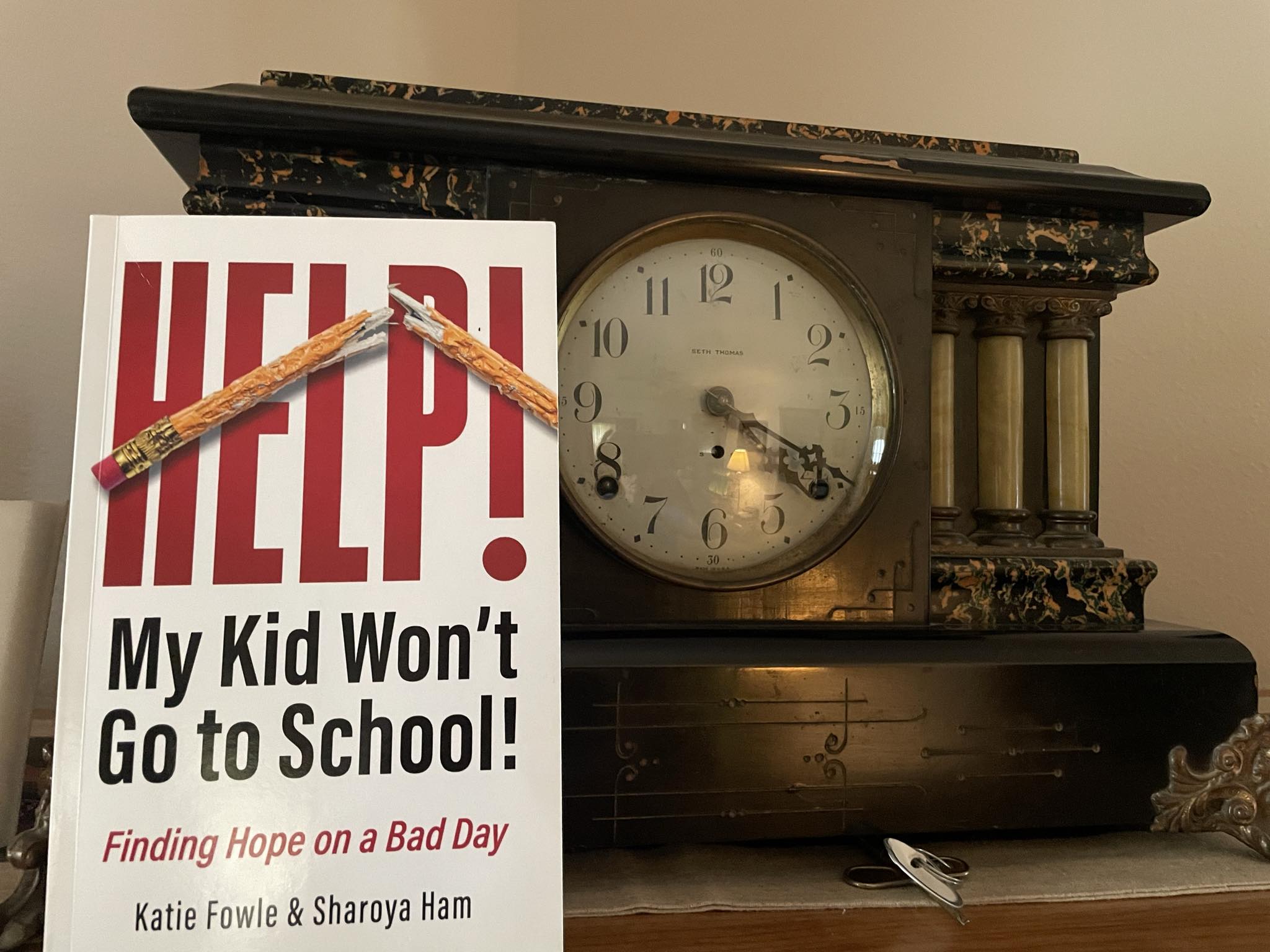
Book Review: Help! My Kid Won’t Go to School!

Help! My Kid Won’t Go to School! Finding Hope on a Bad Day

by Katie Fowle and Sharoya Ham

Published: 2023

*Please note that I earn from qualifying purchases as an Amazon Associate. Please see the disclaimer at the bottom of the page.

Summary:

This short (102 pages) book explains what school refusal is and explains the background on why kids struggle with going to school. Fowle and Ham team up to write a book that not only gives the why but explains how some parents are unaware of how their reactions encourage children to not attend school. Fowle is the parent who struggled with this issue and her passion to help other parents from what she has learned is evident in this book. Ham’s experience and knowledge makes this a resource parents can begin using right away. They offer practical tips to use at home and how to work with the school to help children learn the skill of willingness. Each chapter has questions that help the reader plan and continue to move forward towards the goal. This book is for parents or caregivers of children that are 9+ years old.

Recommendation:

If you are struggling with school refusal in your home, then I do think this book would be helpful. It focuses on the importance of the relationship between the parent and child. I have read educational articles on school absenteeism, but this is the first publication I have read coming from the parent’s point of view. The articles I read were all based in the US, but I am sure there are expat parents who may also struggle with this issue and may feel alone and possibly hopeless. This book is practical and easy to read. The exercises and suggestions can be used right away. Though they do warn that this is a process of change and not a problem that can be fixed overnight. Fowle is an educator and dyslexia specialist who tutors expat children around the globe. Ham is a behavior specialist and international parent coach.

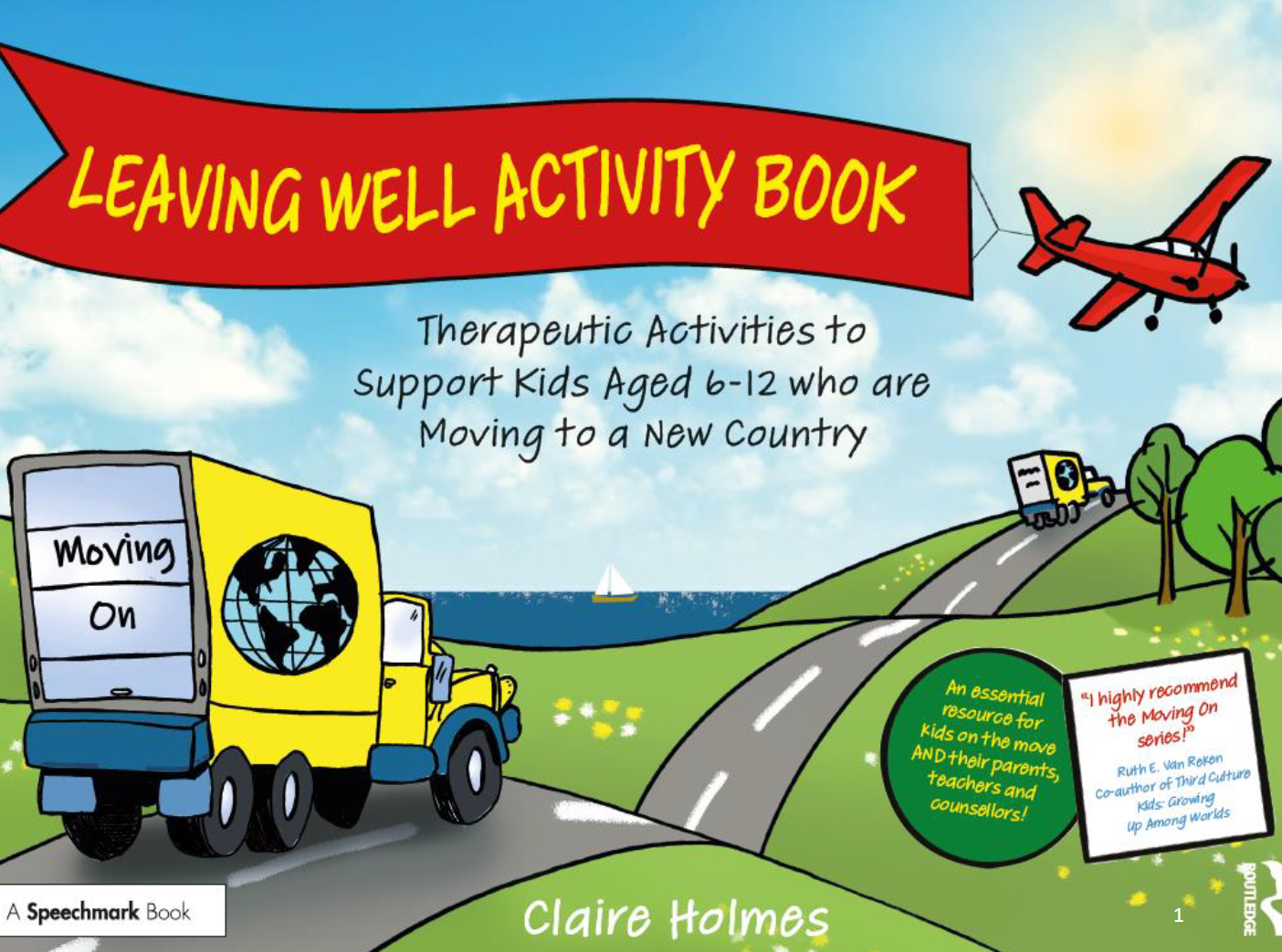
Book Review: MOVING ON SERIES by Claire Holmes

  1. LEAVING WELL ACTIVITY BOOK
  2. ARRIVING WELL ACTIVITY BOOK
  3. MOVING ON FACILITATOR’S GUIDE

by Claire Holmes

Published: 2023

*Please note that I earn from qualifying purchases as an Amazon Associate.

Summary:

Claire Holmes is Head of School Counselling at Tanglin Trust School, Singapore. She has worked with TCKs for 14 years. This small piece of information significantly impacted why I wanted to review this series. Plus, the fact that it is for the younger TCKs is something I feel has been lacking.

There are two workbooks with one facilitator’s guide. Both workbooks are filled with activities that help children process their emotions and thoughts about transition. You can buy the workbooks individually or in a bundle with the facilitator’s guide.

LEAVING WELL:

Claire uses activities that start when the parent(s) tell the child they are leaving. She has the children look at their feelings using an adapted chart of culture shock but does not use that vocabulary. Many people who have lived overseas for long have heard of RAFT. It is a great tool, but the concepts are challenging for children in the age group. Claire uses GUTSS but has the same concepts as RAFT, just in simpler terms.

ARRIVING WELL:

In this workbook, Claire begins by letting children chart their times of transition on a timeline. She has various activities to help children recognize stress in their bodies but also provides ways to cope that help relieve anxiety. Again, the simplified version of the Stages of Culture Shock graph is used to help children name the emotions they may be feeling at this time in the move. She ends the workbook with ten tips and appropriate activities to help transition into a new place.

FACILITATOR’S GUIDE:

This book is designed like a teacher’s manual. Every activity in both workbooks offers the rationale for the activity, how to set the scene for the activity, materials needed, directions for the activity, tips to make it easier, and extension activities that you can add if you would like. I have not tried the manual, but it seems easy to use with clear directions.

Overall, I think this is a perfect resource tool for the school to help younger children who are ready to move or have just moved to the school. I like that Claire used vocabulary that helps children at this age grasp the concepts of transitions while offering them space to process their emotions. I believe that giving children language to express their feelings empowers them to communicate clearly and better understand what they are experiencing during this significant life event. Claire does mention that the LEAVING WELL workbook should be started around eight weeks before departure. I agree, but I would also encourage you to start earlier with the goodbye pages so that if there are any lasts, you as a family can not only plan them but have time to make them happen.

Book Review: NAVIGATING GLOBAL TRANSITIONS AGAIN by Frances Early, Jeni Ward, and Kath Williams

Navigating Global Transitions Again: A Journey of Faith – Graduate Planner

by Frances Early, Jeni Ward, and Kath Williiams

*Please note as an Amazon Associate, I earn from qualifying purchases.

Like the title says it is a journey of faith by taking the soon to be graduate on a study of Galatians and relating it to where they are in life. The scripture is printed out on the pages and followed by questions that can be answered by the reader. This is nice as the reader does not need to look up Scripture and we all know that time is precious for those in this age group.

It is also a planner that starts twelve months before graduation and ends twelve months after. There are check lists of things to think through and do, but also discussion questions or processing questions to help the graduate during this time. The authors note that this can be done as an individual or in a group.

While I think the idea is great and needed (and I’ll be buying one for my soon to be graduate because I got an advanced e-copy), I think it is lacking for an individual to do alone. Most of the questions need to be discussed because this is a new area for the student and sometimes the parent. I think that some of the suggestions need to be explained a bit more in detail to help clarify what the authors want to convey. That being said, a well prepared mentor could use this book to lead and guide graduates in helping them transition.

I also have questions about some of the suggestions for the months before. I’m not sure twelve months before they leave that graduates can find a “bridge” person (if they know what that term means) because most students at this point do not even know which university or program they will choose, let alone what city, state, country. As I have talked with soon to be graduates, they are nervous and feel enough pressure as it is, especially those that really do not know what is next. So, while the checklists are great, a well prepared mentor would be able to help individuals navigate this unknown world a bit better.

There are some great activities for the graduate to do to help them build their RAFT. There are photo suggestions and places to draw maps. In fact, I do love that they have pages called “Wreck this Journal Page” where anything goes. In fact, they have a lot of blank spaces for processing and making notes.

Overall, I think the book has potential to be a good resource for counselors or mentors who work with students in their final year of high school or first year out. It is also a good resource for parents to help think through and have conversation starters. As for individual use, I do think there are a few individuals who could do it, but discussions are always better within a group.

Language Learning and Special Needs…a conversation starter

RaisingTCKs for Mulitcultural Kid Blogs

My children are bilingual, including my daughter who has Cri-du-Chat Syndrome, a disability that affects her mentally and physically. She’s not the only bilingual person with special needs, though. In fact, I know a young adult with Down Syndrome who is trilingual. And I read about another boy with Autism Spectrum Disorder who speaks at least four languages. This goes against the belief of many educators and therapists that children with special needs should focus on one language only. Most of the research focuses on three specialty groups: Specific Language Impairment (SLI), Down Syndrome (DS), and Autism Spectrum Disorder (ASD), but the researcher still believes that other disabilities can learn a second language as well. This is great news for CCKs (Cross-Cultural Kids) and TCK s(Third-Culture Kids) who have special needs and their families who are raising them.

My daughter is fairly non-verbal, but she is able to communicate in both English and Chinese. She uses American Sign Language (ASL), speaks simple words in both languages, and sometimes uses communication boards. We speak mainly English at home and she goes to a Taiwanese special education school where they speak Chinese. Honestly, like most Third Culture Kids she is comfortable living in both worlds. It’s part of who she is.

But, what about just teaching a child with special needs a new language? Are there any benefits? Join the conversation over at Multicultural Kid Blogs where I share some benefits I’ve noticed.

Book Review: SAFE PASSAGE by Douglas W. Ota

SAFE PASSAGE

by Douglas W. Ota

Published: 2014

SAFE PASSAGE LowRES COVER
 
 
Regardless how long someone has been an expat, mobility issues are a major part of their life. Many expats can quickly estimate how many boxes will be needed to pack their belongings. They know the routine of good-byes and hellos. From personal experience, they know the grief that trails after them from place to place.  They recognize this grief in their children, and may long for a ‘quick-fix’ to help them cope with this grief.
 
A new book by Douglas W Ota, Safe Passages:  How Mobility Affects People and What International Schools Should Do About It, might just be the essential resource needed for expats.
 
 
If you’d like to read more about this book, check out my review at ExpatArrivals.

School Reports and TCKs

20141006_200631

Believe it or not, I finally unpacked the last two boxes that have remained sealed and stacked in the very back of our closet. We moved over a year ago. Of course it was the two boxes I dreaded to open. They were labeled: “Stuff from top of Desk” and “Stuff from top filing cabinet”. Which pretty much means all the junk I was too tired to sort through before we moved. Tell me you do it too. Just dump everything left into a box and seal it up to sort later.

Yep, I had a box of paper trash – but there was some good stuff, too.

I found mementos to put into the kids’ scrapbooks. Yea, I’m a wannabe scrapbooker – stress on the wannabe. 

I found a couple of books that my husband has been looking for – Oops!

I found school reports from a few years ago. As I put them with the others I remembered when my husband, who by the way has been a school principal for many years, told me to buy a folder with clear plastic sheets. One for each child. This was to be their “book” of school reports. For Ge Ge and Mei Mei, I have their Kindergarten graduation diplomas (I know such a huge deal), all of their report cards for each grade and any standardized test score results filed away in this simple book.

Why?

Simple. It is a clear record for any new school they may attend to see that…

  • They have attended school and which grades they have completed
  • Their scores in each subject for each grade
  • Their behavior and character – from what the teachers have written on the reports

As parents living overseas, most likely our children will not attend the same school they started Kindergarten in. I mean my son has gone to four different schools already – but honestly that is on the low end for TCKs. Many of them change schools every two years or so. It can be difficult to supply all the necessary records for the next school, so having all the reports together helps when it is application time.

As for Jie Jie, my daughter with special needs. I have set hers up a bit differently. Her report cards look different. Some years it is test results from the hospital where they have tracked her physical, cognitive, and self-help development. I also have her IEP (Individualized Educational Plan )from the local Kindergarten, as well as her more recent IEPs. This is mainly for my benefit as I can look back at all that she has accomplished and to plan for the coming year. Though special education classes are rarely found in international schools, this record has also been beneficial for the times that she has had a new teacher.

My school report filing system is simple, but it works ~ so long as I remember to put the report in the book and not just toss it with the other papers piled on the desk.

Your Turn: What do you do to keep track of all the school reports for your TCK(s)? Please share in the comment box below.


The Transition for the Child with Special Needs

I just wrote about helping your children transition from the summer holidays to going back to school. You can read that by clicking on “The Transition“.

How about kids with special needs? They may need a little more time and creative ways to help them with this transition. Below are just some additional ideas to help them adjust to the transition.

  • Talk about it. Talk about what school looks like. Talk about their friends and what they will do while they are there. Even doing some role-play activities to help them get into the mindset will help.
  • Count down – Make a simple chart with the number of days left until school starts up. Let your child mark off each day. HINT: Don’t start too far away from the first day as it might be too overwhelming. You know your child, so adjust accordingly.
  • Visit the school: If the school allows it, make a trip to the school to go and see the classroom, to reconnect BRIEFLY with the teacher. (Hint: Don’t stay more than 5-10 minutes. Teachers love to see you, but they do need to get their work done.)
  • GRACE: Give your child grace and give yourself grace those first few weeks that school starts back up. Remember that sometimes change and transitions are not always what we hope or dream they will be – but they eventually do adjust.

I know I need to get started with this transition with Jie Jie. Otherwise she just may think that I threw her into the Arctic Plunge Swim.

If you have a child with special needs, how do you help them get ready for going back to school? Please share in the comments below.

The Transition

The word transition means different things to different people. For instance:

  • Parents bring home their newborn from the hospital
  • Freshman in college (or high school)
  • Soldier returning home from deployment
  • Family moving to a new country
  • Summer to Fall
  • Summer holiday to “Back to School”

Though, expats and TCKs relate the word with “good-byes”, new countries, and new friends, I’m going to talk about that yearly transition from summer holidays to returning back to school. It is an adjustment – for everyone involved.

For the parents: It’s the return of the SCHEDULE – either homeschool or taking them back to local or international school. Either way, we don’t hear the constant two words, “I’m Bored”. Okay, maybe if you’re like a super Pinterest mom and don’t deal with this issue skip this section, I’m not talking to you. If you are like me…well, I’m still trying to “enjoy the summer,” but I’m ready for everyone to get on a regular schedule.

The kids: You remember. Come on, I know you do. Sleeping in just a little bit later (or a lot later) than school days. Swimming, snacking, playing with friends, and swimming some more. That first morning of school was like being thrown in an Arctic Plunge swim. It shocked your system and was just not a pretty site. Times haven’t changed – it’s tough for our kids, too. Okay, my kids can’t wait to see their friends All Day Long, but they are NOT looking forward to early wake-ups and the dreaded homework.

So, what can we do to help them?

  • Start waking them up earlier. It doesn’t have to be the exact time, but definitely maybe trying for a half hour difference. This doesn’t have to be done weeks in advanced either – just a few days before to help their bodies start to adjust.
  • Earlier Bedtimes – This goes hand-in-hand with the above. Same rules, a week before or a few days put kids to bed at their normal “school night” bedtime.
  • Review Math Skills – This tip is more for elementary school aged children, but buy flashcards and a few weeks before school starts have your kids review them. Their brain has had a break, hopefully, so now is a good time to help them “think” school.
  • Reading – If you haven’t had them reading at all this summer, then start. This year we actually are paying our kids to read. They are getting a set amount per book they read and record on their chart. It was an incentive to READ – and I’m afraid that it may just have hurt our pocketbooks, but totally worth it!
  • Collect Meal Ideas/Make a Meal Chart – This one is for the cook in the home. I’ve found that when I take the time to make out a two-week meal plan that I actually feed my kids healthier and spend less money at the grocery store. It’s fairly easy to do this at the beginning of the year, but think about doing 4-6 of these charts and rotate them throughout the year.

What do you do with your children? Do you help prepare them? Do you just “throw them into the Arctic Plunge?” Please share in the comments below. Me? I’ll be doing some of it…I’d like to get to the meal plan, but that all depends on how I do with my lesson plans. Remember…I’m not the super Pinterest mom, though I so wish I was.

TCK Mentoring – Sea Change

Yesterday I had the opportunity to listen in on a webinar given by Sea Change Mentoring. This organization, founded by Ellen Mahoney, is designed for third culture kids from the ages 16-23, although they are open to reaching out to help children as young as 13. Read their mission below:

“Help international teens develop into happy and successful adults through the power of mentoring and our tailored curriculum.”

Ellen is a TCK herself. She shared her story with us of the time she returned to the US for university alone. It was a very hard year as she felt lonely and even depressed. She found out that she was not the only one – that many of her other TCK friends were also experiencing the various degrees of the same feelings. Throughout her life she has helped children. She began as a high school teacher, then began working with an online mentoring group in the US, and now is the Founder and CEO of Sea Change Mentoring.

So what is Sea Change Mentoring?

It is just that – mentoring third culture kids through all the change that they go through. The mentoring is currently being facilitated through Skype by professionally trained mentors that have overseas experience. They use a tailored curriculum for TCKs that was developed by a TCK. Some of the “units” that are covered are Building Strong Relationships, Healthy Good-byes, Career Exploration, Career EQ, Becoming Independent, and much more.

Why is this so important?

We all know that the expat life is much like sea waves, coming and going. Children may have a difficult time adjusting or connecting with friends. This program is designed to be a 2-3 year commitment allowing the mentor time to help the child go through changes, nudging them to build heathy relationships, as well as other issues they may be facing. And for those that are older, to help them begin to think about being independent BEFORE they are independent. We as parents can help, yes, and we should be involved in this process – but sometimes a third party that is standing on the outside can see the whole picture. Possibly even better since this person understands all the emotions that our children are going through. Sea Change works with the child, but they also communicate with the parents – which I found, as a parent, to be comforting. Sea Change was founded in 2012 and launched their first pilot program this past January. So, it’s fairly new – but I don’t believe there is anything like it out there for TCKs. If you have children in this age range and wondering how you can help them with adjustment, this might be a really good option. If you would like more information, you can click here.

**I just want to note that I did not receive anything for this review, but that it is solely my own opinion from what I learned about through the webinar.