Combating Loneliness in “Expat-land”

Loneliness in expat-land is a feeling that can unfortunately be constant – what I mean is that it will can come and go with every transition. Sometimes it creeps in during the holidays or when visiting friends and family. Other times it pounces on you after the big move and the husband is off to work and the kids are off to school – your alone and would love to get a coffee with a friend, a friend that you don’t have in the new place ~yet.

ypamphitheater

One of my dear friends just wrote me this week. She’s been in her new country for almost six months. She has two very active toddlers with her, and she left two step children back “home” for college. Her husband is gone this week and she is feeling very lonely and homesick. Can you relate? I know I can.

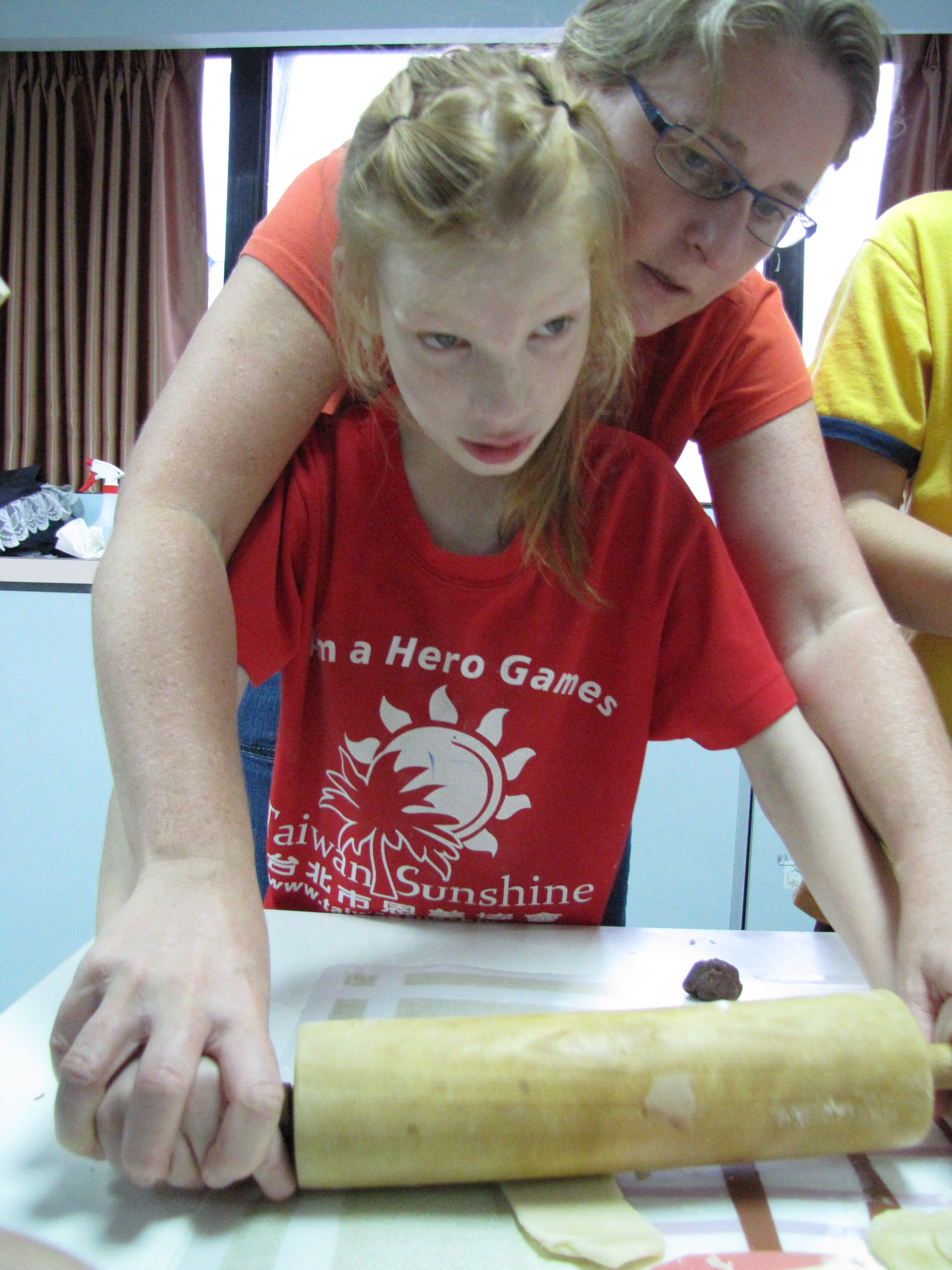
Or how about the parent of a child with special needs? What I’m about to share is not meant to point fingers or start a pity party club for me. It is just a fact of life, and I’m sure I’m not the only one that has felt this way. So here it goes *deep breath*I have felt at times lonely in the middle of a party. All the adults are gathered in the living room or around the snack table chatting, laughing, and relaxing. The children are outside playing basketball, riding bikes, or in one of the rooms playing legos or dolls. I’m wherever Jie Jie is ~ I’m sitting at a table feeding her a snack or outside helping her “ride” a bike. I’m usually by myself feeling uncomfortable and fighting the big bad bully: Loneliness. Please note that this is only at times, not every time and it is just a fact of my life. 

What did I tell my friend? What do I do in those times when I want to run to my room and cry like a teenager?

I run to my room and cry on my bed like a teenager. Yes, I do. I’ve learned that it’s okay to cry, to be sad. Crying is healthy to do in doses. The key to not letting my tears turn into something worse like depression is that once the tears stop, I immediately begin praising God for who He is and what He has done in my life. I turn on some praise music and sing really loud. I begin a list or look at a list that I’ve made of all the things I have to be thankful for: a home, food, therapy for Jie Jie, school for all my kids, a great husband, sunshine, chocolate, etc.

Then when my mind is starting to lighten up a bit, I call a friend and make a “date” for coffee.

Your Turn: What do you do to fight the battle of loneliness? Please share in the comments below.

If you like what you are reading, you can subscribe at the top right. Also, you can find me on Facebook where I post other articles that I find from other sites that are relevant to raising Third Culture Kids.


Enhanced by Zemanta

An Expat Special Needs TCK Parent

I recently re-read “6 Secrets Special Needs Moms Know But WON’T Tell You.” If you IMG_3649haven’t read it, go over and at least scan the list. It’s good and fairly accurate. I say that because I feel the same and I’ve heard the cheers from other moms out there. Like this mom, who was also inspired from this same article to write “Special Needs Parents“.

As an expat though, I think at times some of these truths could ring louder…and here is why.

1. Expats are mobile. We move, or our friends move. Like it or not, it is the nature of “expatland.” If we are the one moving, then it is finding new doctors, therapists, schools that have special education, housing that is safe for the child with special needs, and making new friends ~ and I’m not even getting into the emotional side of transition. If it is our friends that move, then new friends join the circle. Always changing…

2. Loneliness: Mobility can add to loneliness. The friend who understands your child, who forgives you for having to cancel the fifth coffee date that month because of something related to your child, the friend who always makes you laugh is no longer there. The time and energy it takes to invest in making new friends is exhausting ~ making one feel like it isn’t worth it at all. To add to this lonely feeling, going out in public and feeling the stares, the odd looks, or hearing the whispers is tough. This is normal in any country, but if you live in a country where the parents of children with special needs are believed to have “bad blood”, then one may not even want to go out.

2. Alone-ness. Not too many parents of children with special needs live overseas, so feeling “I’m all alone” haunts the mind of the parent. The internet forums for specific needs are a great resource for parents, but having someone in person who can relate to those struggles of living overseas is better.

3. Marriage. YES, this is so important and sometimes seems difficult. The divorce rate is very high for families of children with special needs. Couples have to work at their marriage to make it last. Most go on date nights every week, take weekends away without the kids, or even let the kids stay with grandparents for the week to have a second, third, or fourth honeymoon. As an expat, it can be difficult to find people to watch your children, especially if your child has special needs. People are not always comfortable and parents may have issues with finding people they fully trust – see #1 & 2 above.

So, why do we do it – live in “expatland?”

I can’t say for the other parents of children with special needs, but for our family I can say that we live here because it makes the most sense. It is not because we are against living in the US or in Germany or because we are hard-set on being expats. Nine years ago when Jie Jie was diagnosed, we were ready to figure out how to live in the US if we needed to. With no hesitation every doctor and therapists told us to return. So, we’ve taken it one year at a time.

We look at our whole family, not just Jie Jie’s needs. We look at our other children and their needs. We also look at what God is wanting us to do. Two years ago my husband quit his job as principal at the “American Christian” school to focus more on the nonprofit organization that he helped start called Taiwan Sunshine, which supports families of children with special needs. So, for now, this “crazy” expat life makes sense.

Next week I’ll share a few ideas to help fight those expat “heartaches” of being a mom to a child with special needs child.

Your Turn: What do you find difficult as a mom/dad to a child with special needs while living overseas? Even if you don’t have a child with special needs, what do you find difficult? Really I do want to “hear” what you say. Go ahead and comment below.

Also, remember that if you want to get the latest post, subscribe and you they will be automatically emailed to you. Thanks to all who have subscribed and shared my posts.

Enhanced by Zemanta

Awareness Week for Cri-du-What? Syndrome

Cri-du-Chat is French for “Cat’s Cry”. It is the name given to the syndrome that Jie Jie has. The syndrome was discovered 50 years ago by the French geneticist, Jerome Lejeune. This syndrome is also known as 5p- Syndrome or Lejeune Syndrome.

So much has changed in 50 years. One of the major breakthroughs has been not institutionalizing the children. For the past twenty years, or so, children with CdCS have been able to remain at home with their families – with the discovery that they actually develop so much more through the interaction and intentional therapy play starting at a young age.

The big breakthrough for me, as an expat, was the internet and communicating with other families that have a child with CdCS. I have been so grateful that I’ve been able to receive the services that I’ve needed to help our daughter develop and grow here in Taipei, but the lack of communicating with other parents has been difficult. Now, I’m able to check on the Facebook page or the website to get the latest information or to get a question answered. I don’t feel as if I’m wading through an unknown land without a map or compass. I know have fellow travelers who have gone ahead and left markers to help me navigate this new territory of parenting.

This week, May 5th-11th is the 2nd annual International CdCS Awareness Week. It is a time for the families to be a voice for their child who can’t speak up. It’s a time for us to encourage each other, to be excited that we are not alone, to cheer our children on as they develop more than we ever expected or imagined. If you’d like learn more, here is a short video that gives you a glimpse of what these kids can do.  I CAN

If you are living in Taipei or thinking about moving here with a special needs child, I wrote an article that just came out in Centered on Taipei‘s May issue titled “Living in Taipei with a Special Needs Child”.

Living overseas with a special needs child is not always easy, but neither is living overseas with children. Period.
Your Turn: Whether your child has special needs or not, what has been the most difficult thing about living overseas for you? Please share in the comments below.
Enhanced by Zemanta