Claire shares her life as a missionary kid (MK). She grew up in the Philippines but moved to the US in high school when her family decided to leave. During her senior year of high school, she returns to her MK school, where she realizes that things are the same, but she is not. She bounces around from university, Kenya, the Phillippines, university, and then South Korea. Her struggles in searching for her identity come to a head when she moves to Argentina. It is here that she faces many of the same themes that she faced in Filipino culture as a young adult. A dear school friend since grade school in the Philippines challenges her to write her story. And in doing so, Claire finds clarity and understanding in who she really is as a TCK, an introvert, and a high sensitive person.
Recommendations:
Memoirs are difficult to write. The art of not sounding like a journal entry that has details that do not move the story forward is one reason. The other is telling the story without defaming the character of others who are part of your story. It’s tricky. Claire shares the inner thoughts of a TCK/MK, which is something that is brave to do. It helps those who are teaching them, raising them, and anyone thinking about moving overseas with their children. She doesn’t hold back. And for that, I applaud her. But I did find myself skimming pages that dealt with the comings and goings of events, which felt more like a journal entry and did not really move the story forward. This is Claire’s first book. Her descriptions of the beauty of the land and the people to the stark contrast of poverty she witnessed as both a child and an adult leave you with the same questioning she wrestled with.
If you work with MKs or are raising them, then I do recommend this book because it is a more modern memoir that is relevant to many of the issues that MKs deal with today.
*Please note that I earn from qualifying purchases as an Amazon Associate. Please see the disclaimer at the bottom of the page.
*Please note that I earn from qualifying purchases as an Amazon Associate. Please see the disclaimer at the bottom of the page.
Serving at the Ends of the Earth is divided into seven sections. Steve and Gill begin by laying a foundation for what a missionary kid (MK) or third culture kid (TCK) is. They devote a section on transition describing what it is like, ideas to help with re-entry, and even a chapter for those times when a family may suddenly need to leave the host country without warning. Another section deals with parenting TCKs and has a chapter on cross-cultural marriages, which is nice as there are not a lot of resources on this topic. These sections are helpful and bring up some points that would be good for spouses/partners to discuss during all stages of transition.
I appreciated the last three sections of the book. First, one section deals with the heavy topic of dangerous situations and keeping children safe. This section was practical and is something that more and more organizations are becoming more educated in. I was glad to see it in this book as parents also need to be educated and know practical ways to keep their children safe.
The next section was about non-American TCKs. I appreciated this section because much of the literature comes from this background, and it is so good to read about what TCKs from other parts of the world experience. Their experiences are different and the challenges of repatriating or transitioning to university can be tricky. If you work in international schools, mission organizations, or HR departments of companies that have missionaries/global workers from all over the world, then I highly recommend this book just for this section alone.
The book’s last section is near and dear to my heart – educational issues. They discuss the different options, as well as their advantages and disadvantages. Another chapter deals with boarding schools. These two chapters are logical and can really help parents figure out what is best for each of their children. The authors point out that children are different and could need different educational options to help them grow and mature. The last chapter is on special education. Most of this chapter described various impairments, but the last few pages had guidelines for parents of children with special needs and for the sending agency. While I’m glad they included this chapter, I had a lot of questions after reading it, especially regarding their recommendations about MK schools being willing and able to take these students. While one would think it might be true, in reality there are few. But that is for another post at another time.
Though the audience of this book is missionary families and those who work with them, I see benefits to any global mobile family or organization/company that works with them to better understand what families need to consider when making a big move.
*Please note as an Amazon Associate I earn from qualifying purchases.
Review:
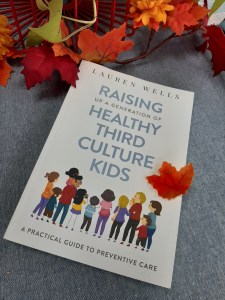
Lauren Wells created a resource book for parents using her experience and knowledge of third-culture kids. This book takes what encompasses moving and living overseas for children and puts those ideas into a practical guide. Lauren deals with leaving well, unresolved grief, identity, restlessness, and trauma, to name a few of these ideas.
My Thoughts:
If you are moving to a country other than your own with kids, you should own this book. Lauren has some great ideas to consider as your children process the move. It is an excellent bridge to understanding the world that your children will experience. It helps you engage in meaningful conversations to help them navigate all the emotions and feelings that they may go through. For me personally, this book was not as helpful. My children were born in Asia and have never lived in their passport countries. I know that TCKs have many of the strengths and challenges others have, but many chapters deal with children leaving their passport country. So, I didn’t find all the chapters applicable to our situation. With that said, I am glad I bought the book because it is a good resource. It has caused me to ponder some of the issues and helped me to start conversations with my teenage TCKs.
Update 12/22/23: This was last updated in 2020. Since then, I have opened Global Crossroads Consulting, LLC, to help individuals and families transition well. You can find more resources at that site, along with a new version of this article.
When I wrote this post a few years ago, we were in the middle of a move. No move this summer, but I have a son graduating. He has a big move ahead of him. With him building his RAFT and with the pandemic going on this year, I thought I’d add a few more thoughts.
This time of year is bittersweet for expats and their children. The excitement of summer coming means slower mornings – the breakfast rush of passing out pieces of bread to eat on the way to school is almost over. We know that we’ll get a few month’s break to recharge before starting back up in the fall. The crazy thing is that after a few days, we miss rushing the kids off so they have something to do besides telling us they are bored. For me, though, this summer will be about the beach, a nice large cup of cold tea (I’m so addicted to these Taiwan teas), and it’s looking like packing boxes.
Yep, we are moving – just not sure when. Yeah, that is hard, but will save that for another post as I’m still processing the unknowns. Being married to a TCK, I’ve learned a few tricks from my husband in assisting my kids in this process called moving. My husband and I both really believe in building RAFTs, and this time we are being more intentional in helping our now older kids build their own.
I really don’t like saying, “Good-byes”. I’d just rather avoid or ignore all the emotions and feelings I have during this move, but I know I can’t – I’ve just got to go through it because if I don’t, I could regret it. I’ve found that building my RAFT has been the key for me to do it in a healthy and may I say, somewhat graceful way.
So what is this “Building your RAFT” all about?
Are we building a boat? No, not literally. RAFT is an acronym that the late David C Pollock developed to help people transition. This process of moving can take up to six months or more. Below is the simple form of this model. If you have the opportunity to go to a seminar or workshop – GO! Seriously, it will change how you do the move – and I’m not talking about a dance step.
R = Reconciliation
Reconciliation is just that: reconciling with people and making the relationship right. Just because you leave a place doesn’t mean the problem goes away. It doesn’t – instead, it goes with you. Research has been done on health-related issues due to unforgiveness. Just google it and see for yourself.
A = Affirmation
Is there anyone you are super thankful for? Anyone who has helped you greatly while living in that city? Tell them. Let them know how much you appreciate them and what they did for you, for your kids, for your family. Awkward? Write a letter to tell them – but just tell them. You have the opportunity to make someone feel appreciated – and you’ll feel great that you did it.
F = Farewell
This is the not-so-fun part; saying goodbye. You immediately think of all the people you want to say goodbye to. An article I just read on this topic stated to rank your friends, which sounds harsh, but I do think is a good idea. Don’t forget to say “Good-bye” to places and things as well. This may sound strange, but it really helps to bring closure. This one is important for kids as well. Plan these “events” on a calendar so you get them in. I’ll write more on this later this week…so much you can do to help your kids here.
T = Think Destination
It’s just that – think about the next place. How will it be different from where you are now? How will it be the same? Go through this dialogue with your kids as well. It will help them in the process as well. Look up on the internet and read about the new place. Check it out on Google Maps. Reminder: It’s okay to feel excited about the new destination as you say goodbye to all the old things. It’s normal.
With the pandemic that rocked the world and seemed to turn it upside down this year, many people had to leave quickly without having a chance to build a proper RAFT. What can be done about that? How do you go day to day feeling incomplete or missing something? I’ve talked with a few friends who are in that situation. And you can Zoom, FaceTime, or Skype with people to tell them what you need to tell them. You can enter Google Earth to “visit” some of the places you couldn’t go and see. But it’s not the same. I’m not sure there is an answer that wraps up the ugly, messy feelings in a nice red bow. In time things become normal. In time, you may get to return to say goodbye, but you can’t be sure everyone or everything will be there. You may find that you need to talk to a professional because the loss is traumatic and great. And as you are trying to figure it all out, you need to be mindful of your kids and help them process it as well. You are grieving as a family, which requires a good amount of grace and wisdom.
Have you ever worried that your TCKs are going to forget or not know your home culture? Are you afraid that they are missing out on all the cultural festivities and knowledge about where you are from? That they are just not going to understand their heritage?
My kids are third culture kids(TCKs). Most of you have read my bio so I won’t bore you with details. In case you haven’t had the chance here is a shortened summary. I’m from the States, my husband is a German MK, and our kids are growing up in Asia.
Sometimes I wonder about the above questions. I know they are getting a great education. I know they are learning so much about the world by living overseas and going to school with children from all over the world. I’ve read books and have attended conferences to learn more about these resilient kids. I’m following blogs of top experts on the subject and even blogs by adult TCKs to gain more understanding. I do all of this and still I wonder.
I’m sure you do too, or you wouldn’t be reading this post.
So, what can you do to pass down your heritage to your kids?
Celebrate the holidays. Yep, this is one way I am doing it. Independence Day for the US is in a few days. I’ve had the opportunity to read part of this book to my girls. I’ve planned crafts and activities to do with them as well.
Since we are in the US, we will get with family and grill and celebrate together. We might even be able to shoot some fireworks off ~ I say might because it is so dry it might not be safe.
The years we have been out of the US for the 4th of July, I have had to be more intentional in celebrating. Sometimes, we’ve been able to attend parties hosted by the embassy. Other years we celebrated with just a few friends around the grill. And there has been a few years where it was just our family. But, no matter what, we brought out the red, white, and blue.
If you are a US citizen and wondering about some free simple activities that you can do with your kids, here are some ideas that I did this year with the girls.
1. Printed out simple readers that they colored and made into books. Click here for site.
2. Printed out some worksheets of the flag and the eagle. Click here for site. Note this site has some things for older kids as well.
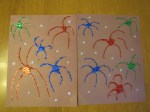
Click here for the website. 5. Blow-Paint fireworks here.
Super Easy, little messy.
Your Turn:Do you celebrate your home country’s holidays with your children? If you’re a TCK, did your parents teach you about specific holidays from their home country? Was it helpful, why or why not? Please comment below. I would LOVE to hear your ideas, thoughts or if you have other activities to share, please do!









 raisingTCKs