Book Review: THE GLOBAL NOMAD’S GUIDE TO UNIVERSITY TRANSITION by Tina L. Quick

THE GLOBAL NOMAD’S GUIDE TO UNIVERSITY TRANSITION, Second edition

by Tina L. Quick

Published: 2022

Summary

Tina Quick updated her book for TCKs transitioning to university life. She writes that it is also for parents, high school counselors, and university staff who support students. This book is divided into six sections: The Global Nomad/Third Culture Kid Experience, The Transition Experience, Identity Development and Relationship Insights, Realities of College Life, Health and Welfare, and Tips for Parents. It is tailored to read from cover to cover, but also, one can easily focus solely on one topic at a time. Each chapter offers knowledge but also times to go deeper, tips to try, and many graphs and models to help understand the concepts better. Tina offers knowledge about the issues of TCKs while offering tips to help them navigate the unknowns of university life.

Recommendation

I will be honest by saying I ignored the advice that you should never judge a book by its cover. I did judge this book by its cover and did not buy it until after my oldest was in university, but I didn’t really read it until my youngest was about to start university. With that said, I wish I had read it much earlier. It is packed with some really good information, but also practical tips that help not only the parent but the one who is about to launch. It is a thick book, so I believe it would have been daunting for them to pick up and read cover to cover. But, I believe it is a great resource for parents to use to start conversations with their high school kids. It is a great resource for high school counselors helping students leaving for their passport countries, and I do believe it is a must-read for any university student support staff who wants to understand this category of international students who may not look or sound international.

*Please note that I earn from qualifying purchases as an Amazon Associate. Please see the disclaimer at the bottom of the page.

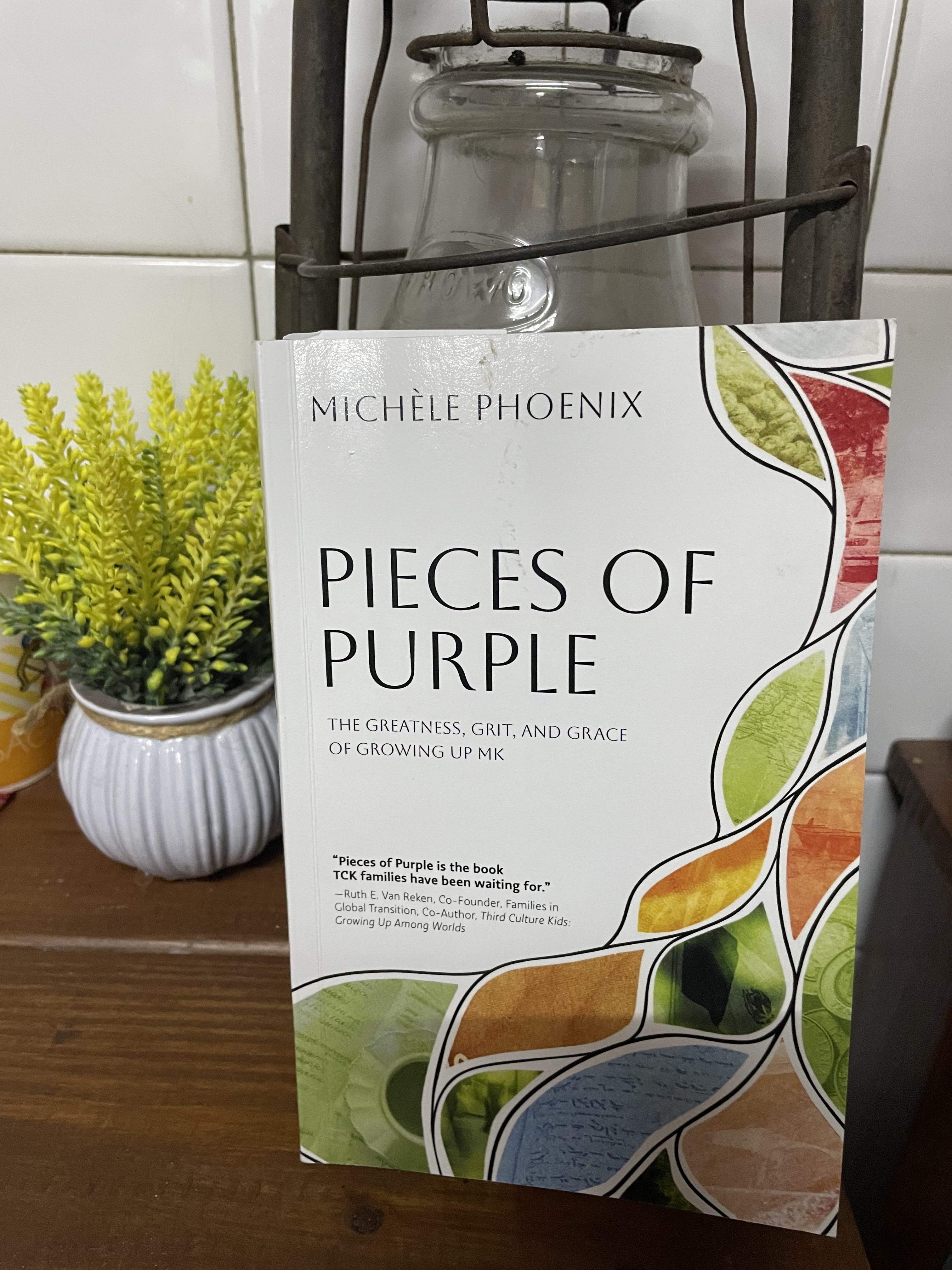
Book Review: BECOMING CLEAR by Claire Collins Friesen

Becoming Clear

by Claire Collins Friesen

Genre: Memoir (of a TCK)

Published: 2025

Summary:

Claire shares her life as a missionary kid (MK). She grew up in the Philippines but moved to the US in high school when her family decided to leave. During her senior year of high school, she returns to her MK school, where she realizes that things are the same, but she is not. She bounces around from university, Kenya, the Phillippines, university, and then South Korea. Her struggles in searching for her identity come to a head when she moves to Argentina. It is here that she faces many of the same themes that she faced in Filipino culture as a young adult. A dear school friend since grade school in the Philippines challenges her to write her story. And in doing so, Claire finds clarity and understanding in who she really is as a TCK, an introvert, and a high sensitive person.

Recommendations:

Memoirs are difficult to write. The art of not sounding like a journal entry that has details that do not move the story forward is one reason. The other is telling the story without defaming the character of others who are part of your story. It’s tricky. Claire shares the inner thoughts of a TCK/MK, which is something that is brave to do. It helps those who are teaching them, raising them, and anyone thinking about moving overseas with their children. She doesn’t hold back. And for that, I applaud her. But I did find myself skimming pages that dealt with the comings and goings of events, which felt more like a journal entry and did not really move the story forward. This is Claire’s first book. Her descriptions of the beauty of the land and the people to the stark contrast of poverty she witnessed as both a child and an adult leave you with the same questioning she wrestled with.

If you work with MKs or are raising them, then I do recommend this book because it is a more modern memoir that is relevant to many of the issues that MKs deal with today.

*Please note that I earn from qualifying purchases as an Amazon Associate. Please see the disclaimer at the bottom of the page.

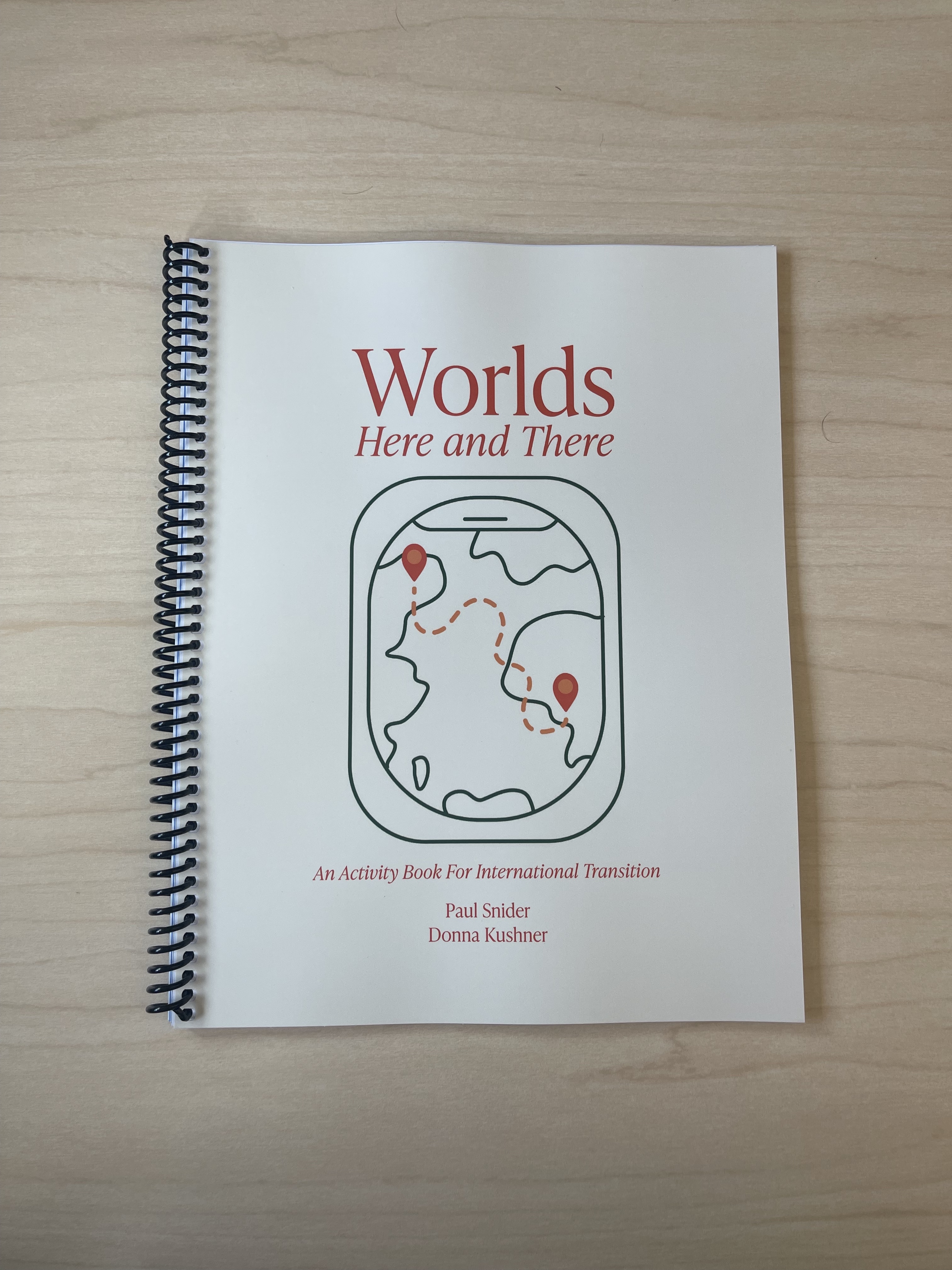
Book Reveiw: WORLDS HERE AND THERE by Paul Snider and Donna Kushner

World Here and There: An Activity Bood for International Transition

Written by Paul Snider and Donna Kushner Designed by Josephine Loh

Published: 2025

Summary

WORLDS HERE AND THERE is an activity book to help individuals and families during their transition. It provides activities and questions for processing – like naming the losses and recalling the memories. It can be used for re-entry to the passport country, for long home assignments, or for a brand new move. It is divided into several parts. One gives you a guide map on how to use the book – with a family, with a team, or individually. Another is the activities for the “Here” and “There” parts of the transition. There is a reflection section that takes the previous processing a little deeper. And ends with some suggestions for what to do next, along with resources that can be helpful as well.

Recommendation

I received an advanced reader copy (ARC) in digital form, so I cannot comment on the physical quality of the workbook. But seeing that it is spiralbound, which to me means that pages won’t fall out, is a HUGE positive. I know many spiral-bound books can be drab, but not this one. The pages are colorful and quite pleasant to look at. The design allowed white space for the participants to write or draw in the book. What I really liked about this book is that a family would only need to order ONE book for the family. This cuts the cost which is always a plus. Also, only having to pack one book is super helpful with limited space. And this is a book you would want to take with you to the next place.

I would recommend it for families preparing for a transition, but also for anyone who facilitates transition debriefs for families or groups.

Book Review: STAYING WELL ACTIVITY BOOK by Claire Holmes

Staying Well Activity Book: Practical Activities to Support Children Aged 7-12 Whose Best Friend is Leaving + Facilitator’s Guide

by Claire Holmes

Genre: Processing Guide for Ages 7-12

Published: 2025

Summary:

Claire Holmes’s new activity book is for younger TCKs or any child who has said goodbye to their best friend. This activity book is the third one on transition that she has written. The first two were from her Moving On Series, Arriving Well and Leaving Well. The structure of this book is similar to the other two books but has activities geared towards the Stayer. Claire uses each letter from the word “TRUST” to help the child “grow [their] TRUST and cope in the best way” (p. 6).

Recommendations:

Claire is a school counselor at an international school in Singapore, where her knowledge of transition and trauma gives her wisdom in writing this activity workbook. Like the other two books, her facilitator’s guide is written like a well-thought-out teacher plan. The instructions are clear, with example questions for discussion, illustrations of each activity page, and alternative ideas to use with the activity. I recommend this to schools, those working with TCKs regularly, and any family who wants to help their child process their best friend leaving. 

*Please note that I earn from qualifying purchases as an Amazon Associate.

New Year’s Day Thoughts – an excerpt from my journal

Day one of 2025 is here. At midnight, our city had a spectacular display of fireworks. I know this for two reasons. One, I felt our house shake from all the “booms,” which caused our dog to whine and bark up and down the hallway, which woke our twenty-something daughter with disabilities. Second, a friend who lives in a village just across the river posted a video this morning of the show from her balcony. I apprecitated the show better from her point of view.

This morning felt heavy – and not from partying the night before. When you have a child with disabilities, many things end – or rather, they change. Some for the better.

One thing that hasn’t changed is that every morning, I write in my journal and read my Bible – some mornings, I write the happenings of the day before or process something I had read in a book the night before. This morning, I processed what my One Word* would be:

I’ve been thinking about a word for this year, but nothing has come to mind. This morning, Uwe and I slept until 8 a.m. Matthea woke at 8:30 a.m. and has been a demanding tyrant for the past half hour. Maybe it’s because I haven’t had my coffee or sat with my thoughts and Bible – but if this is the outlook for 2025, then I choose HOPE for my word because I am feeling hopeless right now.

  • Hopeless that things will change and get better.
  • Hopeless that my writing will become anything worthy to publish.
  • Hopeless that I’ll make anything of my business.
  • Hopeless that Matthea will ever get to go to a Christian Adult Day program.
  • Hopeless that we will always be stuck in this rut of clutter and chaos.

What a great outlook for the first day of the year. It’s like starting a new book or chapter with marks and tears – making it barely readable, and you just want to throw it in the trash and pick another one off the shelf. But the shelf is bare, and this is the only book on it. It’s yours, a gift from the Lord.

So, hope is needed. Hope to take those tears and repair them, to fill in the pages with resurrection hope…And that can only be done with Christ – the Living Hope.

Hope – in my health, my work, my family, and in the home. I don’t say this flippantly, but because of Christ, there is always hope.

But what does your first day of 2025 look like so far? Do you pick a word for the year? If so, what did you choose?

*One Word – This is choosing one word for the year rather than writing New Year resolutions. The reasoning is that one word is easier to remember and can usually cross into all parts of your life.

**pc: my photo of a candle my oldest gave me a year ago that still makes me laugh every time I look at it.

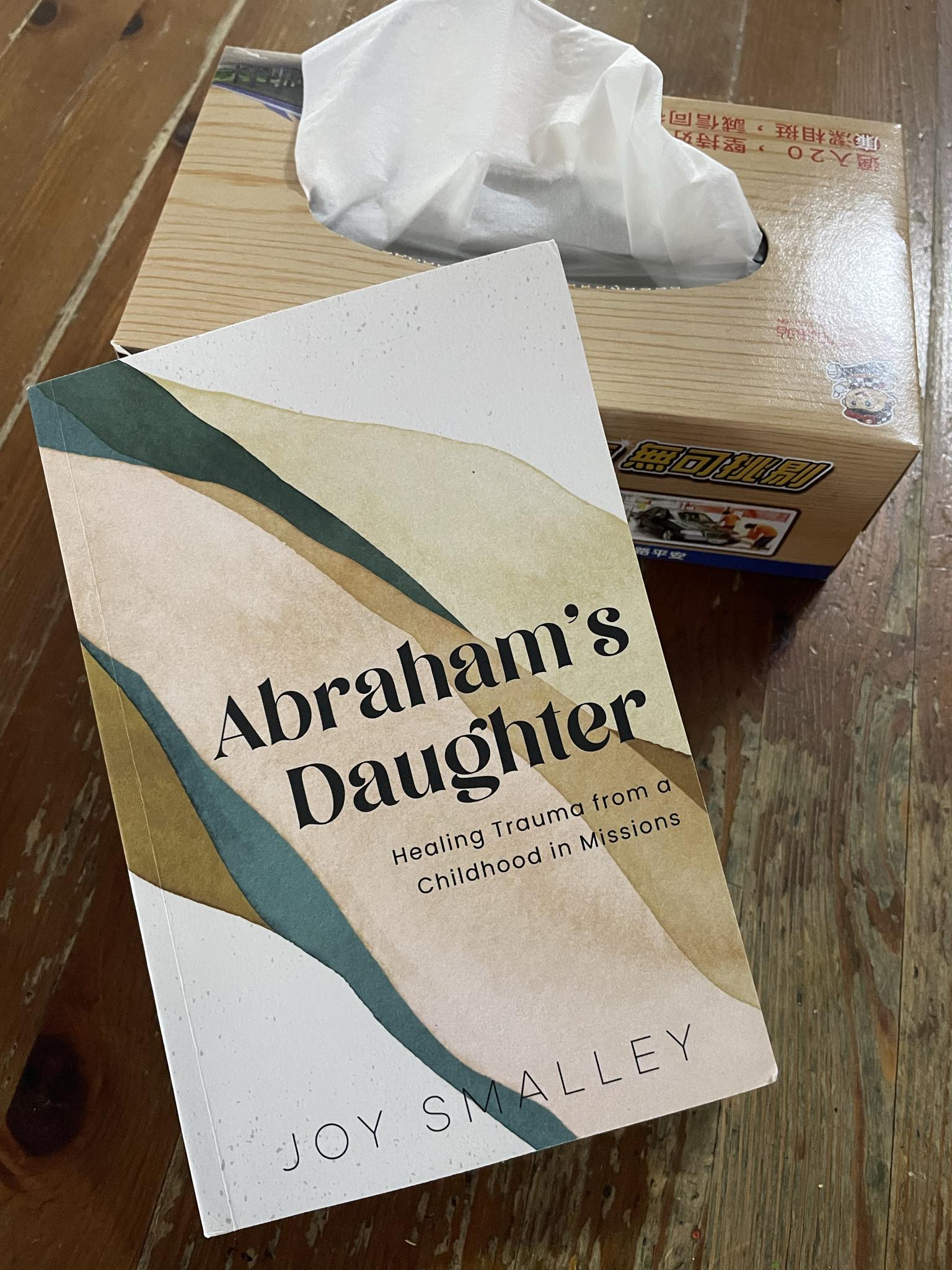
Book Review: ABRAHAM’S DAUGHTER by Joy Smalley

ABRAHAM’S DAUGHTER: Healing Trauma from a Childhood in Missions

Written by Joy Smalley

Published: 2023

Genre: Memoir

*Please note that I earn from qualifying purchases as an Amazon Associate. Please see the disclaimer at the bottom of the page.

Summary:

Joy Smalley writes a memoir as a missionary kid growing up in Mongolia. Though born in the US, at the age of ten her parents moved her and her siblings to Mongolia. Life was hard and and neglect for ministry was normal. She grew up believing that everyone experienced what she did as a child. As she matured and had children of her own, the chinks of this belief began to break. Her body began to show signs from years of “holding it together.” Her belief was challenged: Was God who He said He was? All this led to believing that life was not worth living. She sought help from a licensed therapist who helped her navigate her childhood story and gave her a name for it: trauma. Within each chapter, Joy bounces from her childhood story to the couch in the therapist’s office gripping the pillow with fringe. By writing in such a way, Joy allows the reader to see a glimpse of her story while allowing an explanation of what was going on emotionally. It is through this storytelling/explanation that we realize that her childhood coping strategies were no longer working. Through storytelling, she is able to show how triggers can set someone off with PTSD or even Complex PTSD, but also the road in which they can take to healing emotionally and spiritually.

Recommendation:

This was a challenging read and could trigger anyone who experienced neglect or childhood trauma in missions. With that said, it is a well-written book. Joy has a gift of words and storytelling that will keep you wanting to turn the pages. As a short-term counselor, I appreciated her framework for writing this memoir. It was a good balance of story and therapy. It is not a “self-help” book but a memoir of her healing journey. I recommend it to any parent of TCKs, educators of TCKs, and counselors/therapists/spiritual directors who work with TCKs. Each person’s story is unique, but reading Joy’s story could give you an idea of what other TCK/MKs may be battling. Or at the least give the challenge to sit and listen to their stories which could help them unravel their own knotted beliefs and emotions.

Book Review: SAM’S ROOMMATE DISASTER by Anna Danforth

SAM’S ROOMMATE DISASTER

by Anna Danforth

Genre: Middle Grade Novel

*Please note that I earn from qualifying purchases as an Amazon Associate. Please see the disclaimer at the bottom of the page.

Summary

Sam, a fifth-grade boy, is a missionary kid (MK) in the jungles of Congo. His best friend and roommate at the dorm has left, and he is stuck with a new roommate who is awful. Jordan does not seem to like Sam and is a terrible roommate, but everyone else likes him. Sam can’t figure it out. Through some pretty wild, unforgettable adventures, Sam has to make a decision whether he and Jordan can work out their differences or if maybe Sam has misunderstood Jordan all along.

Recommendation

Anna Danforth brings true stories of her husband’s childhood to life in this middle-grade novel. It is for ages 8-12 year-olds. Books are needed for the TCK/MK population, and this book is a good start. It has a strong beginning that will have you turning the pages to find out what is next, but I found that the main plot fizzled towards the middle. The friendship plot did not have enough twists and turns to help keep the story moving forward. It was solved in them in the middle of the story, which left the plot with not a real climax or resolution. But with that said, Sam is very relatable and the adventures he and his friends have are very memorable. I do think young MKs will enjoy reading about a fellow missionary kid who understands some of the challenges of living overseas and living in a dorm.

Relearning Simplicity: enjoying the simple things in life and celebrating them

In 2014, I published a post on learning to be content with simple birthday parties because our middle child with special needs turned eleven, and I could not think of a single friend to invite to her party. You can read the rest of the article here. Recently, Matthea turned twenty-one while traveling from one country to another. Again we were in a situation where friends were scarce, but family was not. But, while in the midst of this, I was also reminded to enjoy and celebrate the simple things.

We celebrated her birthday four times. One with friends who are like family and three with family. Each had a different theme. But they all had cake, presents, and singing. If you have ever celebrated a birthday party with Matthea, you know that clapping will accompany the singing. Loud clapping.

This girl loves to celebrate.

At the small church we attend, when we visit family, they invite those with birthdays or anniversaries to come to the front while everyone sings. Every single Sunday, she raised her hand and giggled though it was not her birthday. But, when others went forward she began her sharp clap to her own beat of the song “Happy Birthday.” On the day it was her birthday, she jumped down the aisle with the clapping.

But she doesn’t need a birthday to celebrate.

Last week, we took a longer walk than we intended. We ended up climbing a steep path that wound its way up to the point where we could look out over the valleys on either side of the hill. It was difficult for her. She wanted to stop several times, but she made it to the top with some encouraging chant of her name.

The view was stunning, but to see her smile and give us fist bumps when we told her we were proud of her was priceless. She wanted a Kinder chocolate bar to celebrate.

As usual, I think we can learn from her – to celebrate birthdays with clapping, conquer hills with fist bumps and chocolate, and enjoy life’s simplest things.

Raising TCKs in lands that are not familiar to us has its challenges. If you have moved to a new location and just rounded the corner of living there for a month, I challenge you to celebrate that achievement.

If you’ve lived there a year and you notice your kids are now eating foods they would not try when you first got there or can order food at a restaurant. Celebrate!

If you are now able to read the road signs or understand the announcements on the public transportation, celebrate!

Celebrations do not need to be extravagant planned-out theme parties – though if you LOVE to do that, go for it. They can be a simple high-five with your kids, a special meal with the family, or even a simple piece of chocolate.

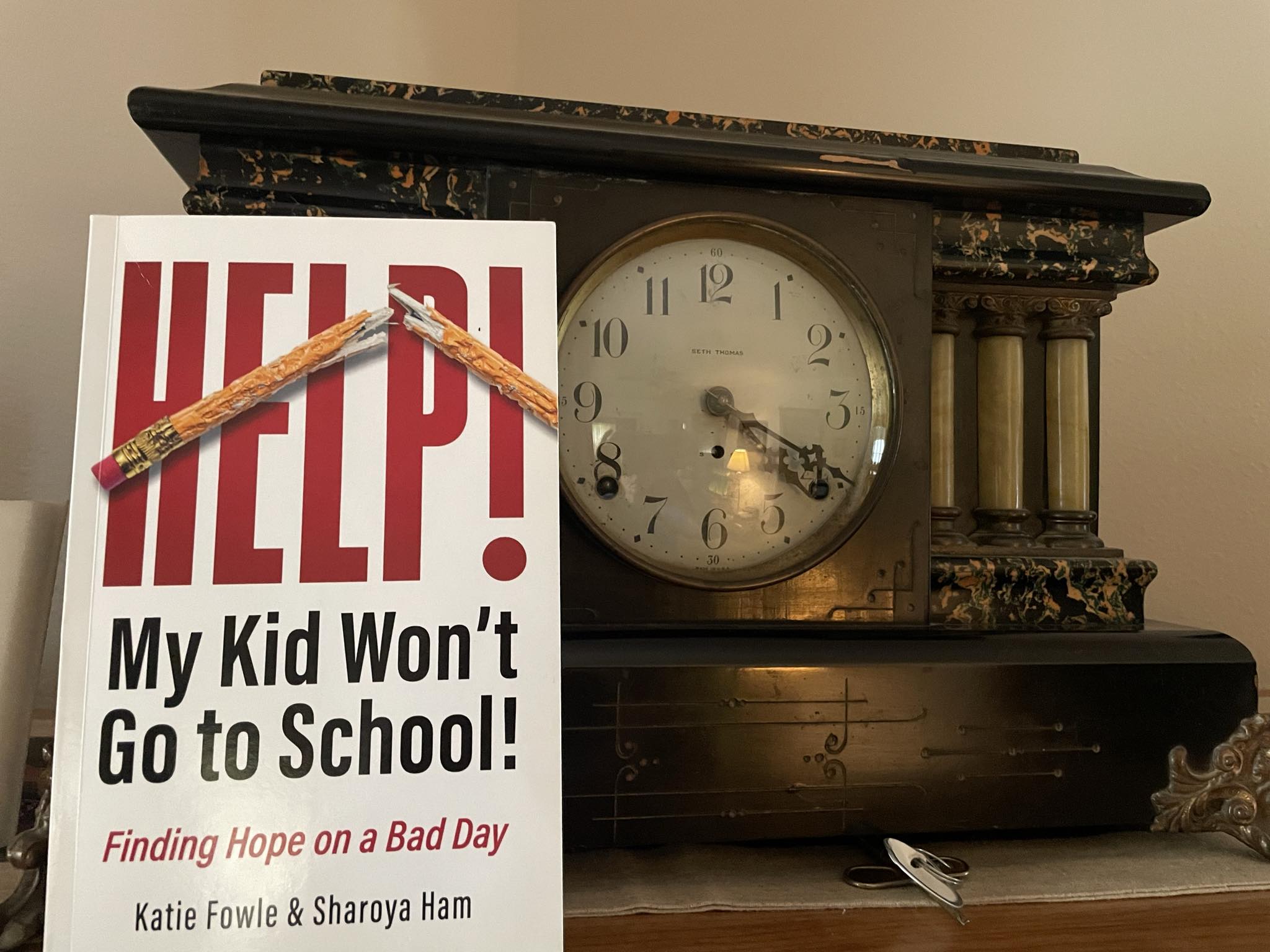
Book Review: Help! My Kid Won’t Go to School!

Help! My Kid Won’t Go to School! Finding Hope on a Bad Day

by Katie Fowle and Sharoya Ham

Published: 2023

*Please note that I earn from qualifying purchases as an Amazon Associate. Please see the disclaimer at the bottom of the page.

Summary:

This short (102 pages) book explains what school refusal is and explains the background on why kids struggle with going to school. Fowle and Ham team up to write a book that not only gives the why but explains how some parents are unaware of how their reactions encourage children to not attend school. Fowle is the parent who struggled with this issue and her passion to help other parents from what she has learned is evident in this book. Ham’s experience and knowledge makes this a resource parents can begin using right away. They offer practical tips to use at home and how to work with the school to help children learn the skill of willingness. Each chapter has questions that help the reader plan and continue to move forward towards the goal. This book is for parents or caregivers of children that are 9+ years old.

Recommendation:

If you are struggling with school refusal in your home, then I do think this book would be helpful. It focuses on the importance of the relationship between the parent and child. I have read educational articles on school absenteeism, but this is the first publication I have read coming from the parent’s point of view. The articles I read were all based in the US, but I am sure there are expat parents who may also struggle with this issue and may feel alone and possibly hopeless. This book is practical and easy to read. The exercises and suggestions can be used right away. Though they do warn that this is a process of change and not a problem that can be fixed overnight. Fowle is an educator and dyslexia specialist who tutors expat children around the globe. Ham is a behavior specialist and international parent coach.

Transition Rollercoaster – Round 2

This article was first published on July 31, 2020, titled Transition Roller Coaster. I have reworked and updated it below.

Transitions. It is a rocky time for globally mobile families. You are up and then down. Tossed and turned. Some people like the thrill of rollercoasters. Some people do not.

Transitioning with all the unknowns, chaos, and goodbyes feels like a never-ending rollercoaster ride. And just as people have very different opinions about rollercoasters, each person in a globally mobile family will have different reactions during this time of transition.

So, what can you, as the parent or caregiver, do?

  1. Be aware. Be aware of your own feelings and responses to those feelings. Observe how your body is responding to all the emotions you may be having. Is there tension in your shoulders? Headaches? Also, be aware that others may be acting out of response to anxiety, deep sadness, or even fear.
  2. Choose Grace. Grace is a Christian word that basically means gift. Offer the gift of understanding when a young child throws a tantrum at the table. Give grace to your spouse when you find them “hiding” in a book, TV series, or a game. Giving grace sometimes means forgiving before it’s been asked for. Don’t forget to give yourself grace. It’s easy to be hard on yourself, but you need grace, too.
  3. Communicate. When you are aware of your own actions and responses you can communicate with your family how you are feeling. You can ask for forgiveness when you’ve spoken in anger because of stress. You can ask how they are doing with this upcoming change. Use open-ended questions that do not allow for responses like “Okay,” “Fine,” or “It was good.” Ask “What are you going to miss the most?” or “How do you want to stay in touch with ______?” Remember though, that HOW you communicate is key – go back to #2 for guidance.

It’s easy to just close your eyes during a rollercoaster ride and not have the full experience. It’s also easy to just try to skip all of the parts of the transition to avoid the painful and hard moments, but it’s important to go through them. It’s important to process it all. Your mind and heart both need it.

So, I challenge you to hold on to that safety harness and force your eyes to stay open through all the dips, dives, and loops this transition rollercoaster brings.