Book Review: ABRAHAM’S DAUGHTER by Joy Smalley

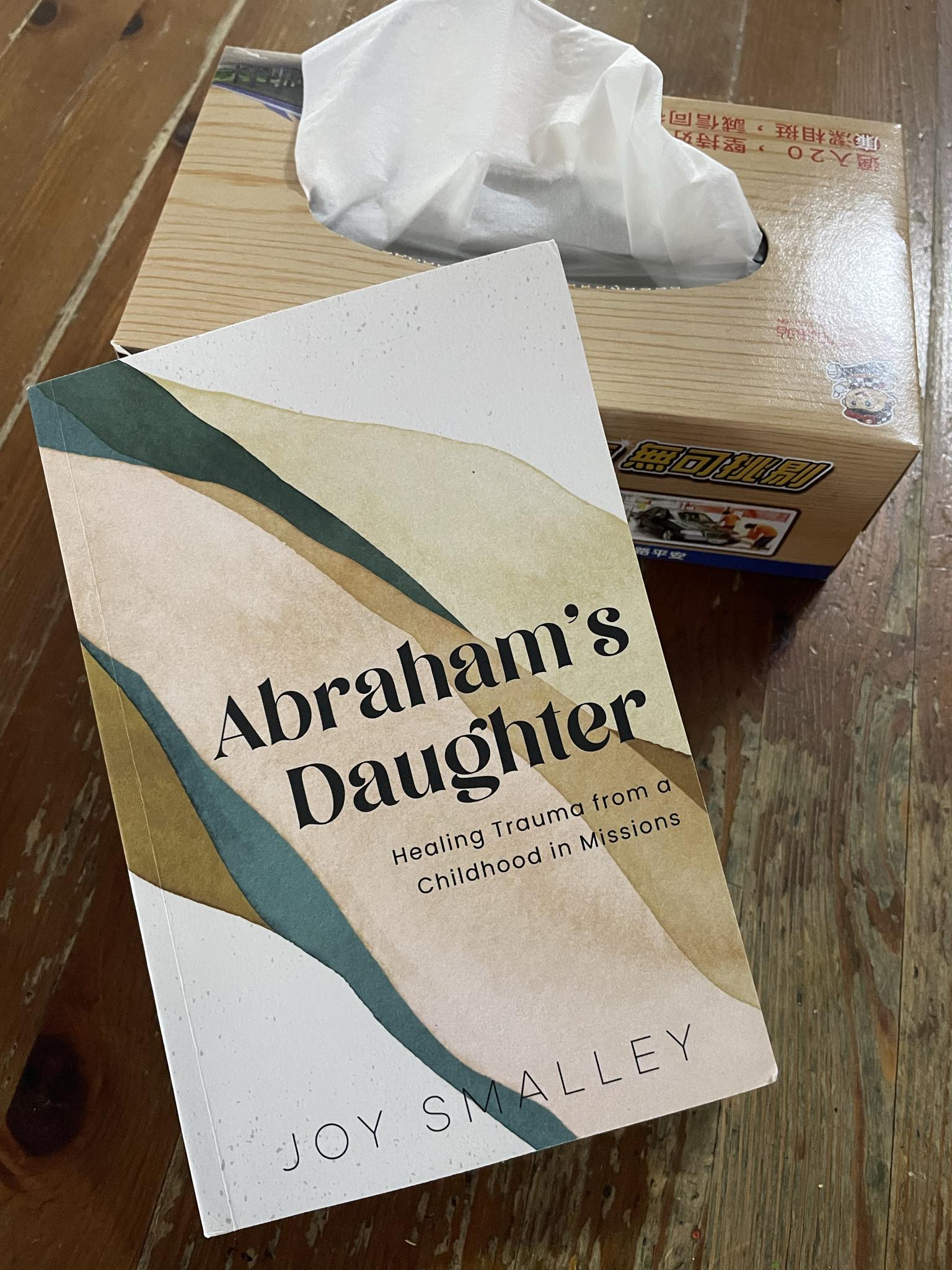
ABRAHAM’S DAUGHTER: Healing Trauma from a Childhood in Missions

Written by Joy Smalley

Published: 2023

Genre: Memoir

*Please note that I earn from qualifying purchases as an Amazon Associate. Please see the disclaimer at the bottom of the page.

Summary:

Joy Smalley writes a memoir as a missionary kid growing up in Mongolia. Though born in the US, at the age of ten her parents moved her and her siblings to Mongolia. Life was hard and and neglect for ministry was normal. She grew up believing that everyone experienced what she did as a child. As she matured and had children of her own, the chinks of this belief began to break. Her body began to show signs from years of “holding it together.” Her belief was challenged: Was God who He said He was? All this led to believing that life was not worth living. She sought help from a licensed therapist who helped her navigate her childhood story and gave her a name for it: trauma. Within each chapter, Joy bounces from her childhood story to the couch in the therapist’s office gripping the pillow with fringe. By writing in such a way, Joy allows the reader to see a glimpse of her story while allowing an explanation of what was going on emotionally. It is through this storytelling/explanation that we realize that her childhood coping strategies were no longer working. Through storytelling, she is able to show how triggers can set someone off with PTSD or even Complex PTSD, but also the road in which they can take to healing emotionally and spiritually.

Recommendation:

This was a challenging read and could trigger anyone who experienced neglect or childhood trauma in missions. With that said, it is a well-written book. Joy has a gift of words and storytelling that will keep you wanting to turn the pages. As a short-term counselor, I appreciated her framework for writing this memoir. It was a good balance of story and therapy. It is not a “self-help” book but a memoir of her healing journey. I recommend it to any parent of TCKs, educators of TCKs, and counselors/therapists/spiritual directors who work with TCKs. Each person’s story is unique, but reading Joy’s story could give you an idea of what other TCK/MKs may be battling. Or at the least give the challenge to sit and listen to their stories which could help them unravel their own knotted beliefs and emotions.

Book Review: SERVING AT THE ENDS OF THE EARTH by Steve and Gill Bryant

SERVING AT THE ENDS OF THE EARTH: Family life and TCKs, 3rd edition

by Steve and Gill Bryant

Published: 2017

*Please note that I earn from qualifying purchases as an Amazon Associate. Please see the disclaimer at the bottom of the page.

Serving at the Ends of the Earth is divided into seven sections. Steve and Gill begin by laying a foundation for what a missionary kid (MK) or third culture kid (TCK) is. They devote a section on transition describing what it is like, ideas to help with re-entry, and even a chapter for those times when a family may suddenly need to leave the host country without warning. Another section deals with parenting TCKs and has a chapter on cross-cultural marriages, which is nice as there are not a lot of resources on this topic. These sections are helpful and bring up some points that would be good for spouses/partners to discuss during all stages of transition.

I appreciated the last three sections of the book. First, one section deals with the heavy topic of dangerous situations and keeping children safe. This section was practical and is something that more and more organizations are becoming more educated in. I was glad to see it in this book as parents also need to be educated and know practical ways to keep their children safe.

The next section was about non-American TCKs. I appreciated this section because much of the literature comes from this background, and it is so good to read about what TCKs from other parts of the world experience. Their experiences are different and the challenges of repatriating or transitioning to university can be tricky. If you work in international schools, mission organizations, or HR departments of companies that have missionaries/global workers from all over the world, then I highly recommend this book just for this section alone.

The book’s last section is near and dear to my heart – educational issues. They discuss the different options, as well as their advantages and disadvantages. Another chapter deals with boarding schools. These two chapters are logical and can really help parents figure out what is best for each of their children. The authors point out that children are different and could need different educational options to help them grow and mature. The last chapter is on special education. Most of this chapter described various impairments, but the last few pages had guidelines for parents of children with special needs and for the sending agency. While I’m glad they included this chapter, I had a lot of questions after reading it, especially regarding their recommendations about MK schools being willing and able to take these students. While one would think it might be true, in reality there are few. But that is for another post at another time.

Though the audience of this book is missionary families and those who work with them, I see benefits to any global mobile family or organization/company that works with them to better understand what families need to consider when making a big move.

Book Review: THE HAPPY ROOM by Catherine Palmer

THE HAPPY ROOM

by Catherine Palmer

Published: 2002

Genre: Novel

*Please note as an Amazon Associate, I earn from qualifying purchases.

81qOl9Fdm2L._SY522_

Summary:

The Mossman family were missionaries in Africa. The three children viewed the experiences differently, which affected their adult lives. Peter turned away from God. Julia embraced the faith. The youngest Mossman brings them back together when she is hospitalized due to an illness. During the hospital stay, each of the siblings revisits the memories from their childhood. From the three perspectives, the readers get a clear picture of what life was like in the Mossman home, but also the experience of boarding school. As pain is revealed, healing begins – and the characters learn more about each other and the God who never left them.

My Take:

I’d heard of this book from a few friends and finally got my turn to read it. My curiosity led to a background check on the author, and I discovered that she and I are alumni of the same university, which I find incredible. But, what my investigative work also uncovered was that she is also an MK from Africa. Catherine knows a bit about this life overseas, and it truly comes alive through the characters in this book.

I love that the three siblings had different opinions about being raised overseas. I loved that they each told virtually the same story but with a different twist as to their perspective. The book was a quick read, meaning I had difficulty putting it down. 

I recommend it to parents as it will help them understand how their children may have different opinions about living overseas and being a TCK. I also would recommend it to ATCKs with a warning that if they experienced childhood trauma, it could be a trigger.