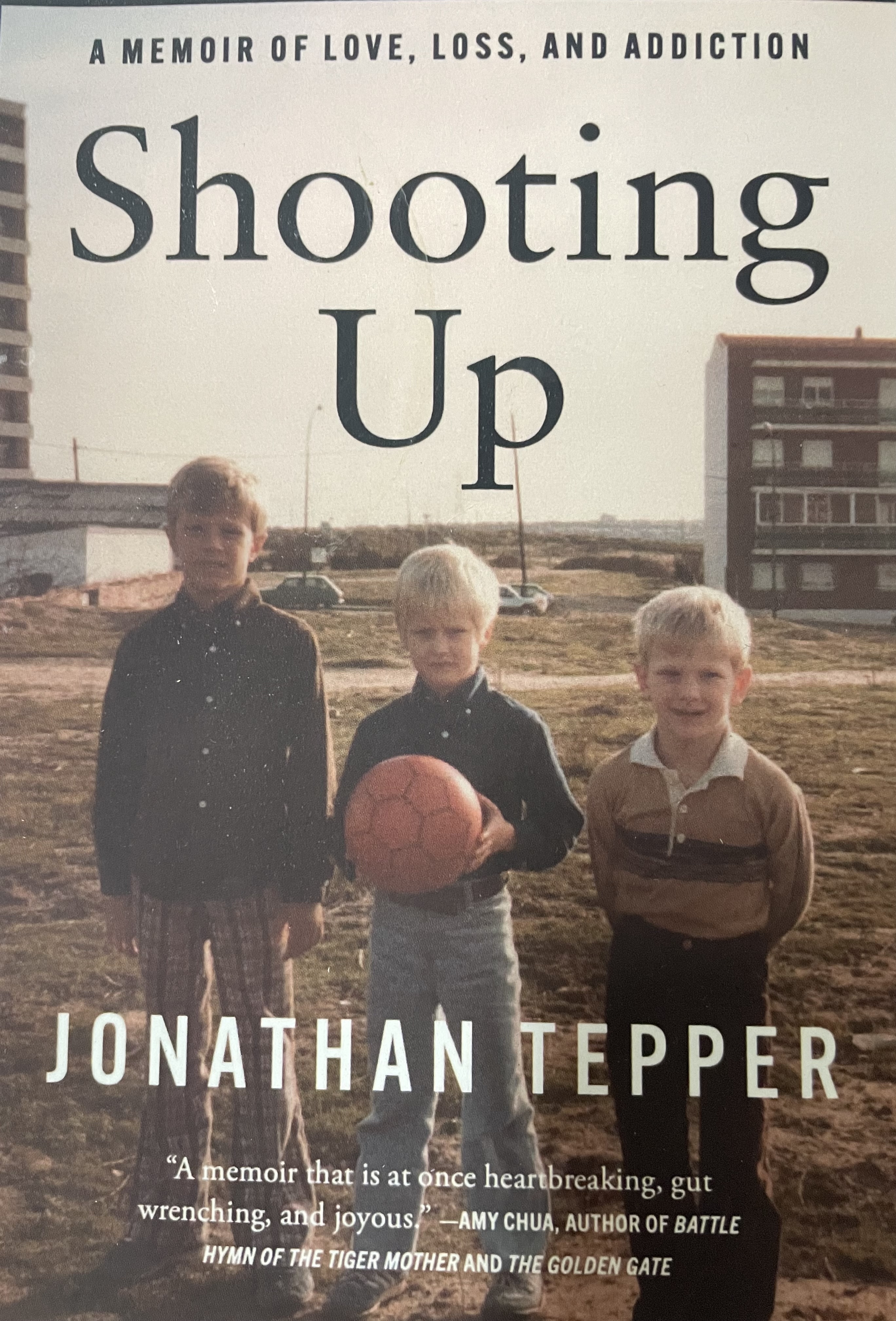
Jonathan Tepper is a missionary kid (MK) who grew up in San Blas, a heroin slum of Madrid, Spain, in the 1980s. His parents started their missionary service focused on university student ministry, but soon shifted as they saw God leading them to work with the yonkis (junkies). This ministry turned into drug rehab centers throughout Spain. Jonathan shares the stories of the people his family worked with – people who became his brothers and sisters. He tells of the AIDS crisis that swept through the world, but from the point of view of one who experienced the pain and suffering it caused those he loved. He tells of the family tragedy that left them all reeling in their own emotions of loss and grief. His story, though, is not one of hopelessness and trauma of a young kid who saw and experienced very challenging situations in his life. Jonathan does not hide or cover the dark times; however, he shows hope in the midst of grief. His story is a prime example of what many MKs face as they grow up – the very real challenges and grief, AND the benefits of growing up in a land that is different than their passport.
Recommendation:
In all honesty, this is one of the best MK memoirs I have ever read. Why do I say that? The writing is phenomenal. Jonathan draws you in on the first page – three blond boys folding tracks to pass out to the yonkis for ice-cream. His story parallels those of many MKs from the 1970s-80s. And while every MK story is unique, the fact that his parents ministered to junkies and his family tragedy give his story twists and turns that kept me turning the pages. He holds nothing back about what he was thinking at the time, and the way he weaves his story with the lives of those around him creates a beautiful tapestry that honors those he loves.
But it is not just a memoir of an MK. Jonathan also touches on the aspects of the AIDS crisis that hit the world in the 1980s. He saw firsthand the effects of the disease and what it was doing to his neighborhood. He witnessed the fear people felt because of their lack of understanding and ignorance about how it spreads. He also explains how his family responded in loving ways towards those who were diagnosed HIV positive. In the end, Jonathan gives humanity to those who suffered. Humanity and honor to a group of outcasts in the world, but because of their faith in God became children of God who produced much fruit.
I highly recommend getting this book and reading it. You will be challenged. You will be encouraged. You will learn.
*Please note that I earn from qualifying purchases as an Amazon Associate. Please see the disclaimer at the bottom of the page.
Annie is an Australian nurse during World War II. We see the hardships of a young girl leaving her home in the bush with a father who doesn’t know how to show her love, and the hardships of a war nurse’s life in the Pacific theatre. Annie travels to far-flung places after the war, trying to find her way in life. We watch as love finds her in unexpected places and with unexpected people. We see the world through the eyes of a woman who is loyal to her friends, fights for what is right, and often speaks before thinking, bringing humor in unexpected places.
Recommendation:
Annie’s Day is more than a historical novel. It is a reflection of Annie’s life as an Australian nurse during World War II and her life afterwards. There are many themes that reflect the views of individuals who have grown up in a multicultural world. From the hardships of war and caring for soldiers from around the world, to moving to various countries that were both exciting and dangerous, to befriending a young Indian woman living in a time of rapid change. Apple Gidley, the author, did a fantastic job of switching from Annie’s present day to her memories of the past and weaving a beautiful story of family, friends, and world events of the time. If you are looking for a fun book for the holiday season, this is the one I’d recommend.
*And for a limited time, Amazon is offering Audible at a great price. You can find details here.
**Please note that I earn from qualifying purchases as an Amazon Associate. Please see the disclaimer at the bottom of the page.
Amelia is a recent widow. Her husband was a well-known artist. However, due to the husband’s decline in health, they lived a secluded life in Papua New Guinea for several years. Amelia sells the home, takes a few of her favorite pieces from her husband’s collection, and moves to Italy. A place where there are no memories of them together. A place where she can begin to find herself, the once-forgotten Amelia. Her two daughters believe she has gone mad until they visit and see that this adventure is exactly what their mother needs. Through Amelia’s new friends, she finds herself – and she finds serenity. Though, not in ways she ever expected.
Recommendation
This is not about a TCK, but it is about expat living. We watch a woman grieving her loss, processing her late husband’s mistakes, all the while learning a new language and culture. She makes friends with the “locals” and becomes one of them. Since Apple is a TCK herself, I believe she intentionally adds one character in her novel that is. Amelia has a clever conversation with this TCK, and in just a few sentences, one reads the facts of growing up outside your passport. This TCK says, “That’s the trouble with a nomadic upbringing. One tends to feel at home in many places.” He then shares that his sister had a rough time and hasn’t moved since after university.
If you are looking for a fun book to read this summer or for a long flight, I recommend this book. You can escape to the vineyards of Italy and the many cafes while reading something you understand even if you have never stepped foot into Italy.
*Please note that I earn from qualifying purchases as an Amazon Associate. Please see the disclaimer at the bottom of the page.
Claire Holmes’s new activity book is for younger TCKs or any child who has said goodbye to their best friend. This activity book is the third one on transition that she has written. The first two were from her Moving On Series, Arriving Well and Leaving Well. The structure of this book is similar to the other two books but has activities geared towards the Stayer. Claire uses each letter from the word “TRUST” to help the child “grow [their] TRUST and cope in the best way” (p. 6).
Recommendations:
Claire is a school counselor at an international school in Singapore, where her knowledge of transition and trauma gives her wisdom in writing this activity workbook. Like the other two books, her facilitator’s guide is written like a well-thought-out teacher plan. The instructions are clear, with example questions for discussion, illustrations of each activity page, and alternative ideas to use with the activity. I recommend this to schools, those working with TCKs regularly, and any family who wants to help their child process their best friend leaving.
*Please note that I earn from qualifying purchases as an Amazon Associate.
Day one of 2025 is here. At midnight, our city had a spectacular display of fireworks. I know this for two reasons. One, I felt our house shake from all the “booms,” which caused our dog to whine and bark up and down the hallway, which woke our twenty-something daughter with disabilities. Second, a friend who lives in a village just across the river posted a video this morning of the show from her balcony. I apprecitated the show better from her point of view.
This morning felt heavy – and not from partying the night before. When you have a child with disabilities, many things end – or rather, they change. Some for the better.
One thing that hasn’t changed is that every morning, I write in my journal and read my Bible – some mornings, I write the happenings of the day before or process something I had read in a book the night before. This morning, I processed what my One Word* would be:
I’ve been thinking about a word for this year, but nothing has come to mind. This morning, Uwe and I slept until 8 a.m. Matthea woke at 8:30 a.m. and has been a demanding tyrant for the past half hour. Maybe it’s because I haven’t had my coffee or sat with my thoughts and Bible – but if this is the outlook for 2025, then I choose HOPE for my word because I am feeling hopeless right now.
Hopeless that things will change and get better.
Hopeless that my writing will become anything worthy to publish.
Hopeless that I’ll make anything of my business.
Hopeless that Matthea will ever get to go to a Christian Adult Day program.
Hopeless that we will always be stuck in this rut of clutter and chaos.
What a great outlook for the first day of the year. It’s like starting a new book or chapter with marks and tears – making it barely readable, and you just want to throw it in the trash and pick another one off the shelf. But the shelf is bare, and this is the only book on it. It’s yours, a gift from the Lord.
So, hope is needed. Hope to take those tears and repair them, to fill in the pages with resurrection hope…And that can only be done with Christ – the Living Hope.
Hope – in my health, my work, my family, and in the home. I don’t say this flippantly, but because of Christ, there is always hope.
But what does your first day of 2025 look like so far? Do you pick a word for the year? If so, what did you choose?
*One Word – This is choosing one word for the year rather than writing New Year resolutions. The reasoning is that one word is easier to remember and can usually cross into all parts of your life.
**pc: my photo of a candle my oldest gave me a year ago that still makes me laugh every time I look at it.
Today’s story involves my TCK husband, my daughter with special needs, and stress. And, of course, myself with lessons learned.
Setting
You may know that my husband is German but grew up on the island of Taiwan. He has only lived in Germany for a total of six years. This story occurred in his passport country, where the temperature dropped tremendously. We had packed for cooler temperatures, not for winter. We stayed in a village nestled in the middle of steep forested hills and valleys. It was beautiful and quiet but far from civilization.
Conflict
In any story, there is some sort of conflict. It can be person vs. person, person vs. self, or person vs. nature. This one may seem to be a person vs. person conflict, but it is, in fact, a conflict involving all three — one you may call the perfect conflict storm.
Person vs. Nature: Most of my work these days revolves around the computer and being online. The same is true for my husband. This beautiful location had very limited wifi. In fact, we could not all be on it simultaneously. We needed to take turns or go to a coffee shop inside Globus. I was waking up at 4am due to jet lag, so I would work until 7am while most of the village was sleeping. Most days it was slow but doable within those three hours. The weather had turned from sunny, gorgeous blue skies to cold, gray, rainy days. It just added to the tension of this particular morning.
Person vs. Self: The pressure I put on myself is sometimes ridiculous. I struggle with being a perfectionist. At this point, I had writing and editing deadlines due and quite a bit of reading to do. As a mom to an adult with special needs, I wanted to make sure that I had stimulating activities for her to do, which I failed for the most part. Then, there is the pressure I put on myself to be the idolized Proverbs 31 woman. I’m old enough and have studied that passage enough to know the real meaning, but I slip back into that belief system when I’m in my perfectionist mode.
Person vs. Person: My husband is great. He is patient with me and understanding most of the time. But there are times in our lives when we are both under pressure, stressed, and fighting inner battles that we tend to clash with each other. This was one of those mornings. And then there is my daughter with special needs. She is nonverbal, but communicates very well what she wants most of the time. She has her ideas of what she wants and we have our ideas of what she can have. And sometimes those are not the same. Thus, a conflict of wills.
On this early morning, I woke up with no coffee powder. We were out. I didn’t want to risk waking his parents at such an early hour, so I made tea. The internet was at an all-time speed of zilch. Okay, I can go to the coffee shop when Uwe wakes up and still make the deadline. No problem. I read books for my research and did what I could that didn’t require wifi.
Uwe woke and went down to get coffee powder. We had a quiet breakfast together with coffee. My day was getting better. Matthea woke, and I began to help her get ready for the day. Uwe made her breakfast.
All seemed to be going as I had planned.
As I passed the kitchen to grab Matthea’s clothes in the other room, I noticed Uwe packing his computer into his bag.
Umm, are you planning to go to the coffee shop?
I talked to Dad this morning, and he needs to go to the store, so I’m going to ride with him. I will work at the coffee shop and then bring back lunch for us.How does that sound?
A perfect wife would have said, “That sounds wonderful.” But more likely could have said, “Wait, you are going to the coffee shop? Is there any way I could go instead? Or maybe we all go?”
But that is not what came out of my mouth.
I didn’t say anything. I shut the bathroom door and mumbled complaints as I handed Matthea her shirt and pants. So began the inner battles.
What is wrong? He calls from the other side of the door.
Nothing is wrong.
What, are you mad that I’m going to the coffee shop? What were you planning to do?
I pretend to not hear him. I can hear him mumbling in the kitchen as he begins to do the dishes.
I follow Matthea into the kitchen. Her breakfast is on the table. Uwe is at the sink finishing up the last dish. Matthea turned abruptly around and communicated that she wanted her iPad. The rule is that after breakfast, she can listen to an episode while she builds blocks or colors. She had her own expectations of what the day would look like. And a battle of wills began. Another layer of conflict.
The storm was at full brew now.
Climax
With Matthea finally in her chair and eating breakfast, I thought I could grasp what was going on.
What time are you leaving? I asked.
In like twenty minutes.
The struggle in my brain was real. I was pressured to get some writing projects submitted that day, and I had no internet access. I wanted to be warm. I wanted Matthea to be normal and be able to do what typical twenty-one-year-olds do. I wanted Uwe to know what I wanted and needed. This all swirled in my mind, which only frustrated me even more. I could feel my brain flooding.
Flooding is when your emotions are at an all-time high, and you are not able to process what you are feeling. It affects your thoughts and the way you function. And the only way to stop the flooding is to create space to think it out.
I grabbed my tennis shoes.
I’m going for a walk and I promise to be back before you need to leave.
He nodded in understanding. I opened the door to cold, fresh air and started speed walking up the hill. I walked until my lungs stung, which didn’t take long. Within ten minutes, I had my frustrations out and was ready to talk.
Conclusion
I returned in a calm spirit. I told him what I was expecting that morning. He grinned.
What if we all go? Can you be ready in ten minutes?
I love that man. That is precisely what we did. We all went to the coffee shop and got our work done on time. And Matthea enjoyed looking at a new magazine while we worked.
One of the things I have learned in my studies in care and counseling that has really helped me is the idea of flooding. In my own life, I can now recognize when I am heading in that direction or in a state of flooding. I now know that I need space to process what I’m feeling, why I’m feeling those feelings, and even to process what I feel about those feelings. From there, I can make a decision about what I am going to do with all those emotions.
Maybe you can relate to this state of flooding. When your brain is flooding, you need to step away from the conflict and do something different. This will stop the hormones that are literally flooding your brain, telling you that you are in danger.
Or maybe you can relate to my husband. Maybe you have a significant other or child who experiences flooding. In this case, let them have the space away to get control over their emotions. Let them color, do sudoku, take a walk, or something for ten to twenty minutes. Then, talk to them about the conflict. That space will also be good for you as well.
To know more about this, please check out my article, “Transition Issues: Window of Tolerance,” at Global Crossroads Consulting. It explains how some people flood and shutdown and how others get revved up and may explode.
*Please note that I earn from qualifying purchases as an Amazon Associate. Please see the disclaimer at the bottom of the page.
Summary
Sam, a fifth-grade boy, is a missionary kid (MK) in the jungles of Congo. His best friend and roommate at the dorm has left, and he is stuck with a new roommate who is awful. Jordan does not seem to like Sam and is a terrible roommate, but everyone else likes him. Sam can’t figure it out. Through some pretty wild, unforgettable adventures, Sam has to make a decision whether he and Jordan can work out their differences or if maybe Sam has misunderstood Jordan all along.
Recommendation
Anna Danforth brings true stories of her husband’s childhood to life in this middle-grade novel. It is for ages 8-12 year-olds. Books are needed for the TCK/MK population, and this book is a good start. It has a strong beginning that will have you turning the pages to find out what is next, but I found that the main plot fizzled towards the middle. The friendship plot did not have enough twists and turns to help keep the story moving forward. It was solved in them in the middle of the story, which left the plot with not a real climax or resolution. But with that said, Sam is very relatable and the adventures he and his friends have are very memorable. I do think young MKs will enjoy reading about a fellow missionary kid who understands some of the challenges of living overseas and living in a dorm.
In 2014, I published a post on learning to be content with simple birthday parties because our middle child with special needs turned eleven, and I could not think of a single friend to invite to her party. You can read the rest of the article here. Recently, Matthea turned twenty-one while traveling from one country to another. Again we were in a situation where friends were scarce, but family was not. But, while in the midst of this, I was also reminded to enjoy and celebrate the simple things.
We celebrated her birthday four times. One with friends who are like family and three with family. Each had a different theme. But they all had cake, presents, and singing. If you have ever celebrated a birthday party with Matthea, you know that clapping will accompany the singing. Loud clapping.
This girl loves to celebrate.
At the small church we attend, when we visit family, they invite those with birthdays or anniversaries to come to the front while everyone sings. Every single Sunday, she raised her hand and giggled though it was not her birthday. But, when others went forward she began her sharp clap to her own beat of the song “Happy Birthday.” On the day it was her birthday, she jumped down the aisle with the clapping.
But she doesn’t need a birthday to celebrate.
Last week, we took a longer walk than we intended. We ended up climbing a steep path that wound its way up to the point where we could look out over the valleys on either side of the hill. It was difficult for her. She wanted to stop several times, but she made it to the top with some encouraging chant of her name.
The view was stunning, but to see her smile and give us fist bumps when we told her we were proud of her was priceless. She wanted a Kinder chocolate bar to celebrate.
As usual, I think we can learn from her – to celebrate birthdays with clapping, conquer hills with fist bumps and chocolate, and enjoy life’s simplest things.
Raising TCKs in lands that are not familiar to us has its challenges. If you have moved to a new location and just rounded the corner of living there for a month, I challenge you to celebrate that achievement.
If you’ve lived there a year and you notice your kids are now eating foods they would not try when you first got there or can order food at a restaurant. Celebrate!
If you are now able to read the road signs or understand the announcements on the public transportation, celebrate!
Celebrations do not need to be extravagant planned-out theme parties – though if you LOVE to do that, go for it. They can be a simple high-five with your kids, a special meal with the family, or even a simple piece of chocolate.
*Please note that I earn from qualifying purchases as an Amazon Associate. Please see the disclaimer at the bottom of the page.
Summary:
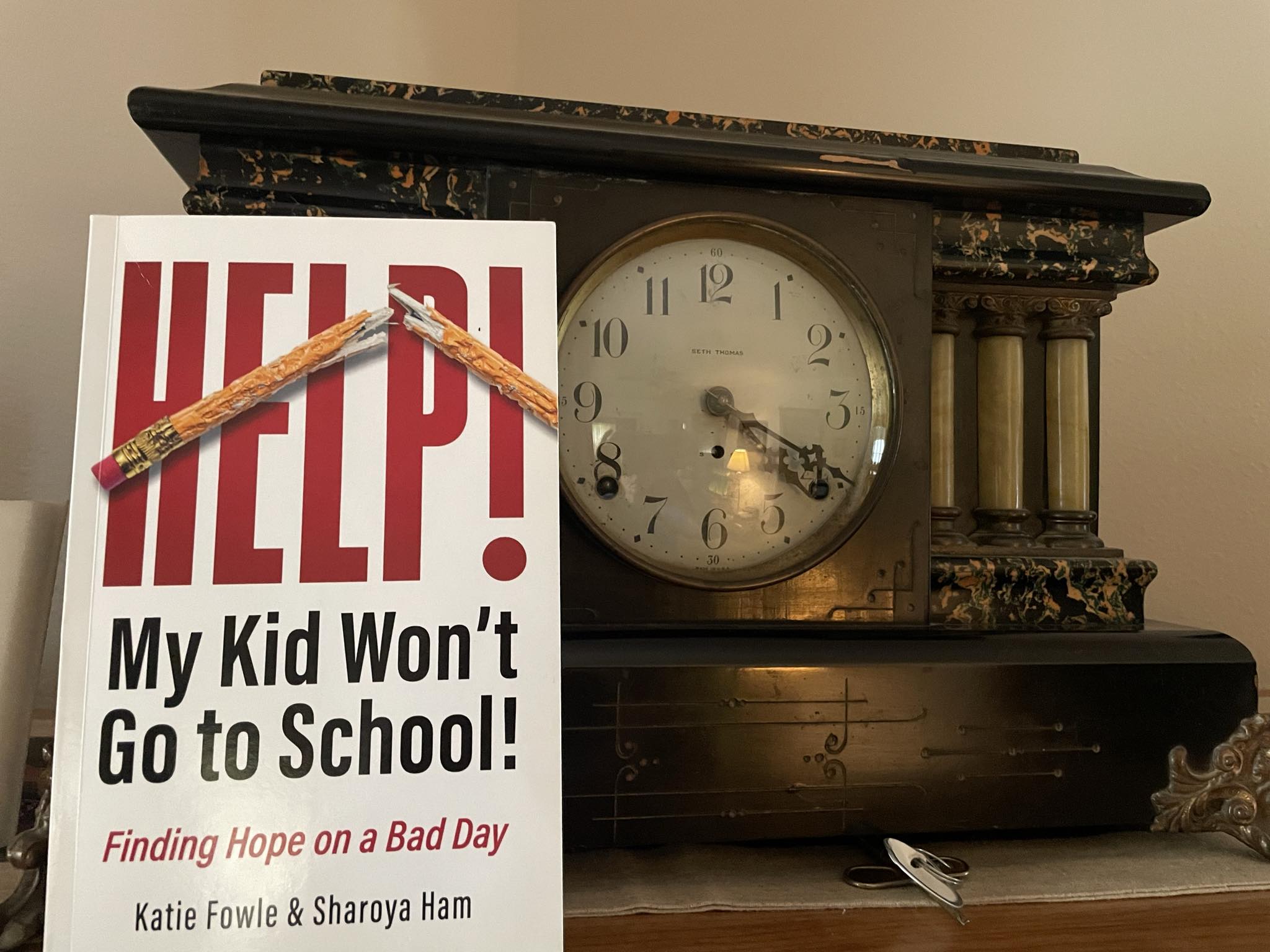
This short (102 pages) book explains what school refusal is and explains the background on why kids struggle with going to school. Fowle and Ham team up to write a book that not only gives the why but explains how some parents are unaware of how their reactions encourage children to not attend school. Fowle is the parent who struggled with this issue and her passion to help other parents from what she has learned is evident in this book. Ham’s experience and knowledge makes this a resource parents can begin using right away. They offer practical tips to use at home and how to work with the school to help children learn the skill of willingness. Each chapter has questions that help the reader plan and continue to move forward towards the goal. This book is for parents or caregivers of children that are 9+ years old.
Recommendation:
If you are struggling with school refusal in your home, then I do think this book would be helpful. It focuses on the importance of the relationship between the parent and child. I have read educational articles on school absenteeism, but this is the first publication I have read coming from the parent’s point of view. The articles I read were all based in the US, but I am sure there are expat parents who may also struggle with this issue and may feel alone and possibly hopeless. This book is practical and easy to read. The exercises and suggestions can be used right away. Though they do warn that this is a process of change and not a problem that can be fixed overnight. Fowle is an educator and dyslexia specialist who tutors expat children around the globe. Ham is a behavior specialist and international parent coach.
*Please note that I earn from qualifying purchases as an Amazon Associate. Please see the disclaimer at the bottom of the page.
Summary:
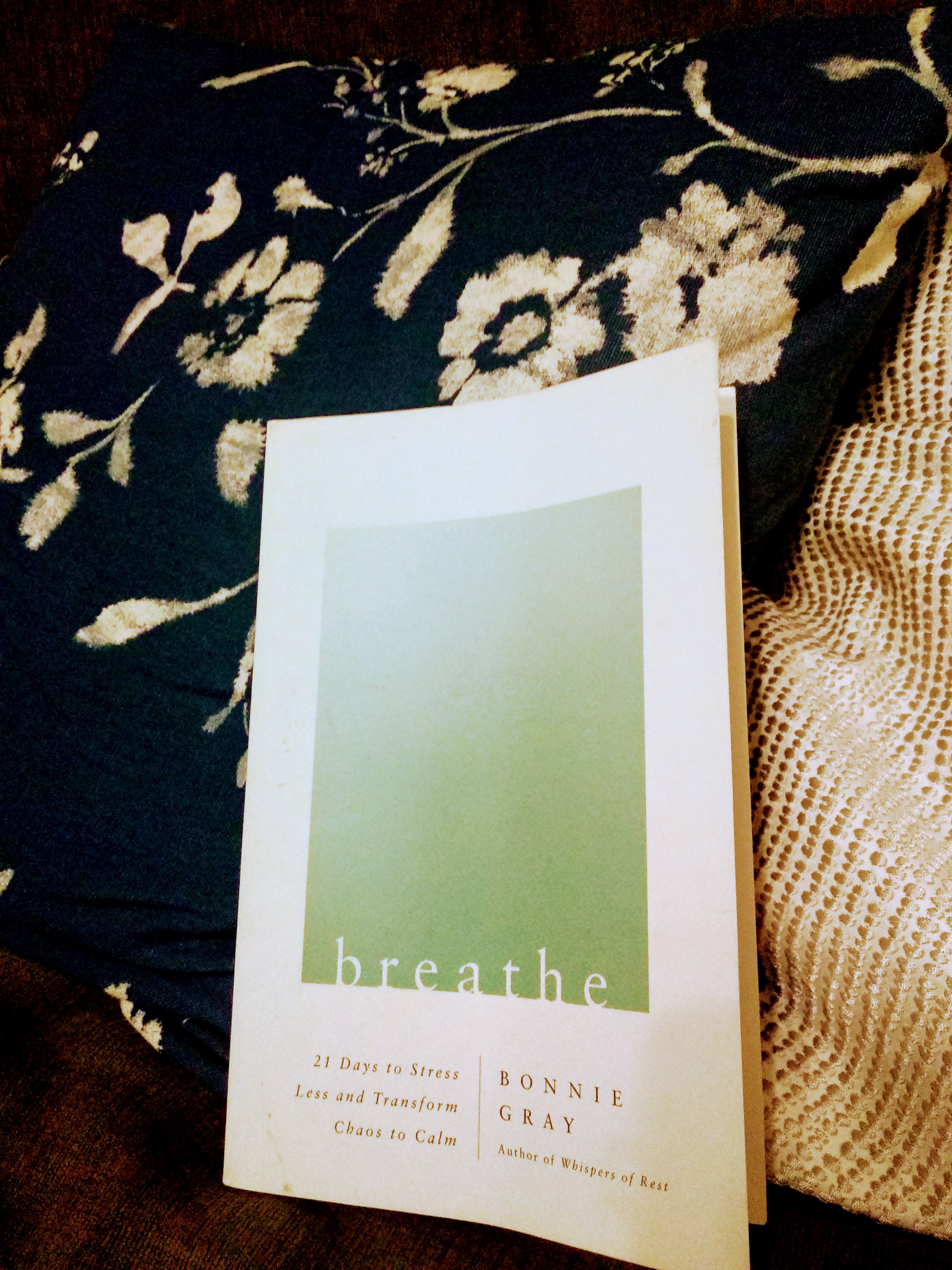
Bonnie Gray shares what she learned during a period of time when she was overwhelmed with life’s pressures that was stemmed from her childhood. She battled anxiety, depression, and panic attacks. Through scientific research and Biblical scripture, Bonnie developed a rhythm that she uses with her sons. She has also mentored “from Army officers to teenagers to every day moms and dads” (p. 13). This book is divided into four sections: Emotional Wellness, Physical Wellness, Spiritual Wellness, and Social Wellness. Each chapter also has four parts as well – Refresh, Release, Restore, and Reflect. But before you dive into the book, Bonnie invites you to take her free Soul Care Quiz. This will allow you to see which area you need to slow down in and work on.
Recommendation?
Living overseas brings about many transitions. And with transitions comes stress – anxiety, possible panic attacks, and maybe even some lows that need to be addressed. This book is a valuable tool for those who need to slow down but are unsure how. It offers an intentional, structured way to practice individually or in a small group. It is geared towards Christianity with the use of breath prayers. There is so many resources out there, but I found this one to have a good mix of science, Biblical based and practical.







 raisingTCKs